
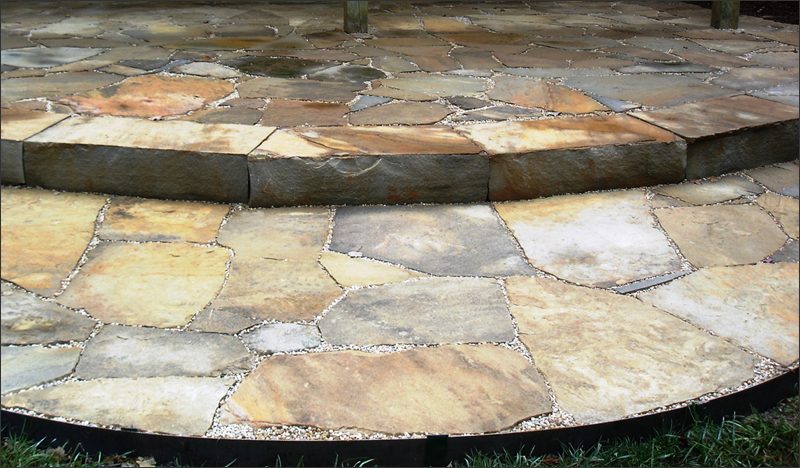
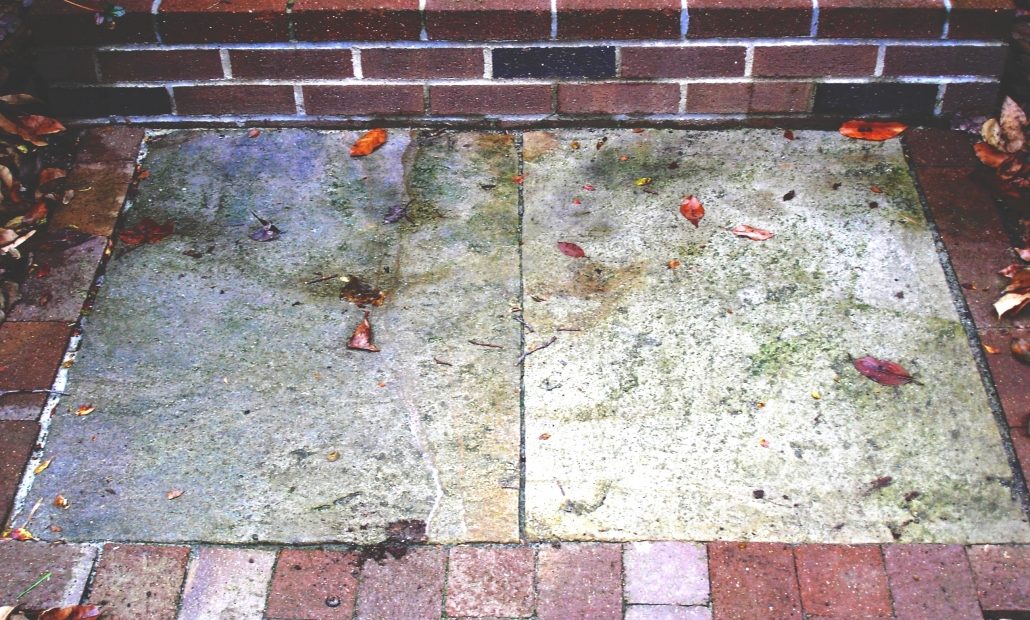

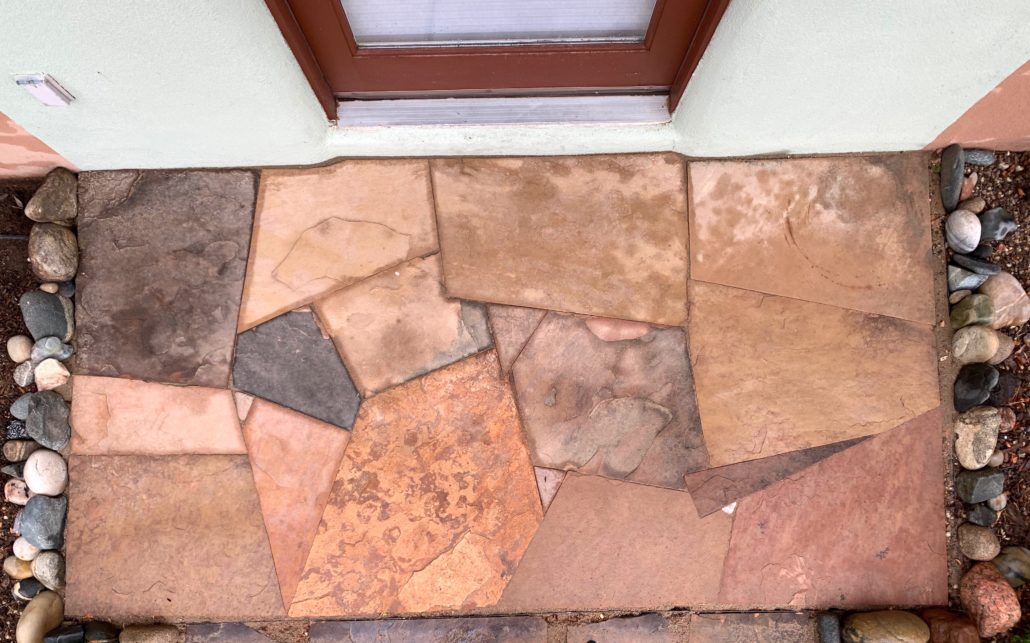
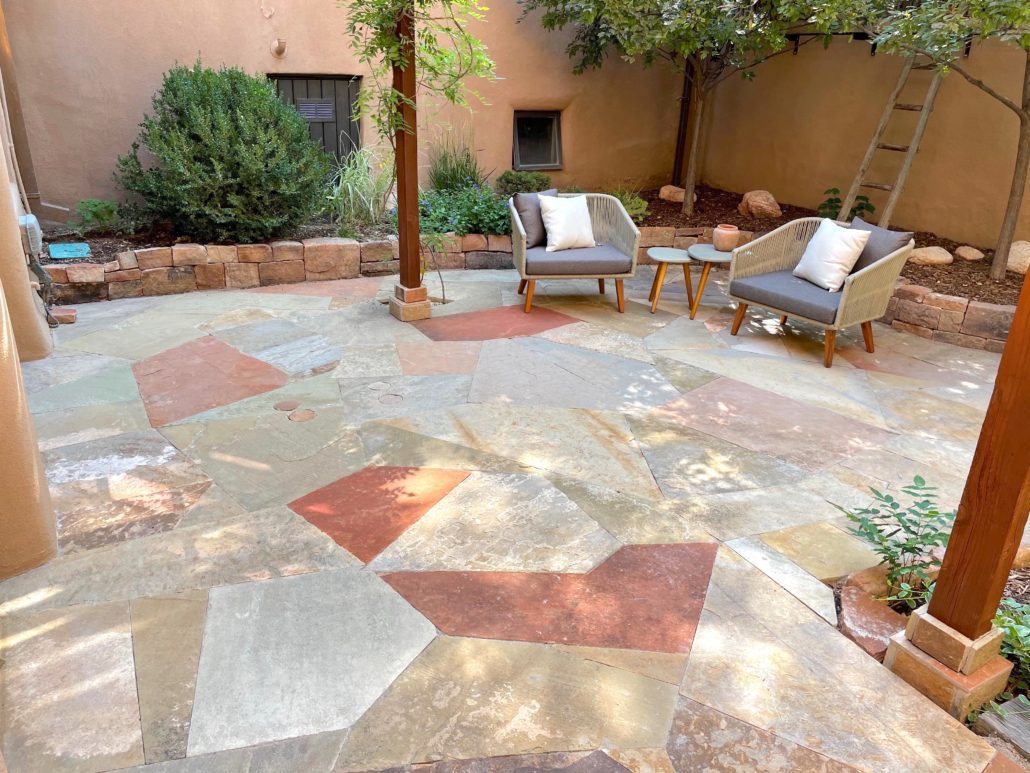
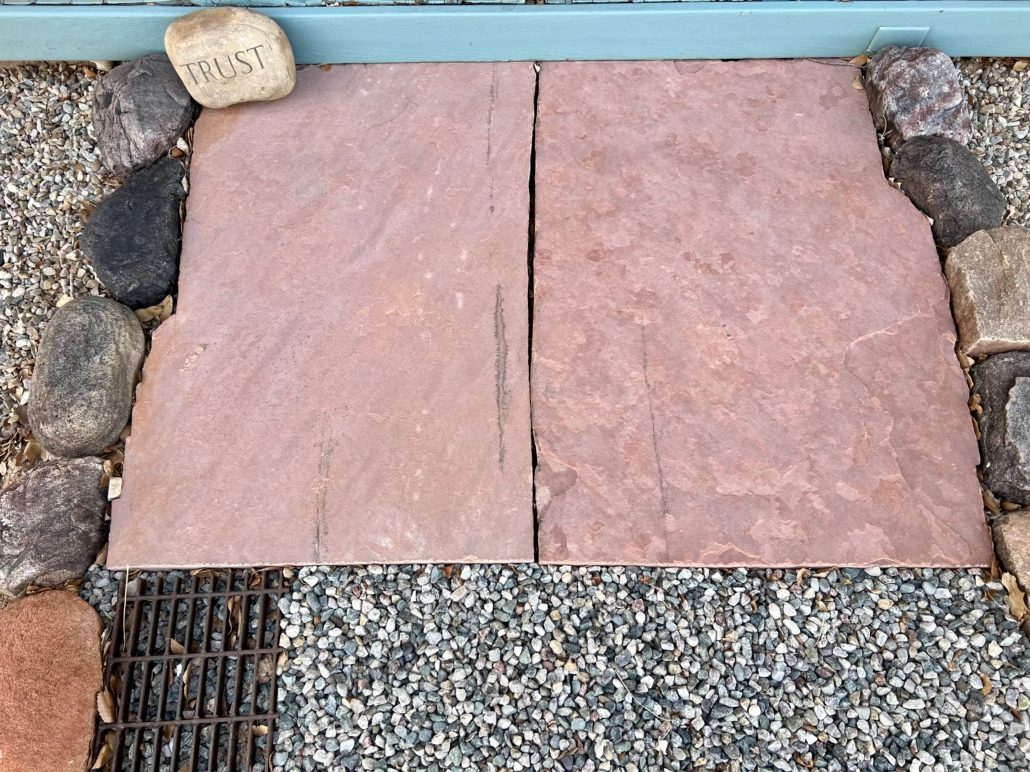
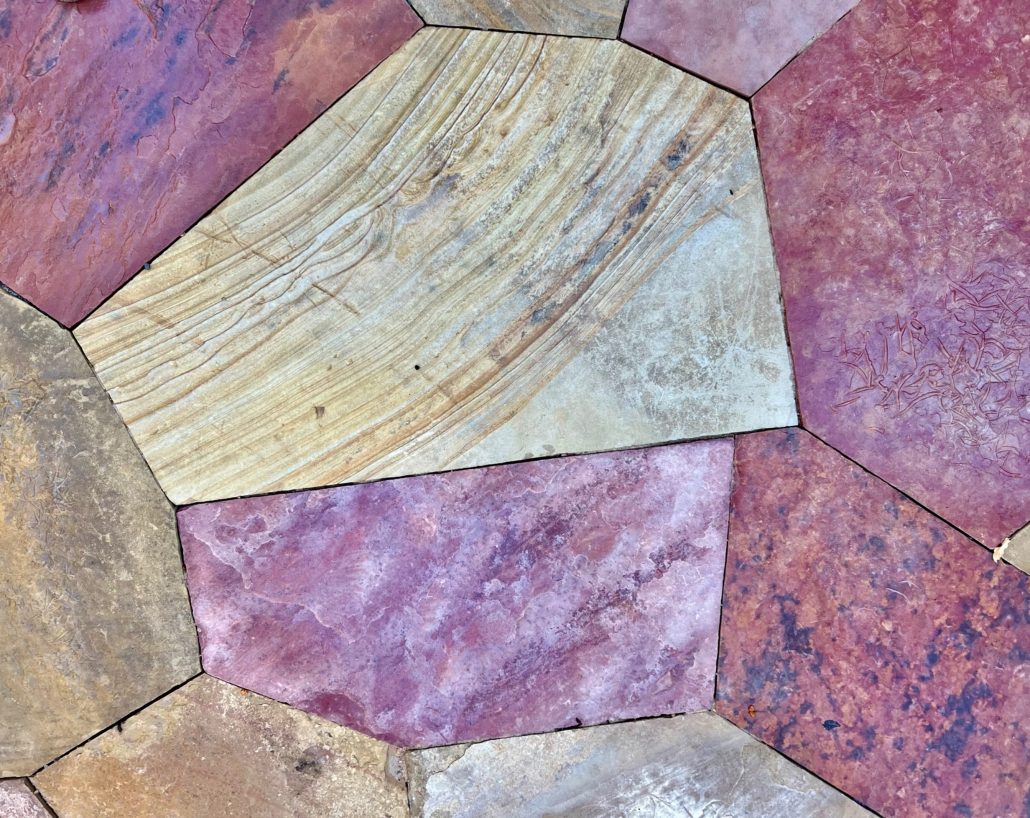
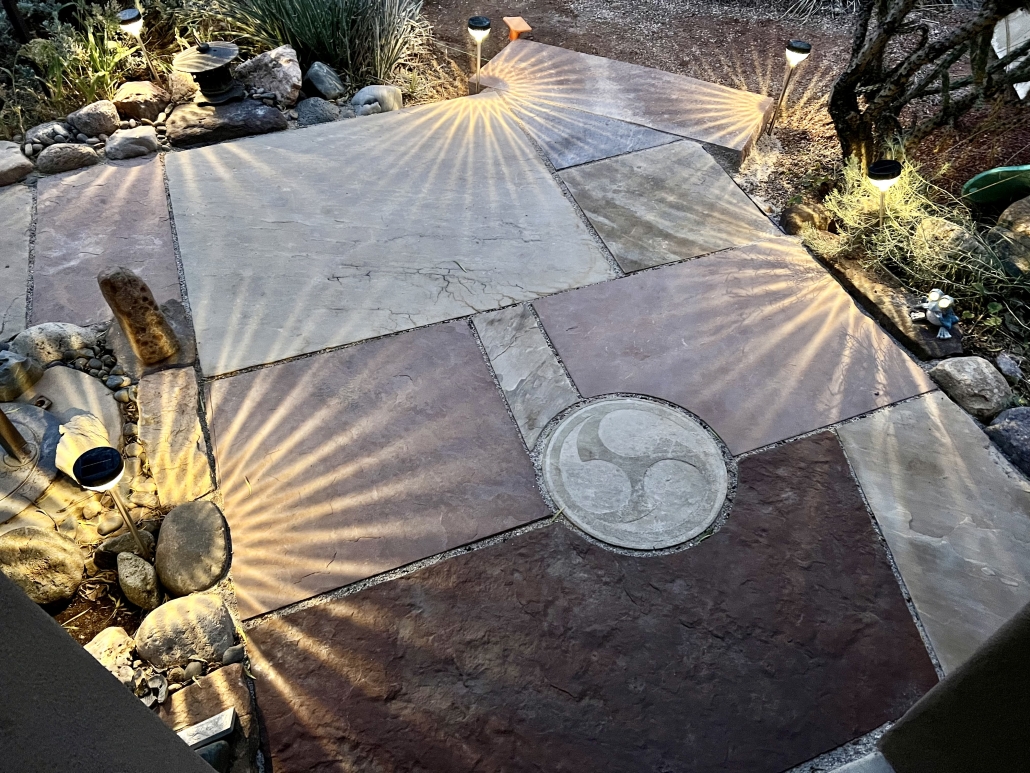
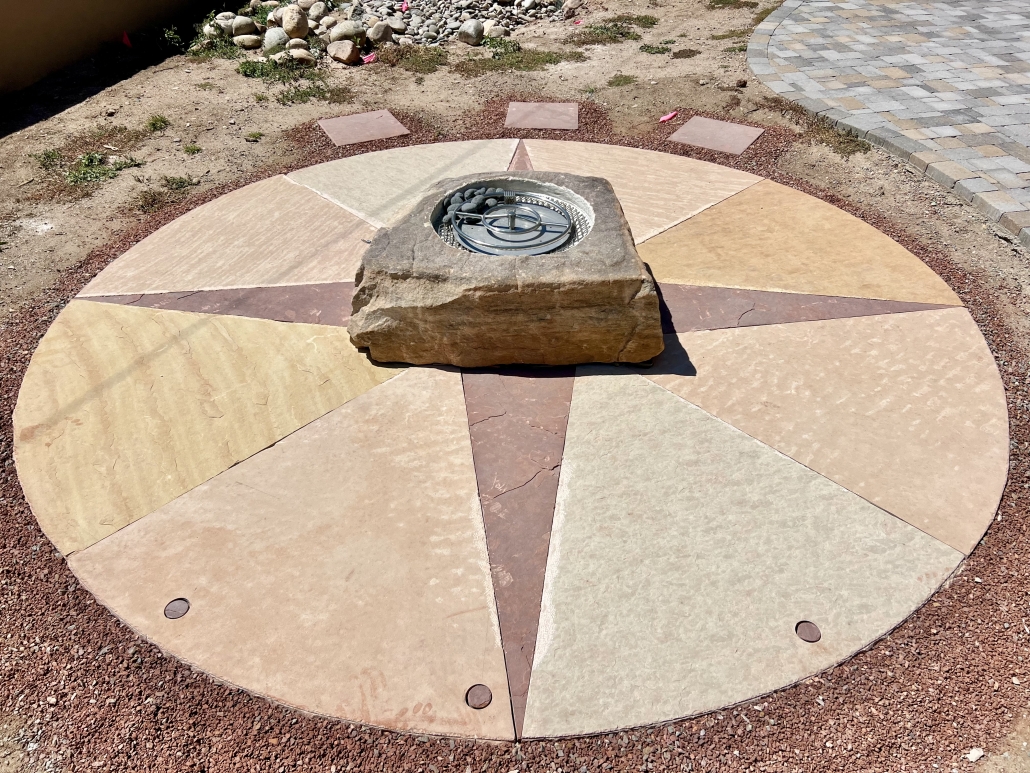
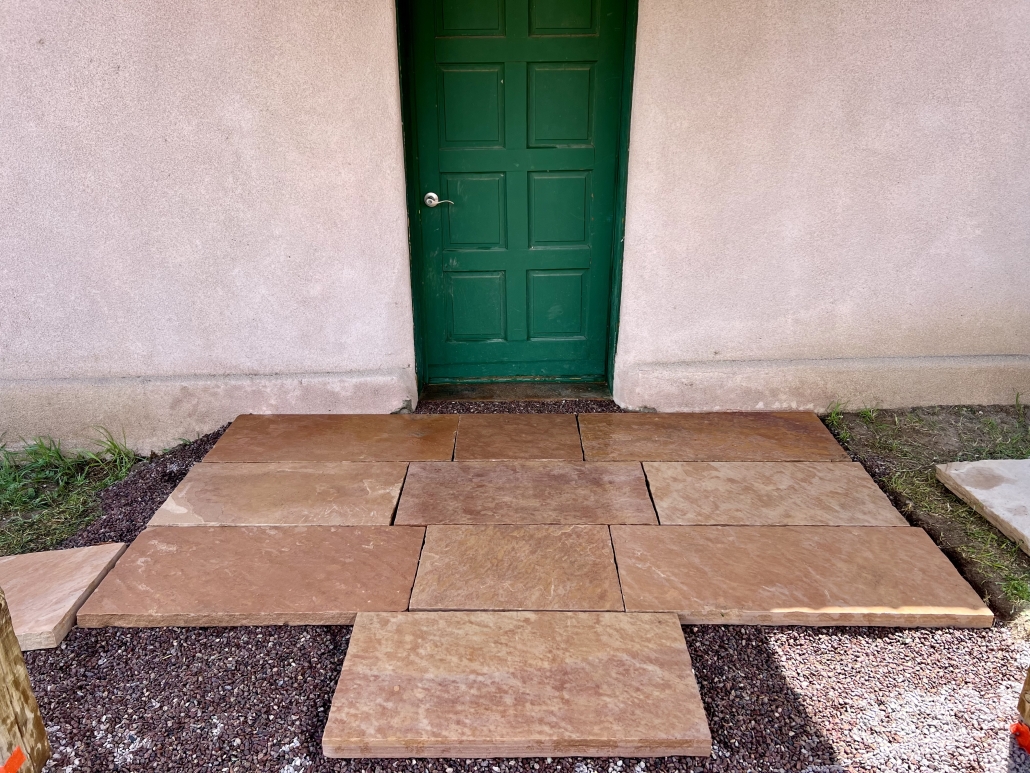

Stone patios are a durable, attractive landscape feature that have the potential to be low maintenance.
Most stone patios work best when they are level in all directions. However, if a patio is immediately adjacent to a structure, such as a house, it helps to have the top surface of the stone slope away from the structure. This enables rainwater to drain away from the structure with the help of gravity.
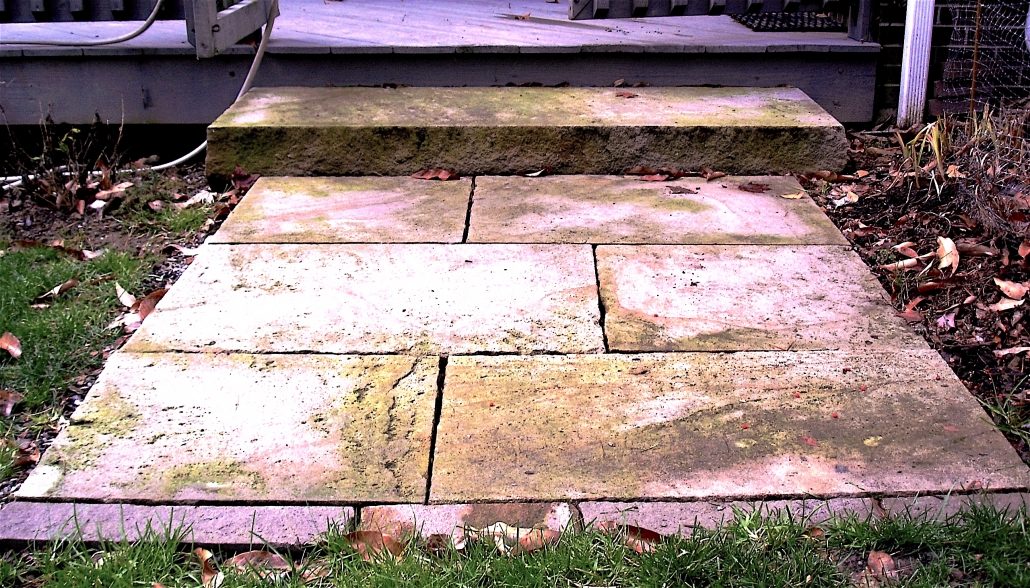
Thick pieces of stone, no less than 2 inches in depth, will remain in place longer than thin pieces. Similarly, stone with a large surface area will remain in place longer than stone with a smaller surface area. This is related to the ancient wisdom: if it is a struggle for a person to move and set a stone because of its weight, it is usually a struggle for mother nature to dislodge it.
The joinery, or gaps, between patio stone can be wide enough to plant deliberately such as with creeping thyme. Gaps between stones can also allow rainwater to seep into ground, which helps reduce soil erosion elsewhere. If no gap is desired, saw cuts can allow surface-to-surface contact. In many areas, a 1/2″ gap is the maximum allowed for the surface to be ADA compliant.
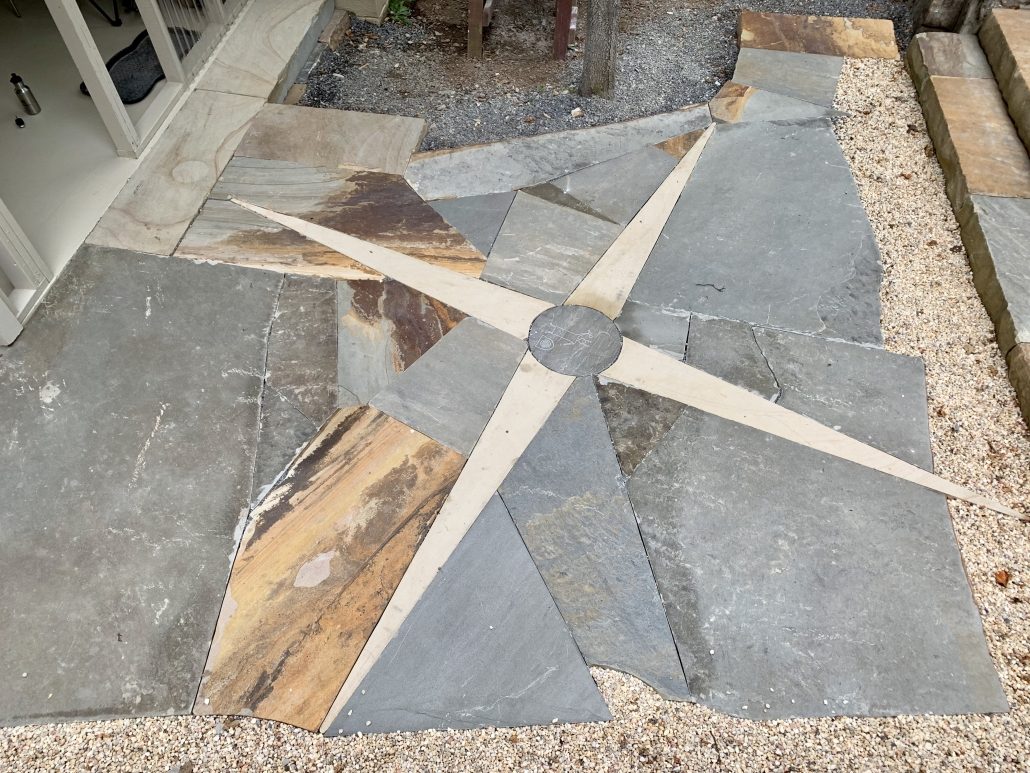
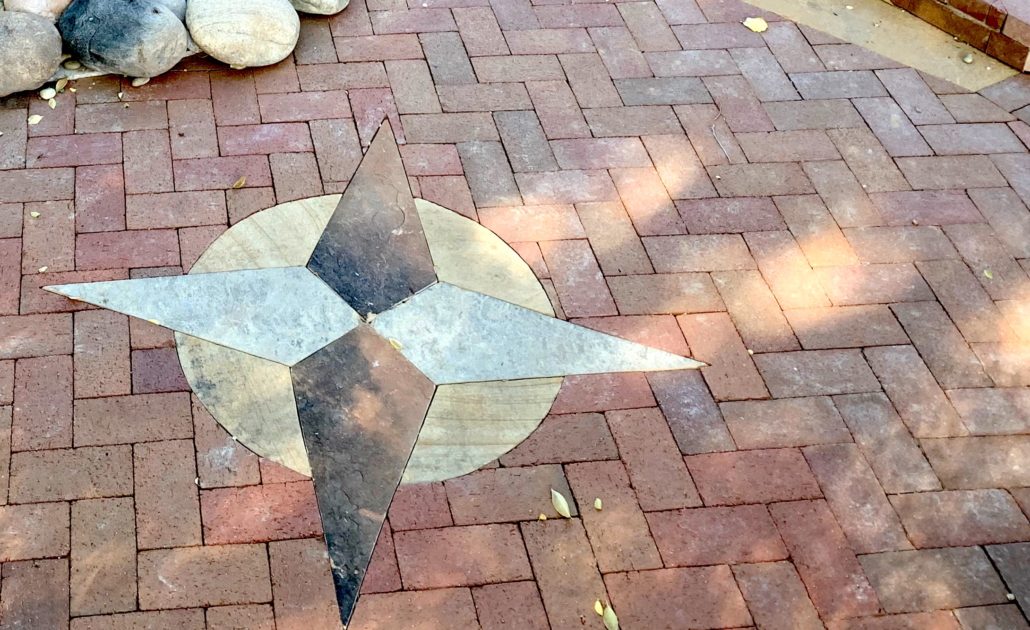
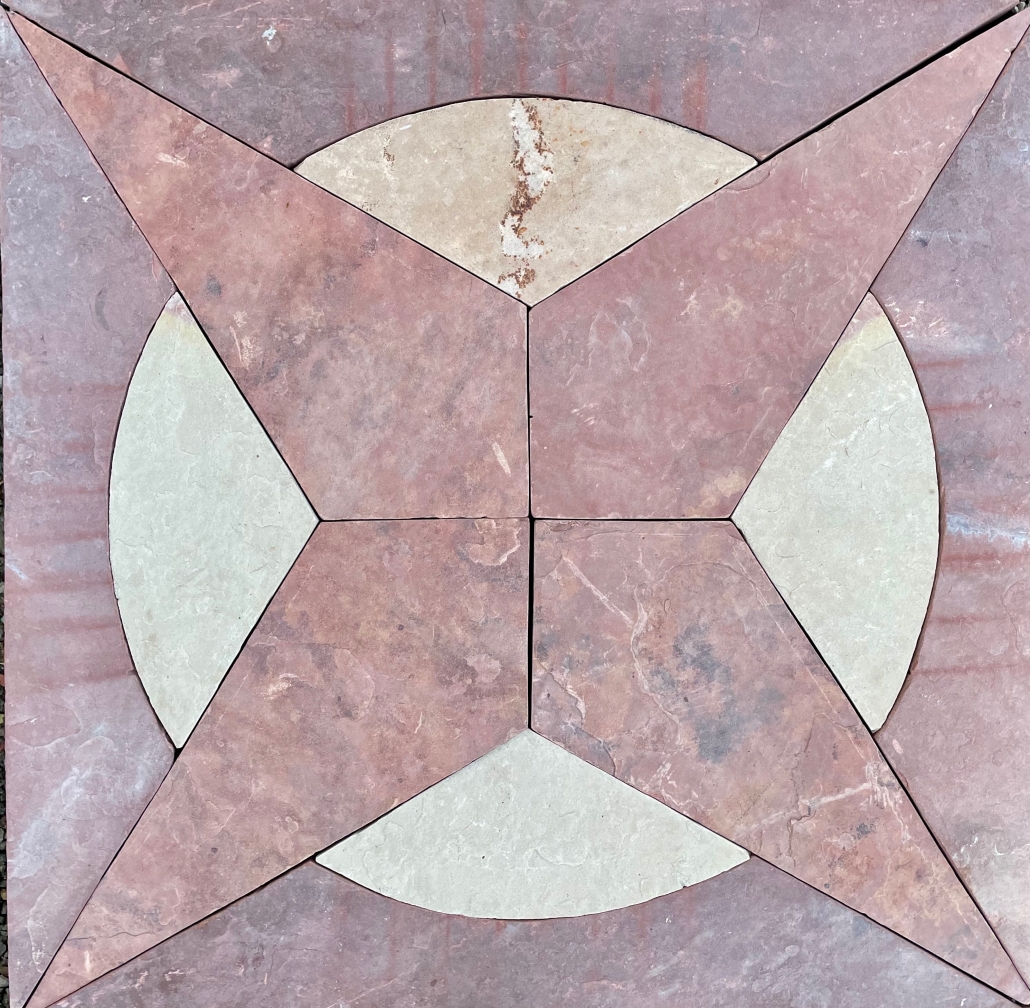
Many of my patios feature the compass rose, showing the 4 cardinal directions. Others also have joinery or other markings which indicate solar and lunar cycle.