
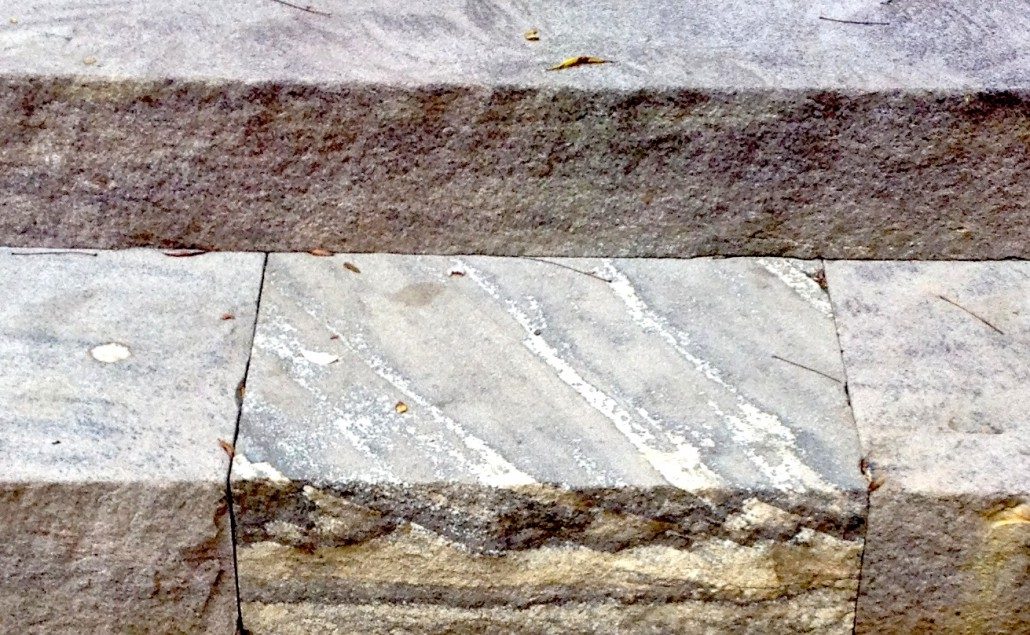
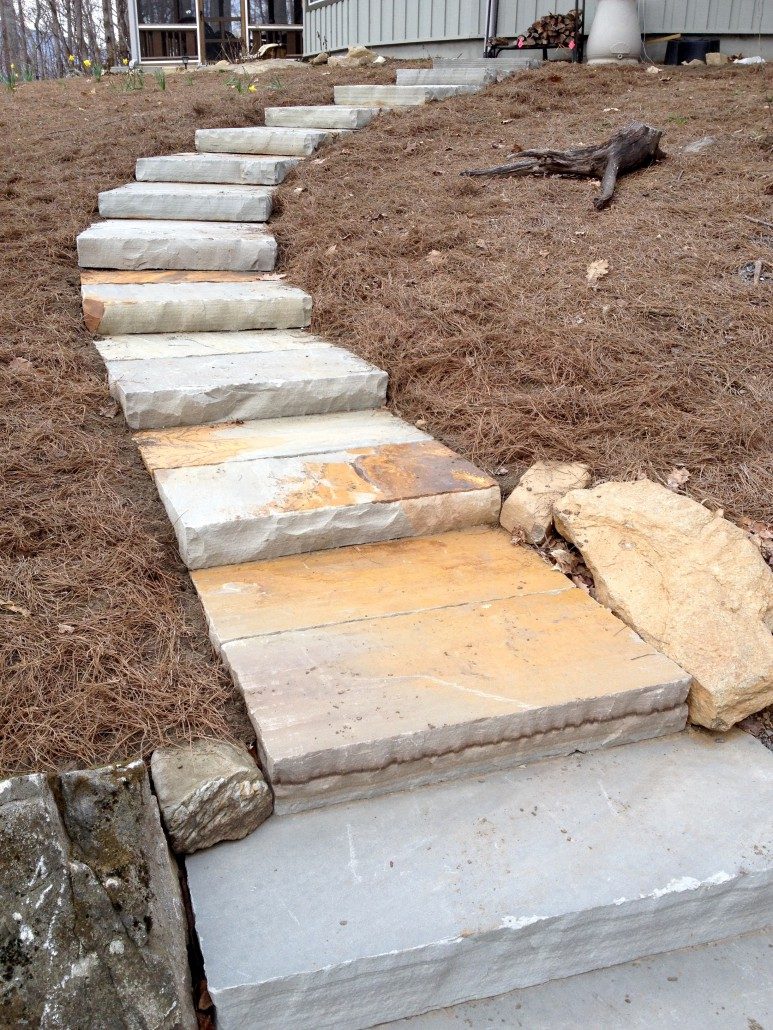
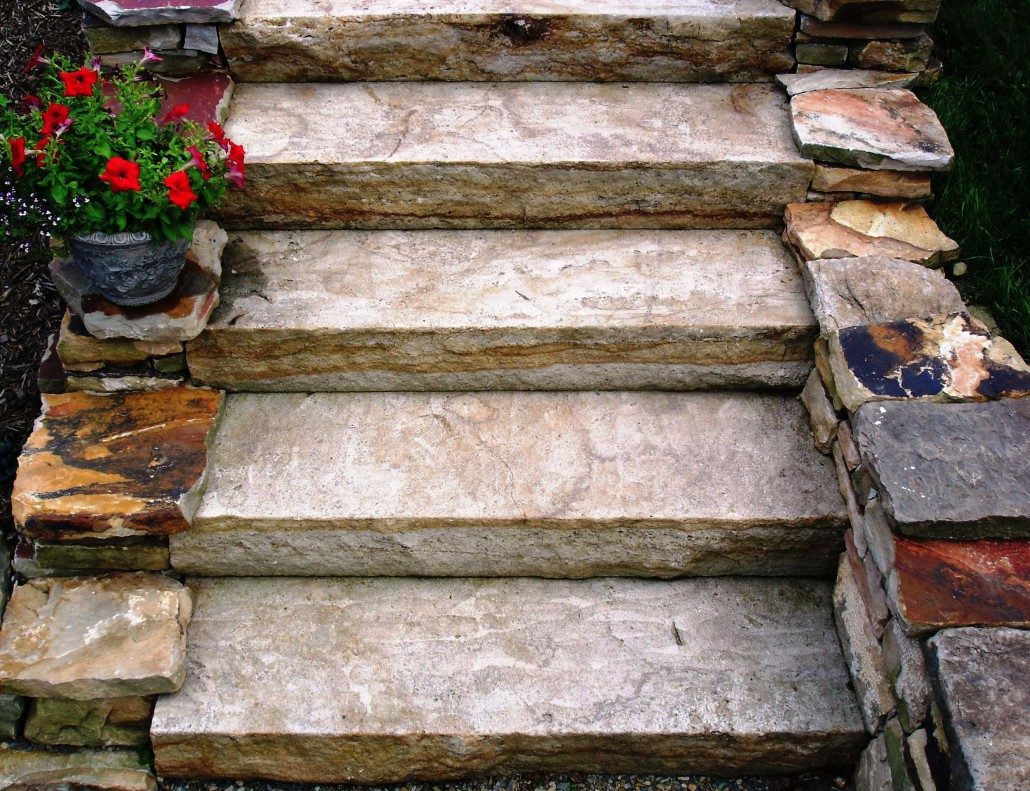
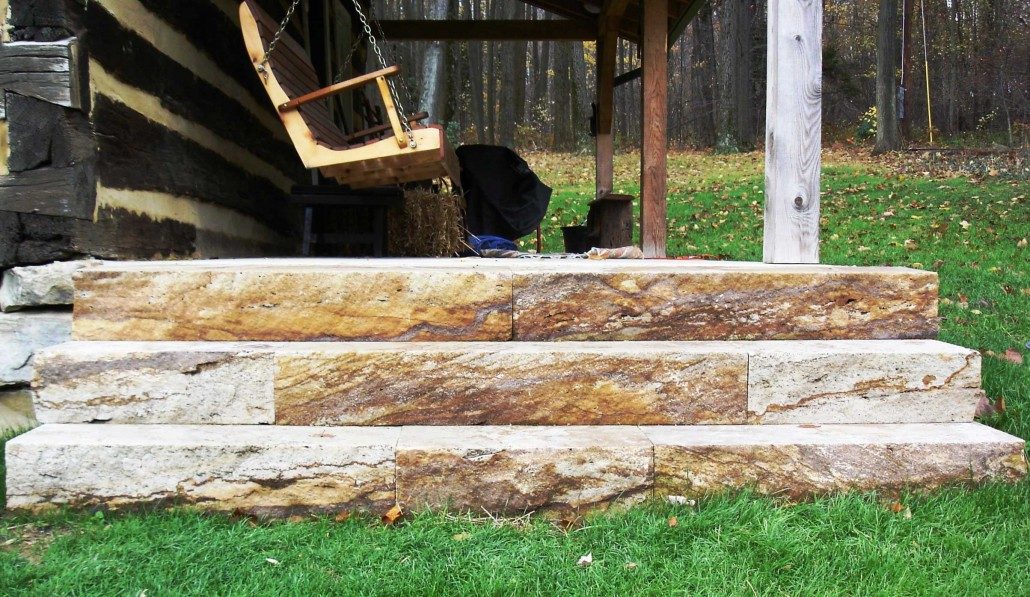
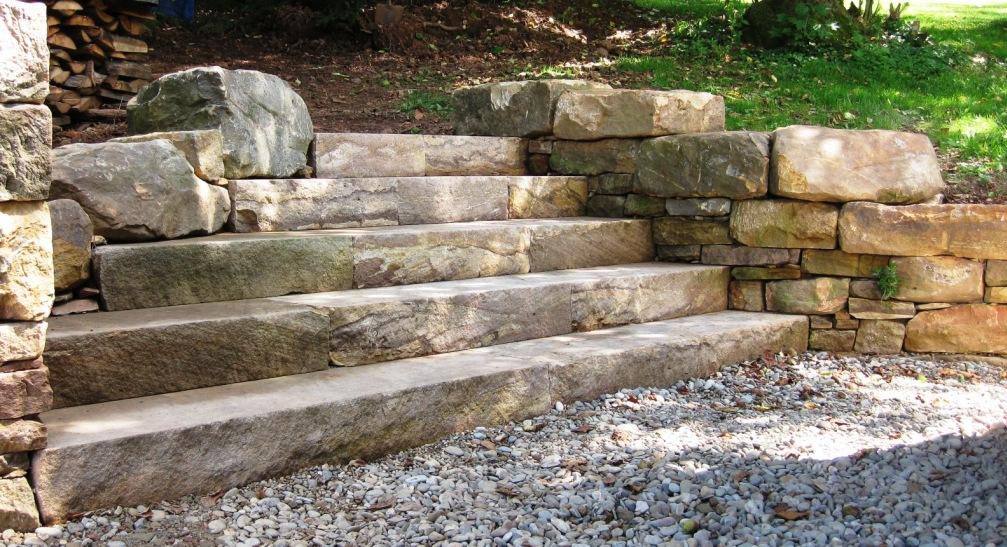
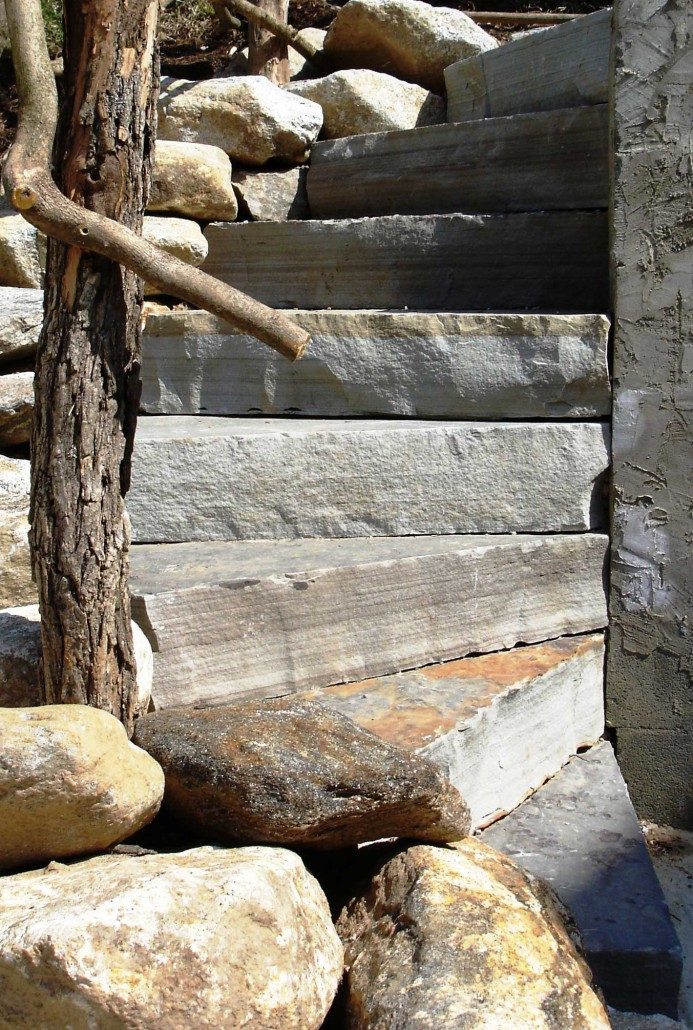
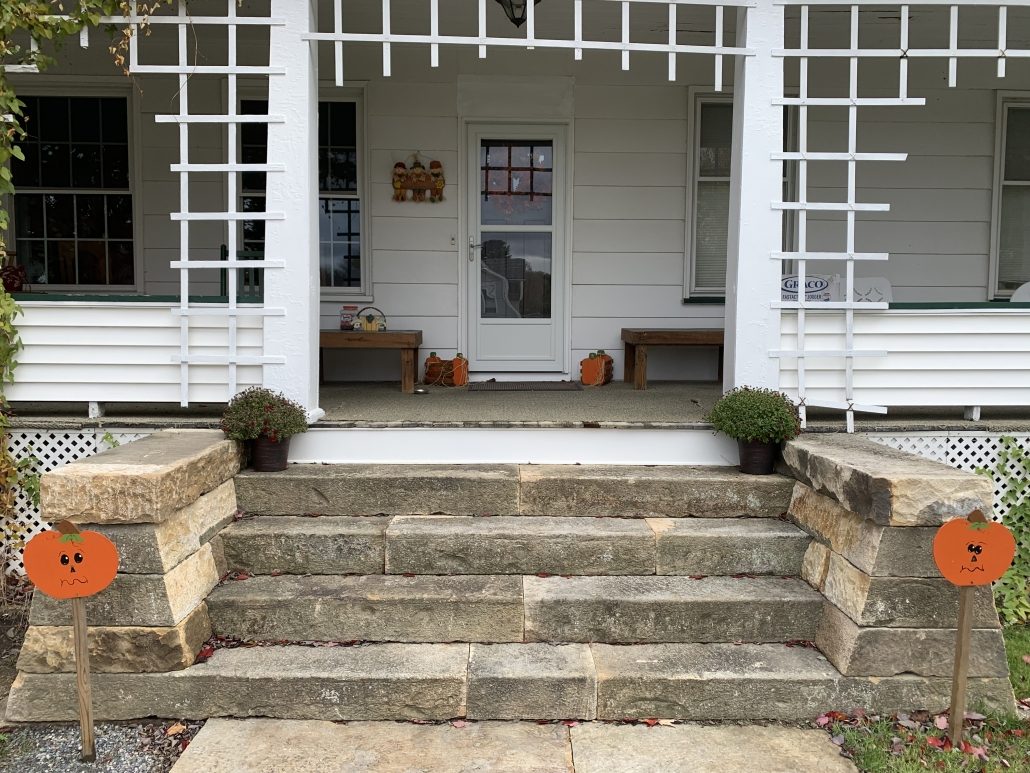
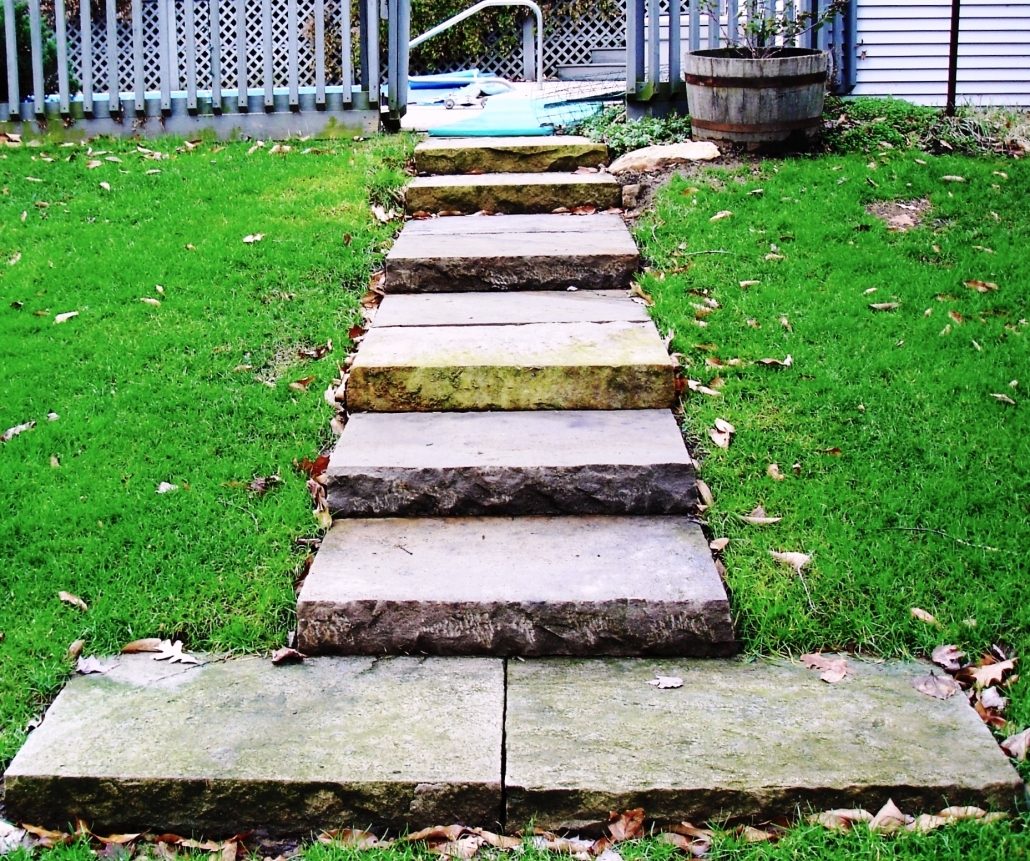
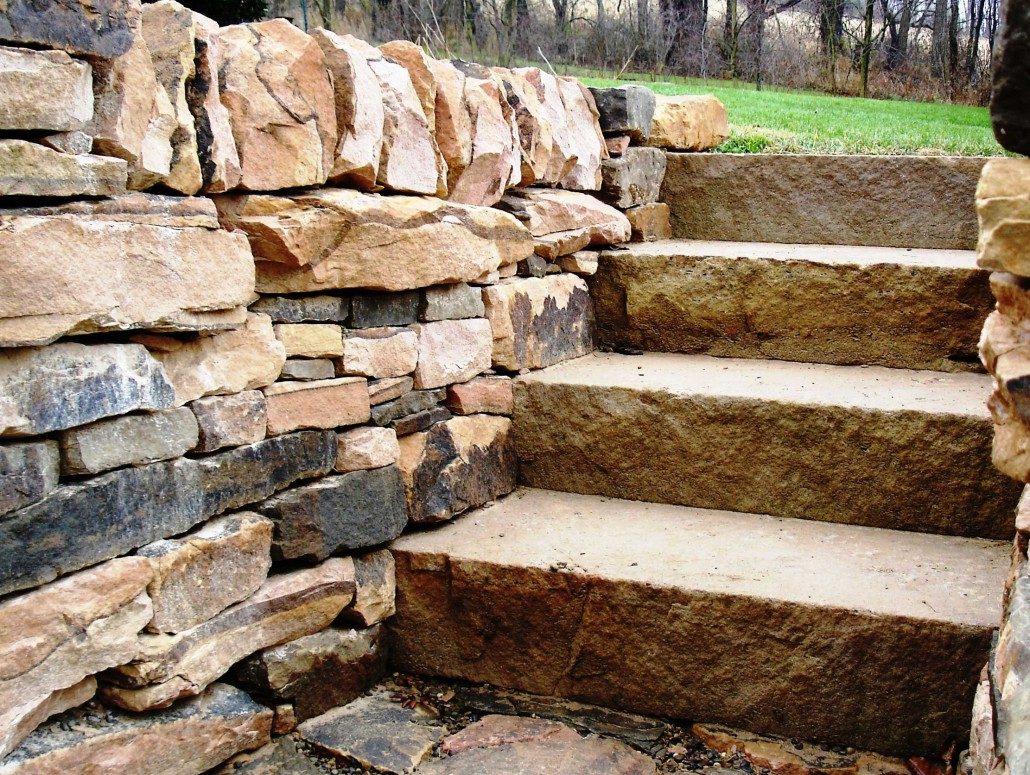
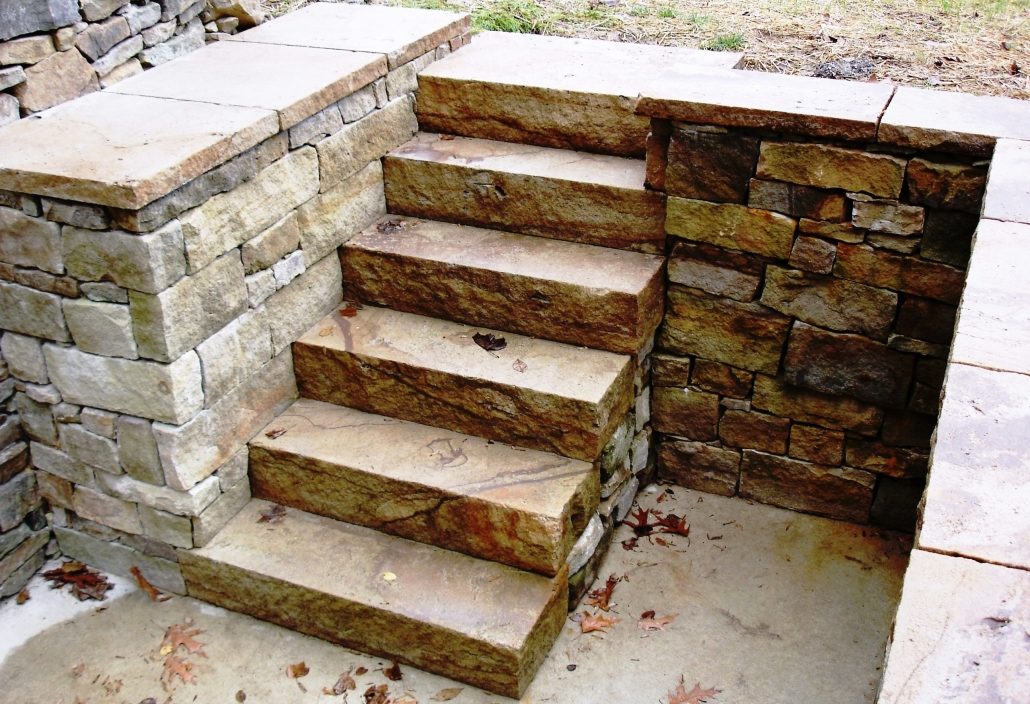
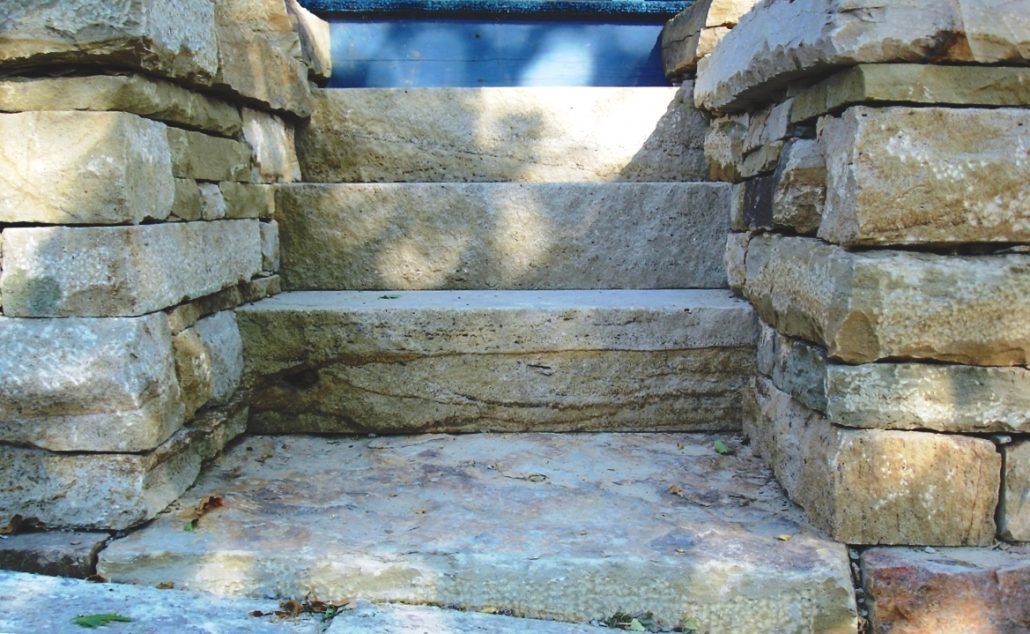
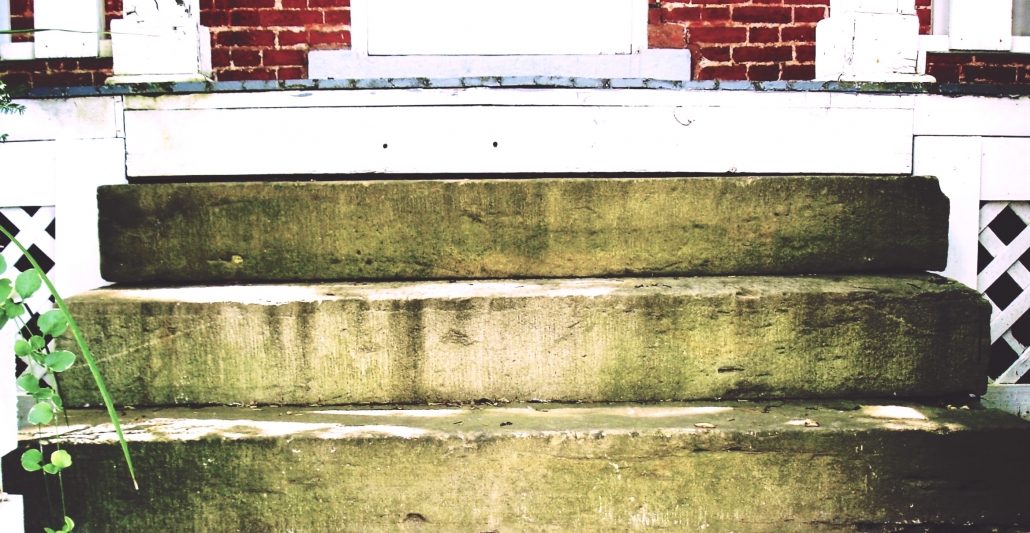
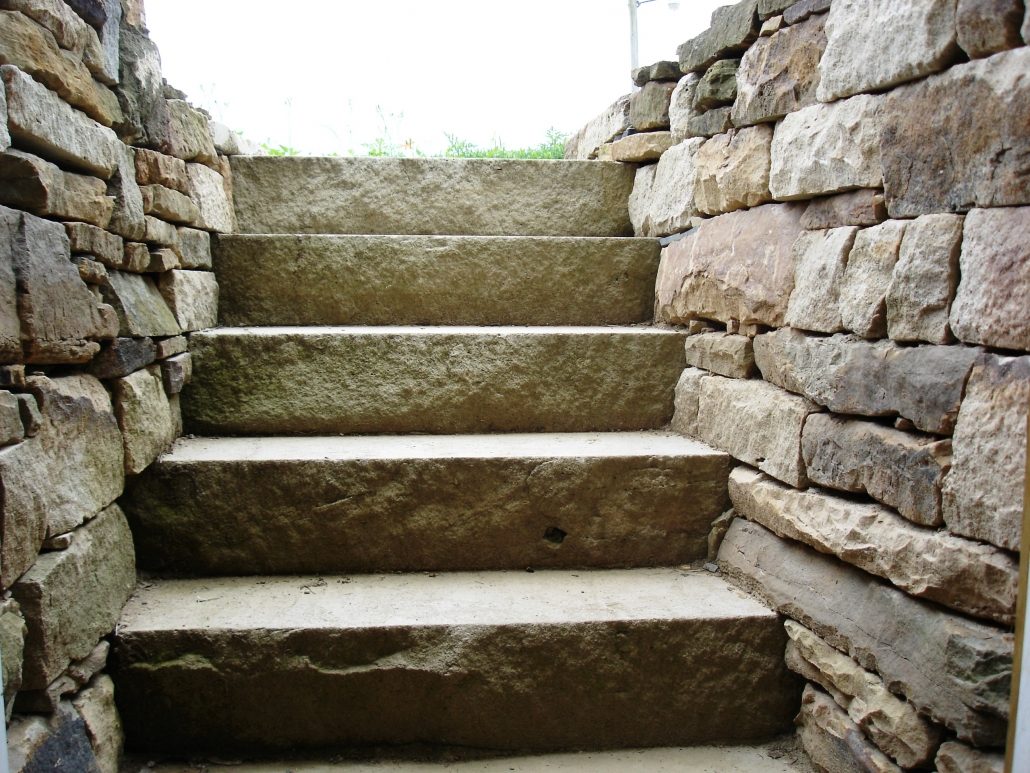
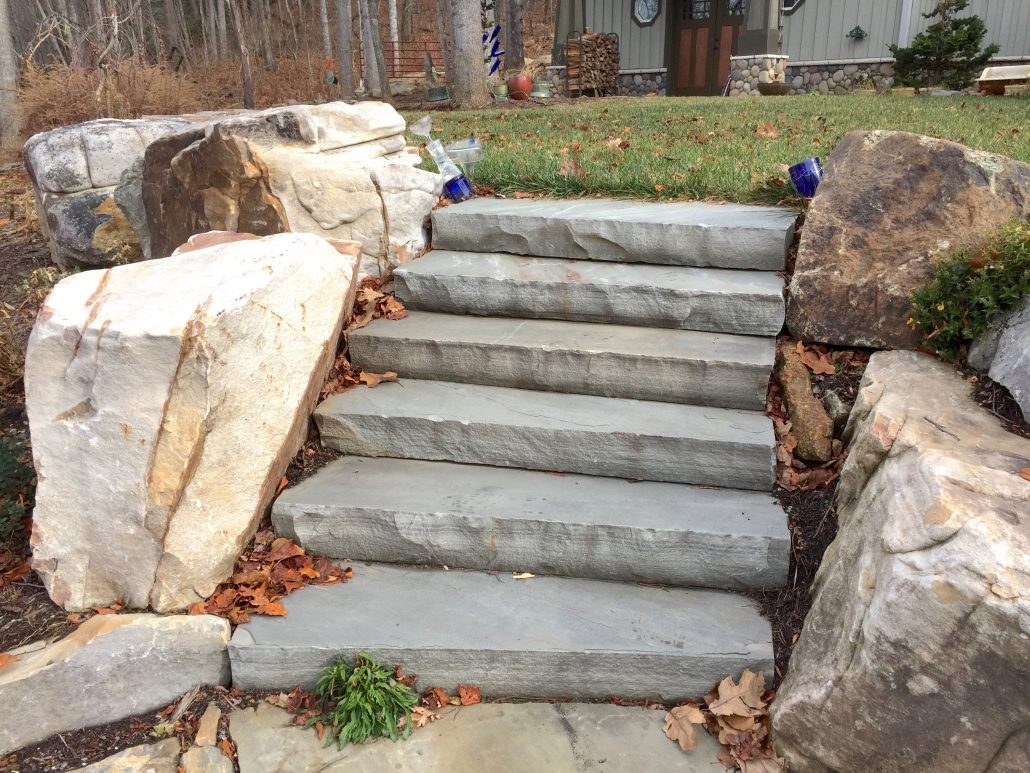
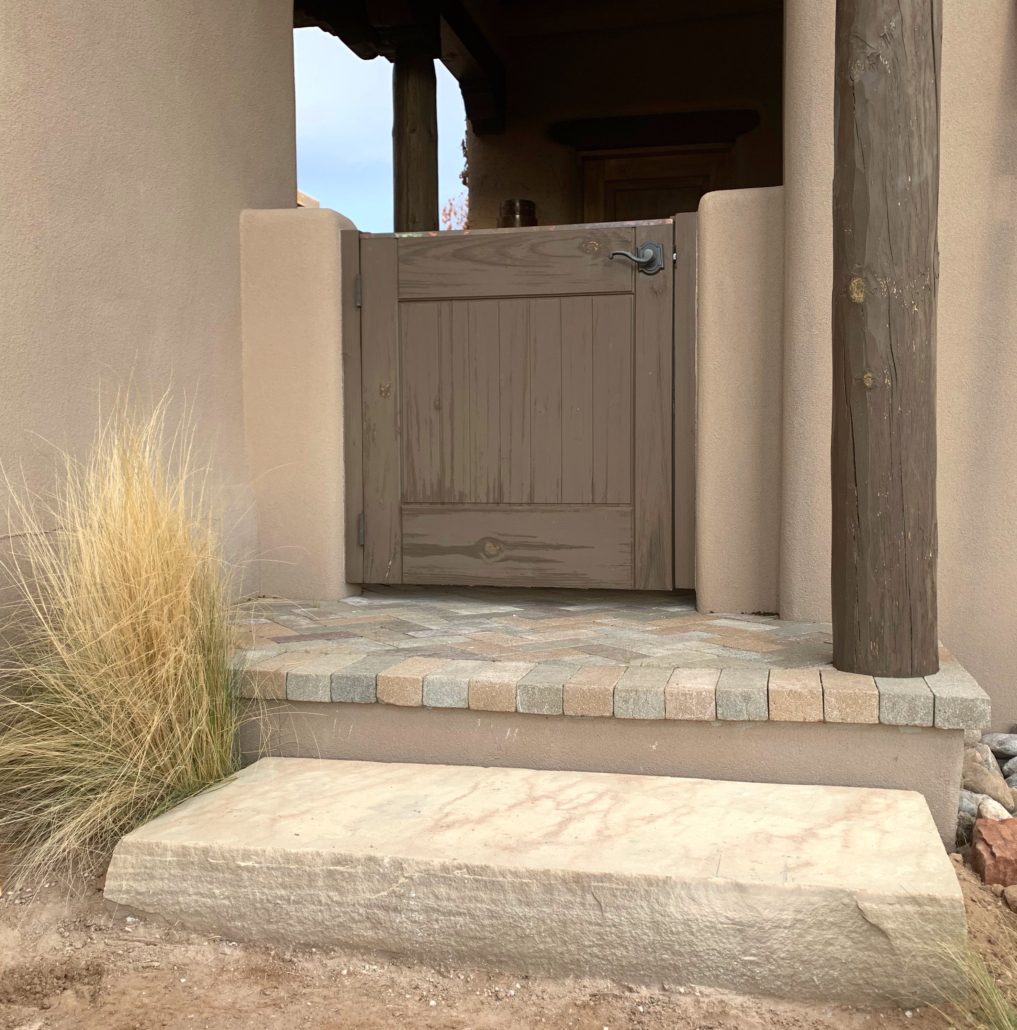
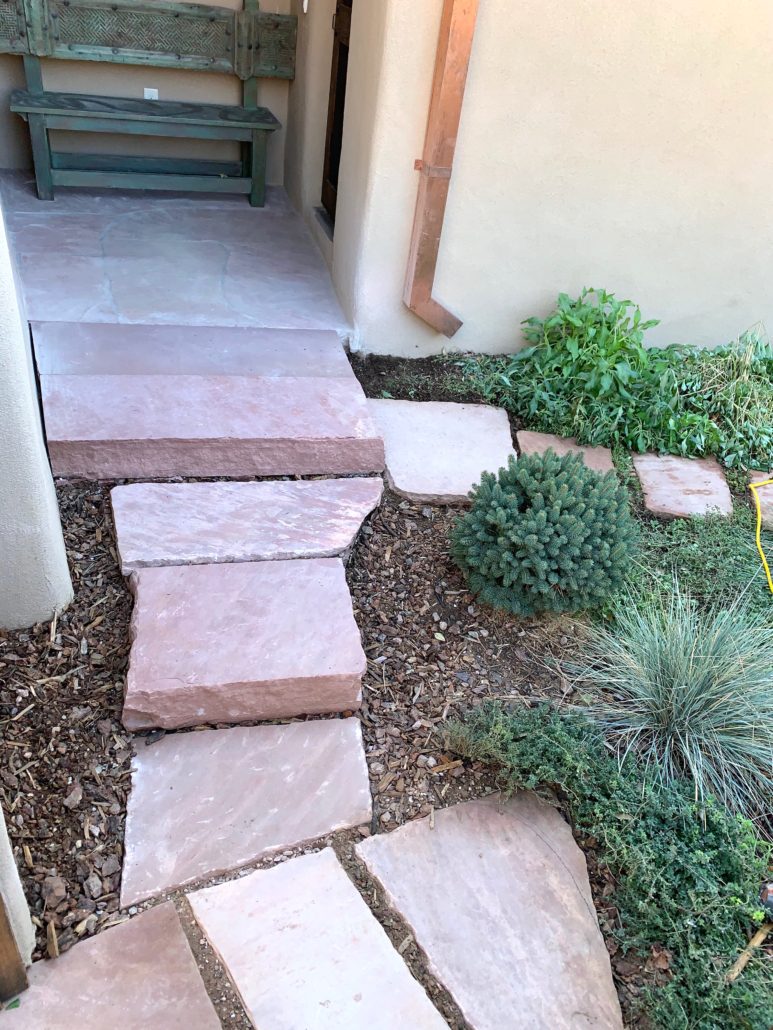
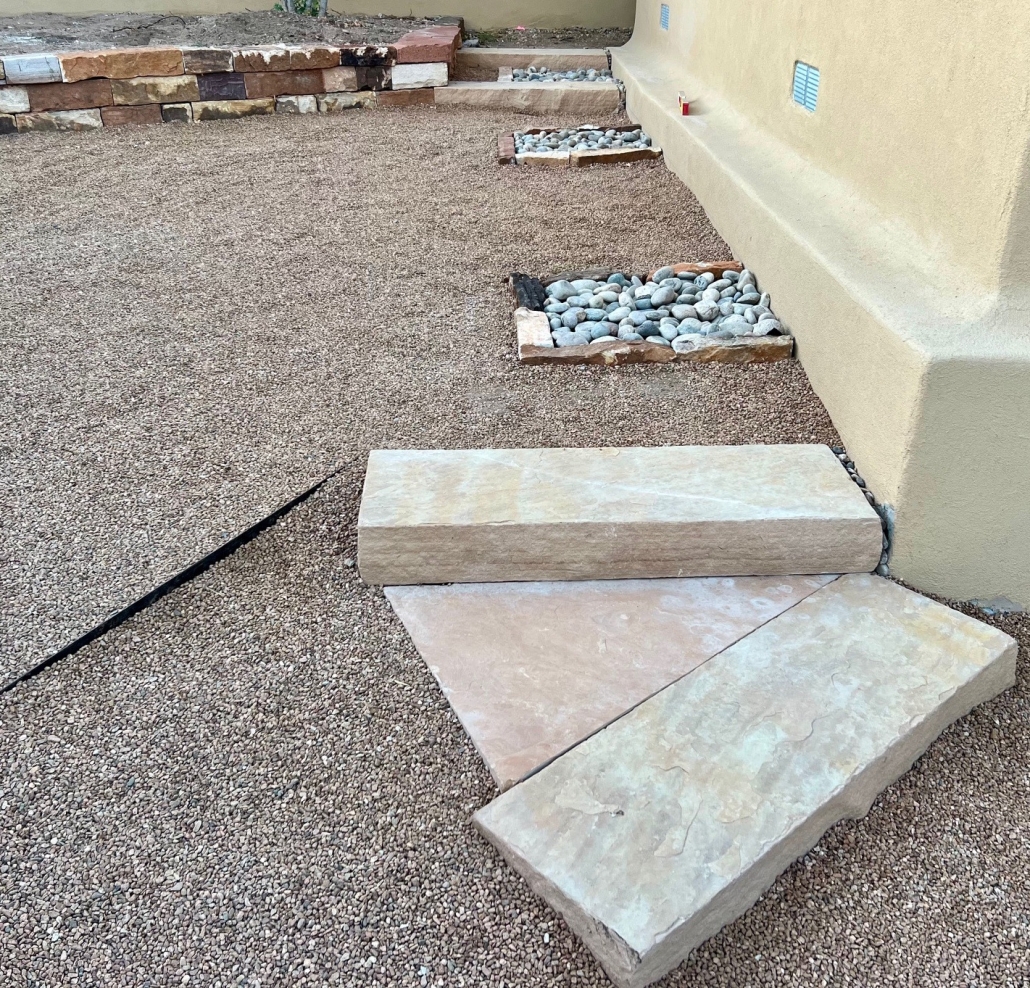
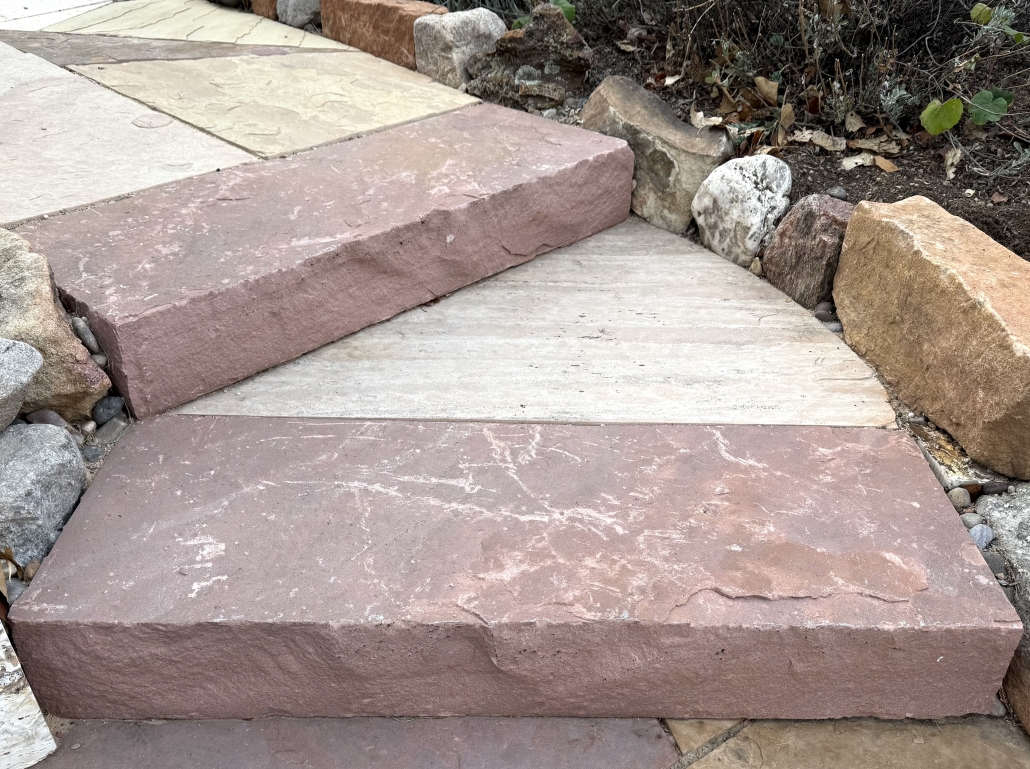
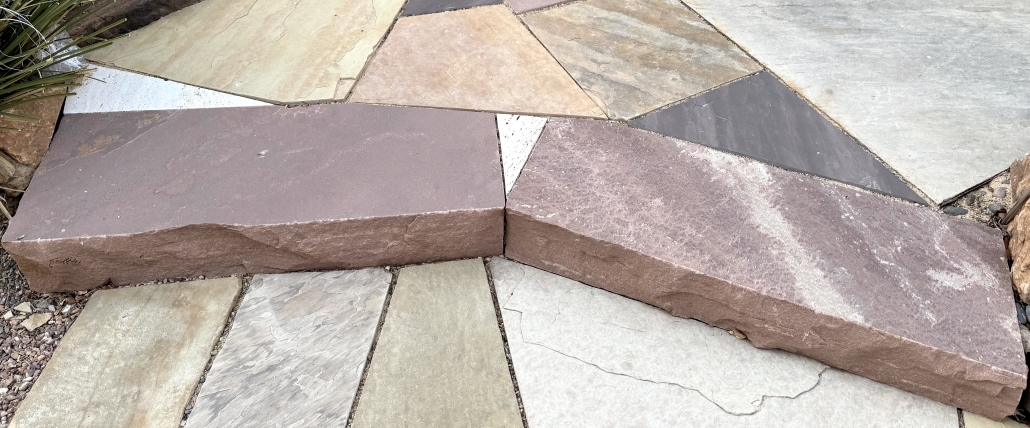
Stone steps work best as a single slab of stone, set so that the top surface is level left to right. Stone steps last longer if they rest on top of the step beneath them, with a 3″ overhang. I set steps into a bed of crushed gravel, compacted. I tilt steps slightly downhill so that rainwater and debris naturally flow downhill. This helps reduce the gathering of organic matter where the steps touch one another, and also helps prevent icing or puddles. Otherwise, plant matter tends to sprout there, starting the process of sending roots under the step.
Steps work best for pedestrians when the top surface is smooth, and when the height of each step is very similar. In some circumstances, there are building codes that require steps to have the same height or a very similar height. Because our feet and legs tend to memorize the height of steps as we walk them, there are less accidents as a result.
For stone steps in the landscape, I advocate the use of handrails made from metal or wood. These can help with stability as people walk up or down, and allow something to lean on when needed.