
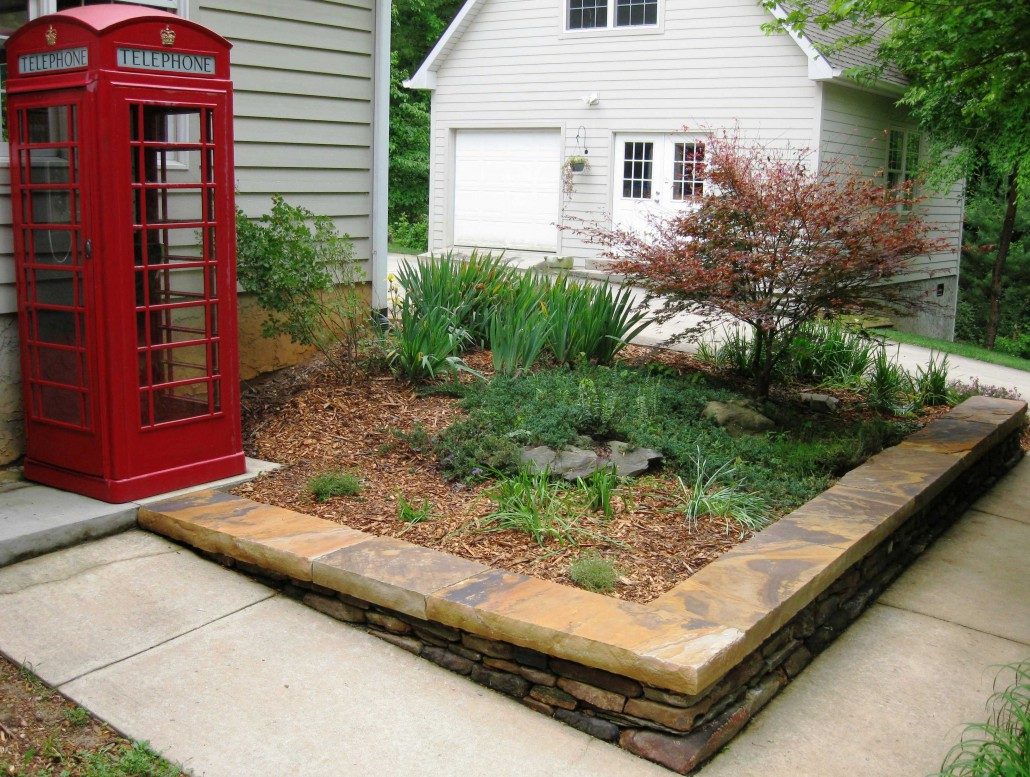
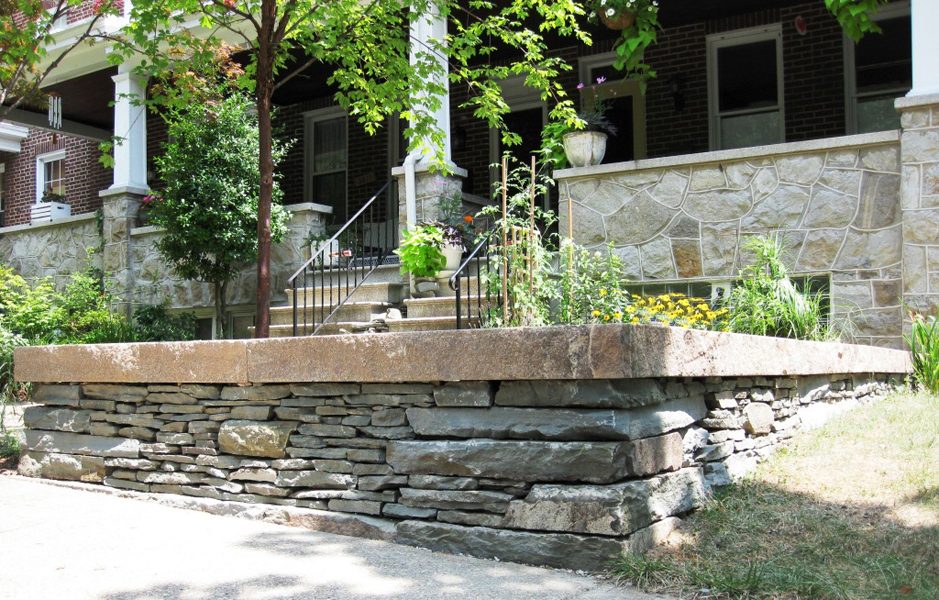
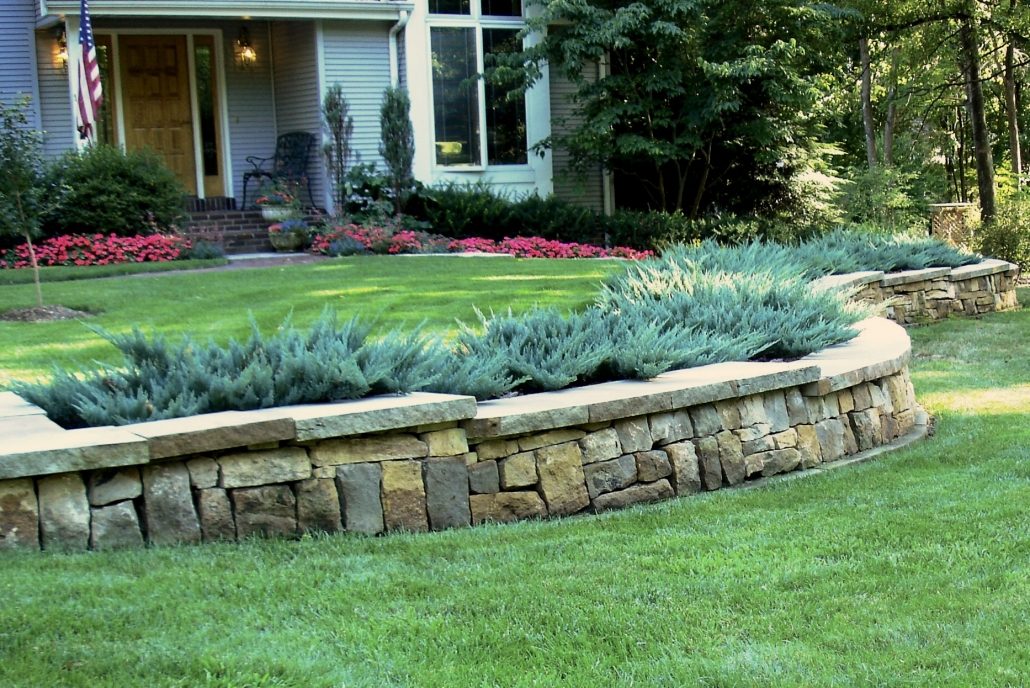
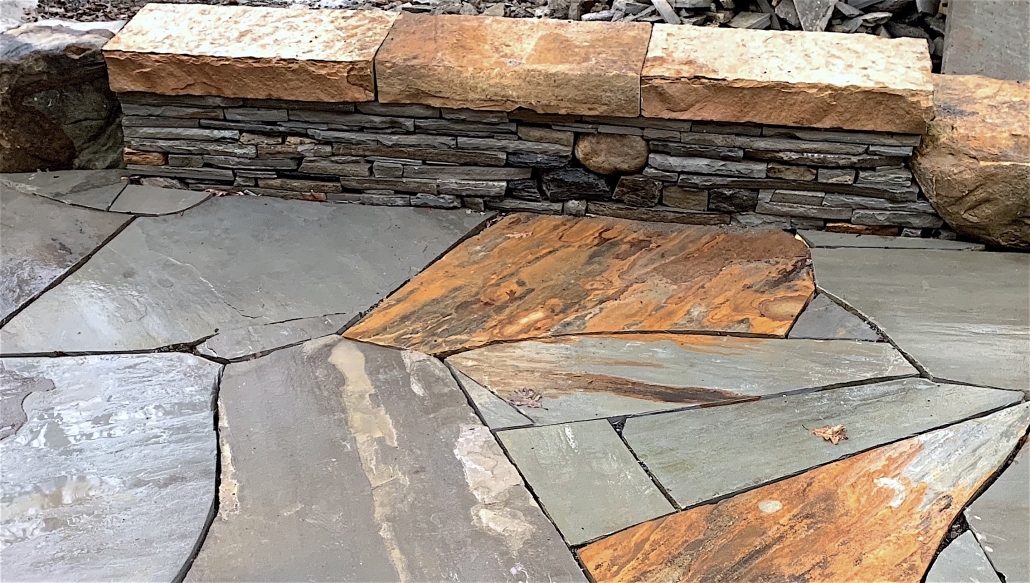

What is A Stone Sitting Wall?
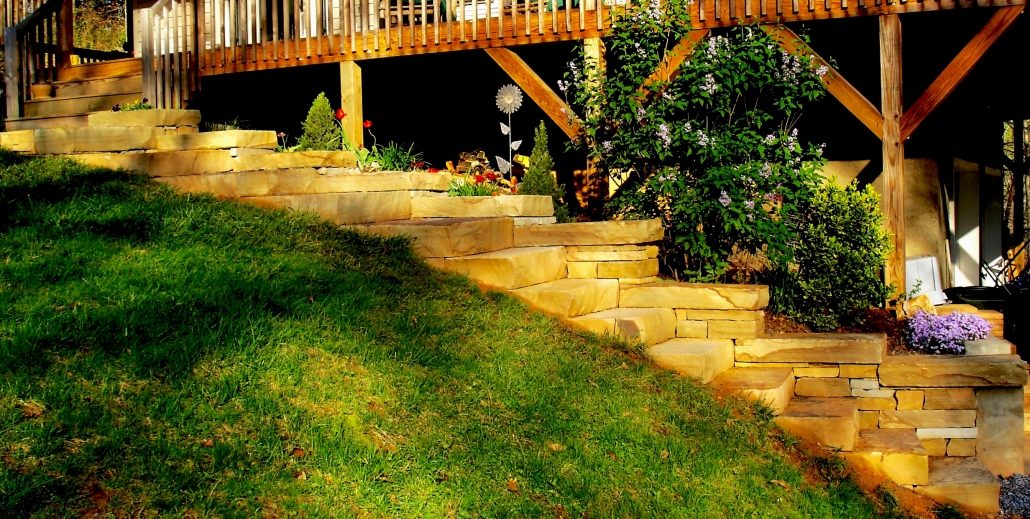
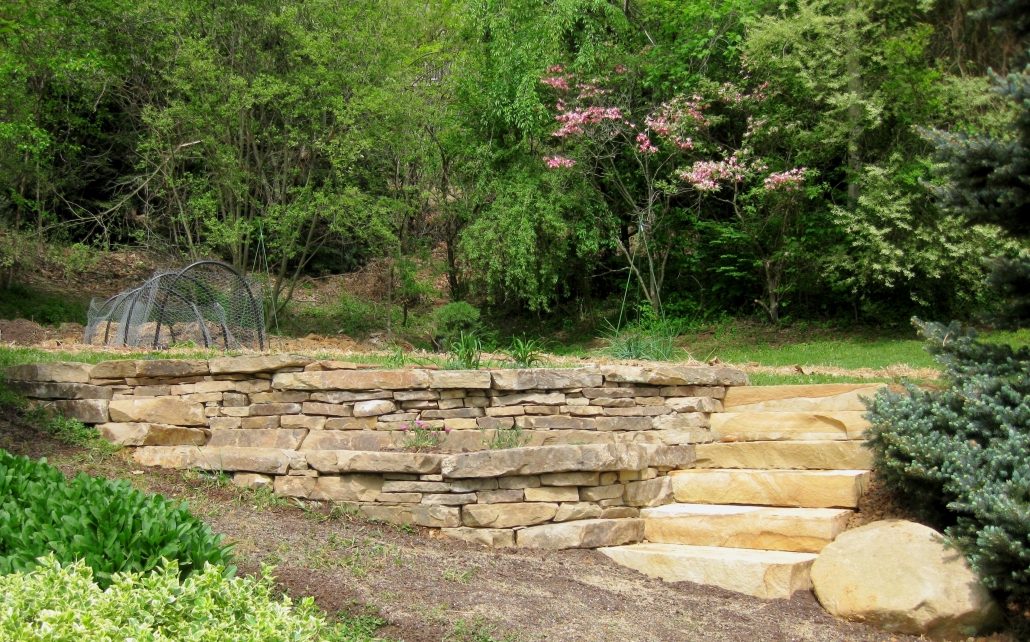
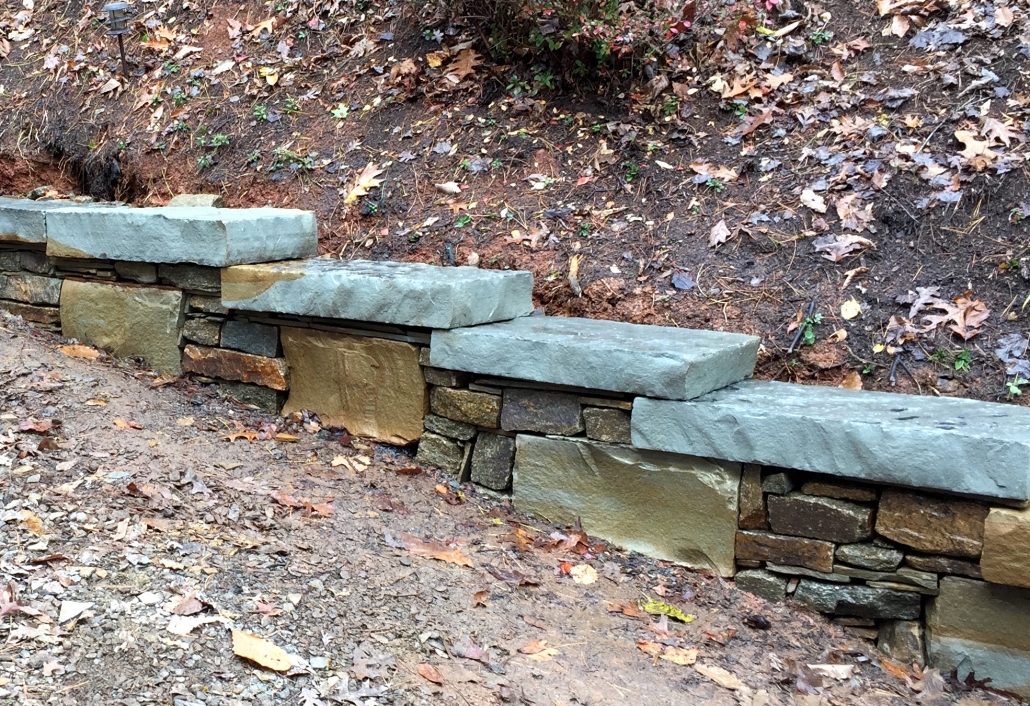
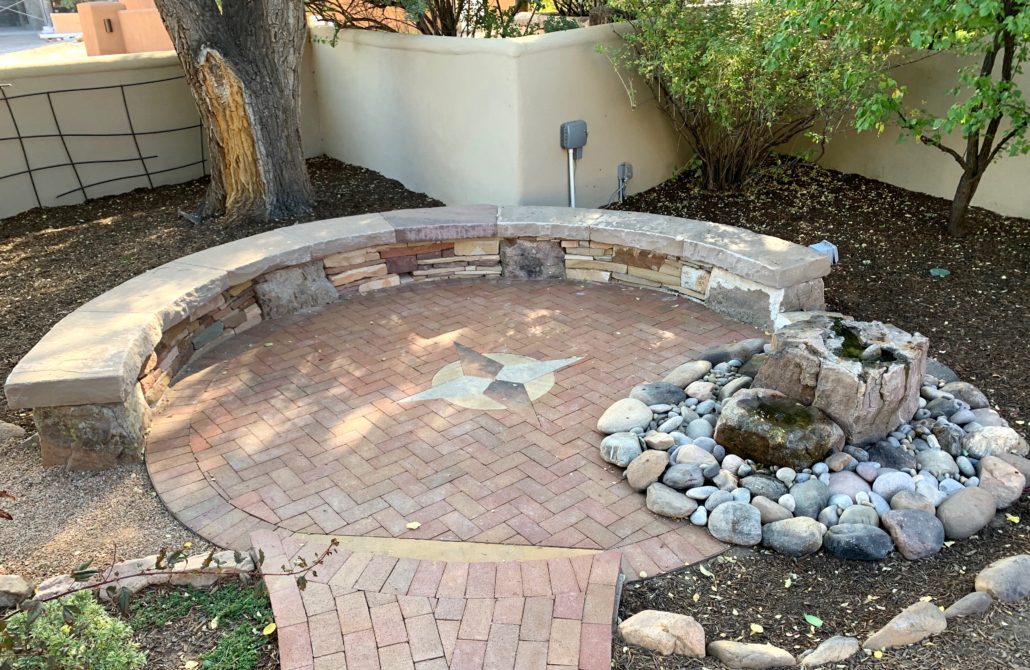
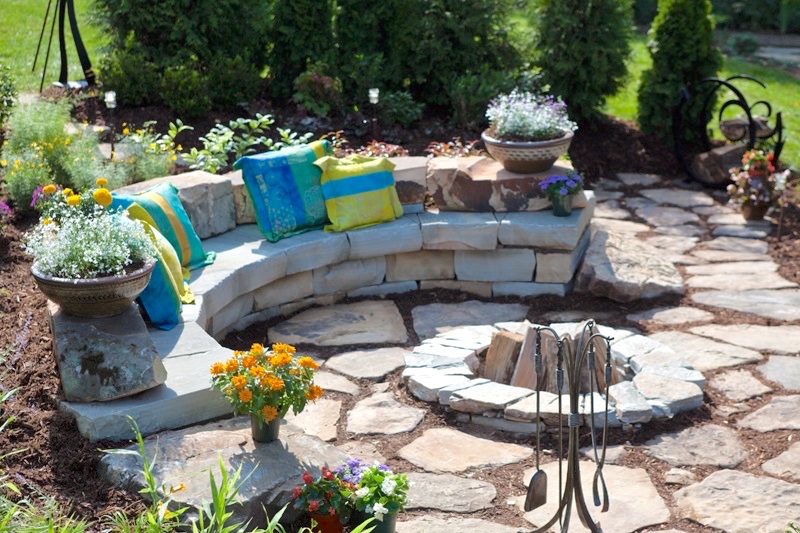
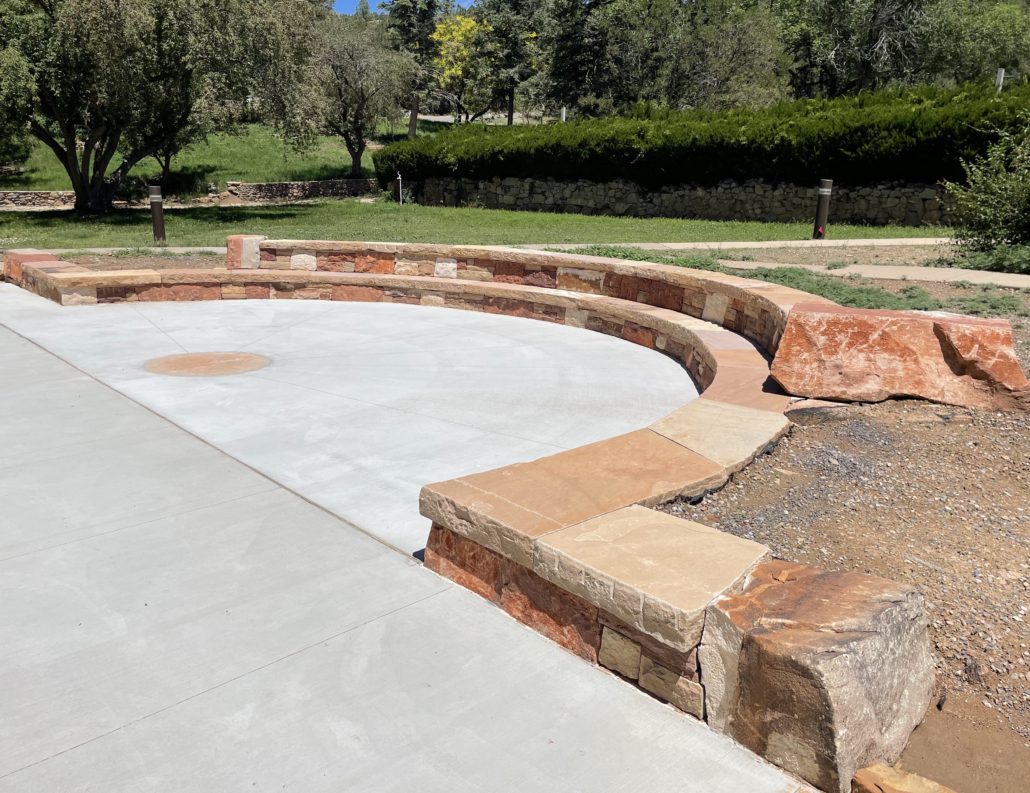
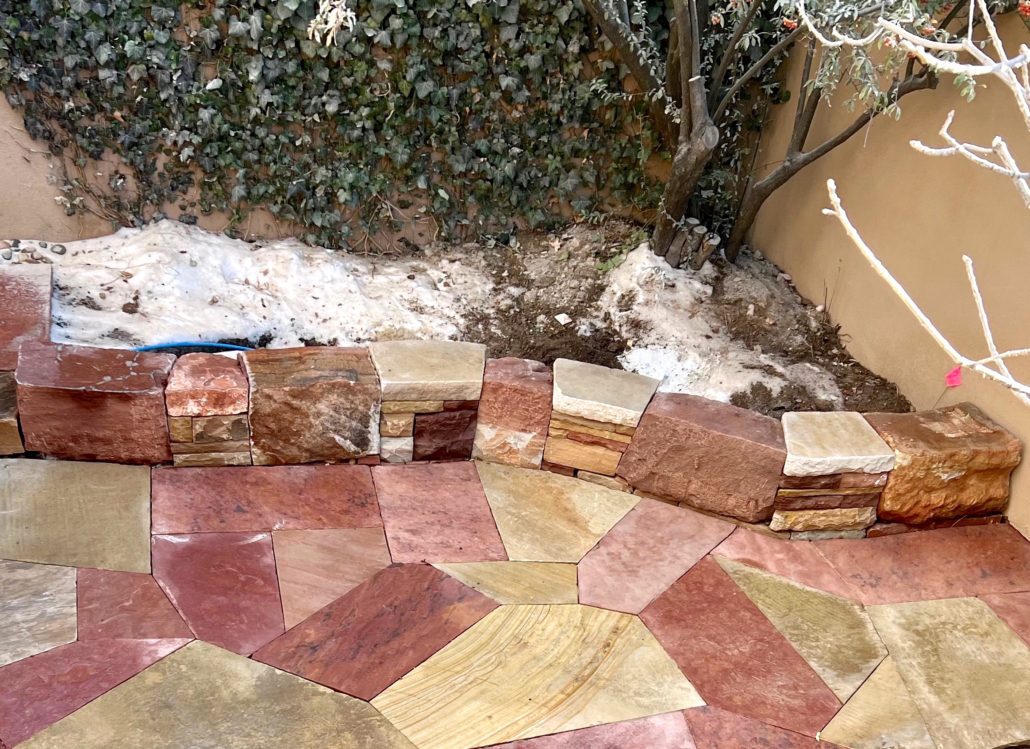
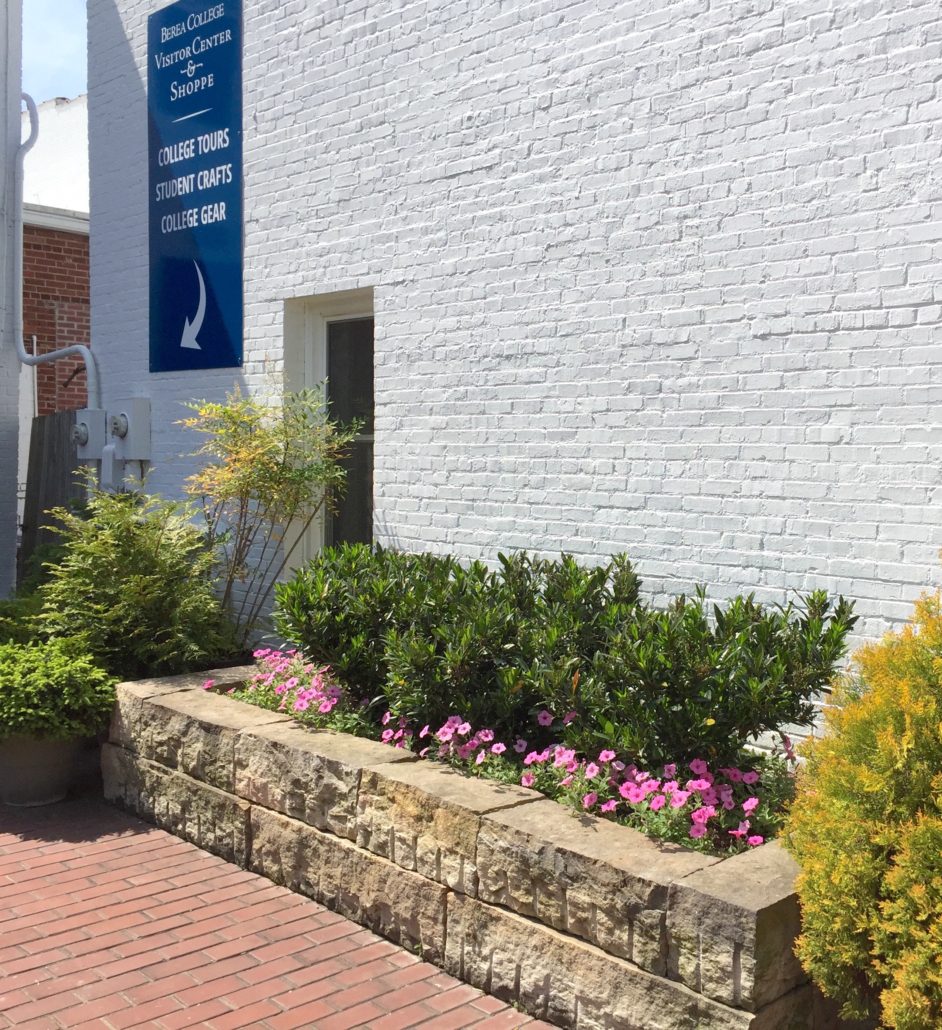
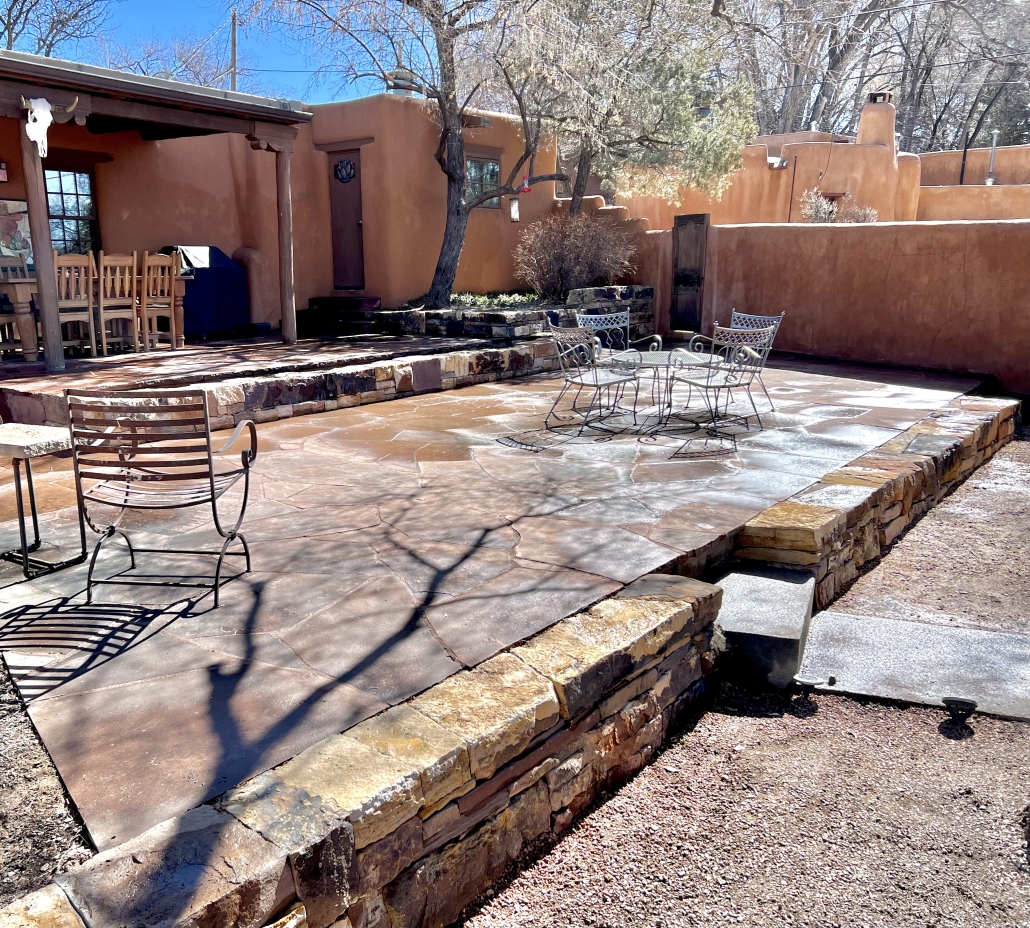
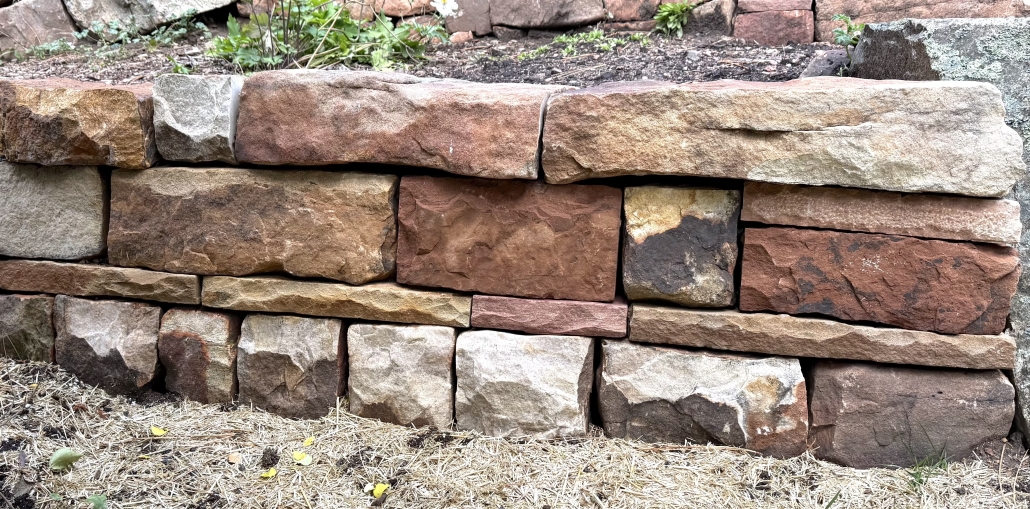
Stone sitting walls average about 18 inches in elevation off the ground, and many of them also double as stone retaining walls. Only one of the ones pictured here is freestanding, as a result of no soil behind it. In addition to space for sitting, the walls also serve as place to set a range of objects. Therefore, they can serve multiple uses simultaneously. For example, I have built many circular outdoor fireplaces that also serve as sitting walls.
Kivas as Inspiration
Some of my sitting walls are curved, however some are straight. The curved, semi-circle stone sitting walls I build certainly draw inspiration from the in-ground kivas built by Native Americans in the southwestern US. Most of the ones I build have alignment with cardinal directions. In addition, several of them have more complex markings such as solstice, equinox, and lunar standstills. The Casa Rinconada kiva at Chaco Canyon in northwest New Mexico has above all been a particular inspiration to me for several decades. During my first visit to it in 2012, I learned about its complex astronomical alignments. After that, I built an outdoor fire ring/sitting wall with similar alignments.
Structural Integrity of Sitting Walls
Most importantly, single slabs work best as the top surface of a stone sitting wall. They last longer than smaller stones placed or mortared together as a result of gravity and friction. I set each top surface so that the stone is level left to right and front to back. Therefore, there is equal compression on the stones below. In addition, this reduces movement due to the soil’s natural expansion and contraction with weather, tremors, etc. Furthermore, the level top surface of the capstone enables easy use for people to sit on, or for placement of sculpture, potted plants, or other objects.