
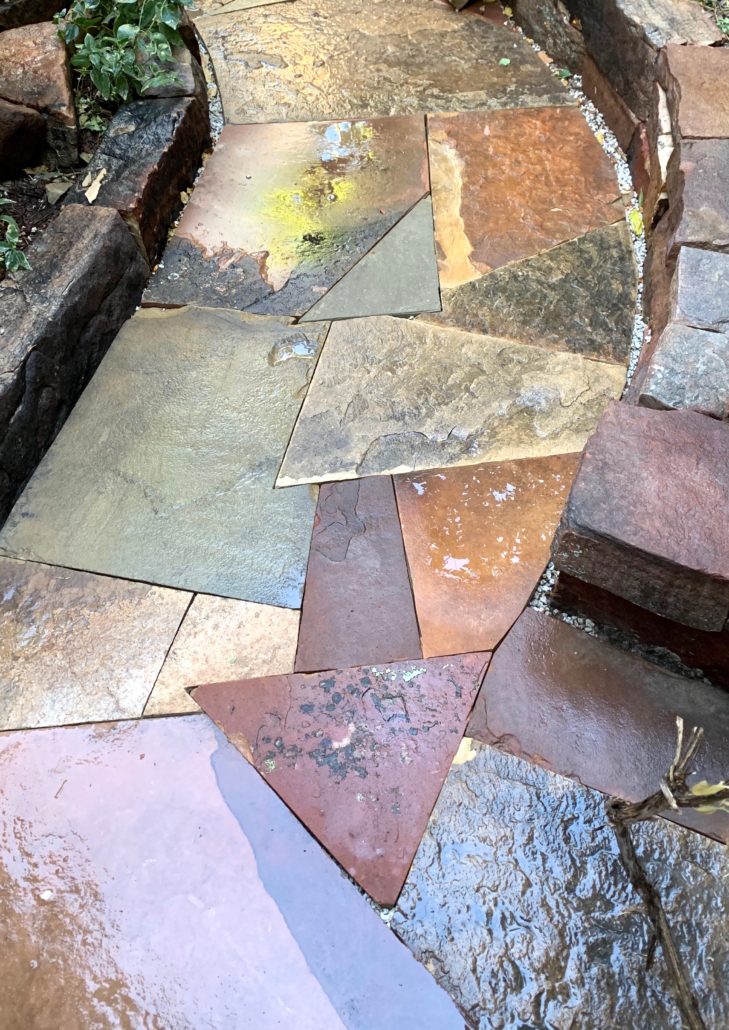
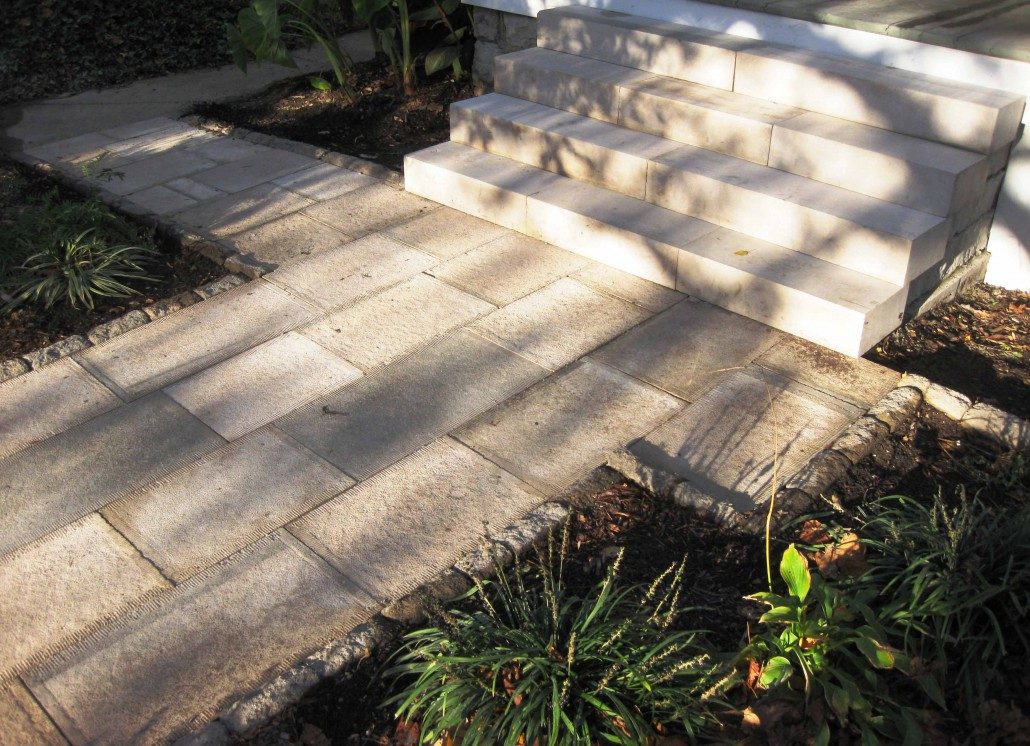
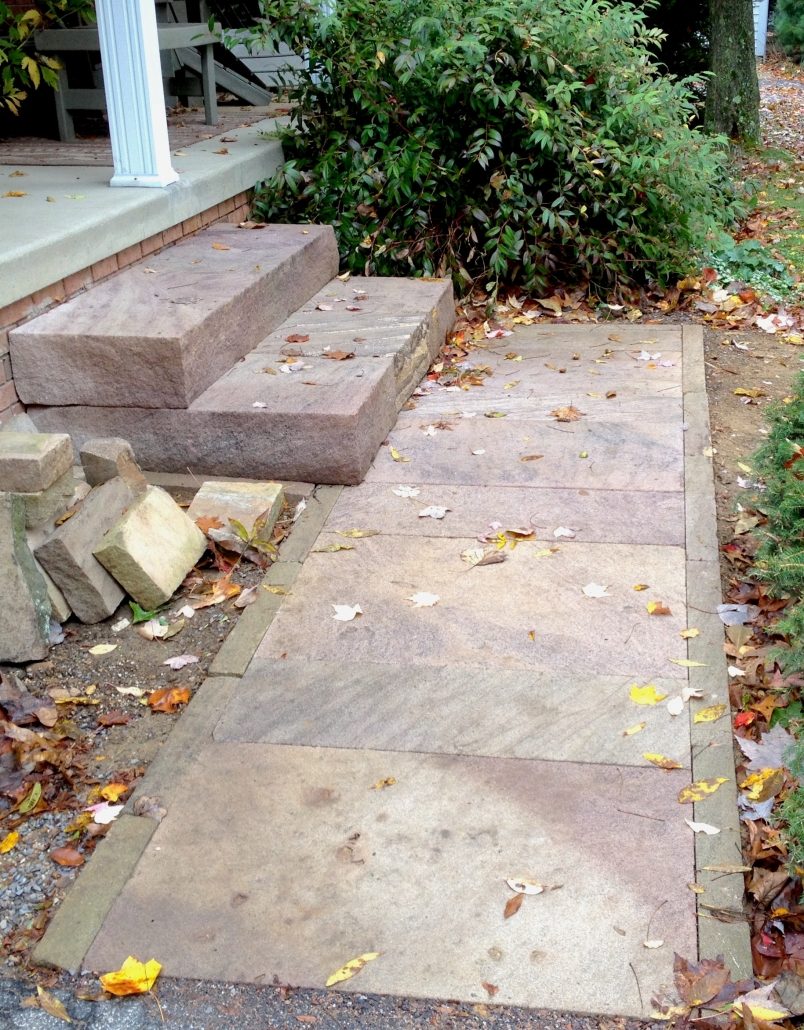
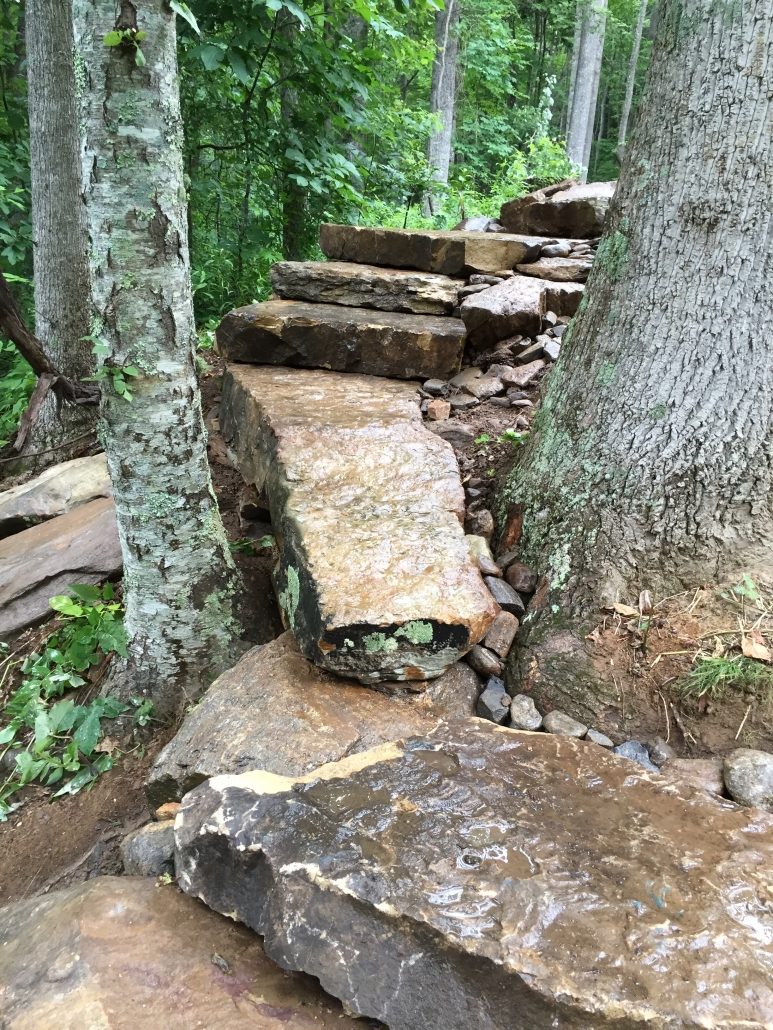
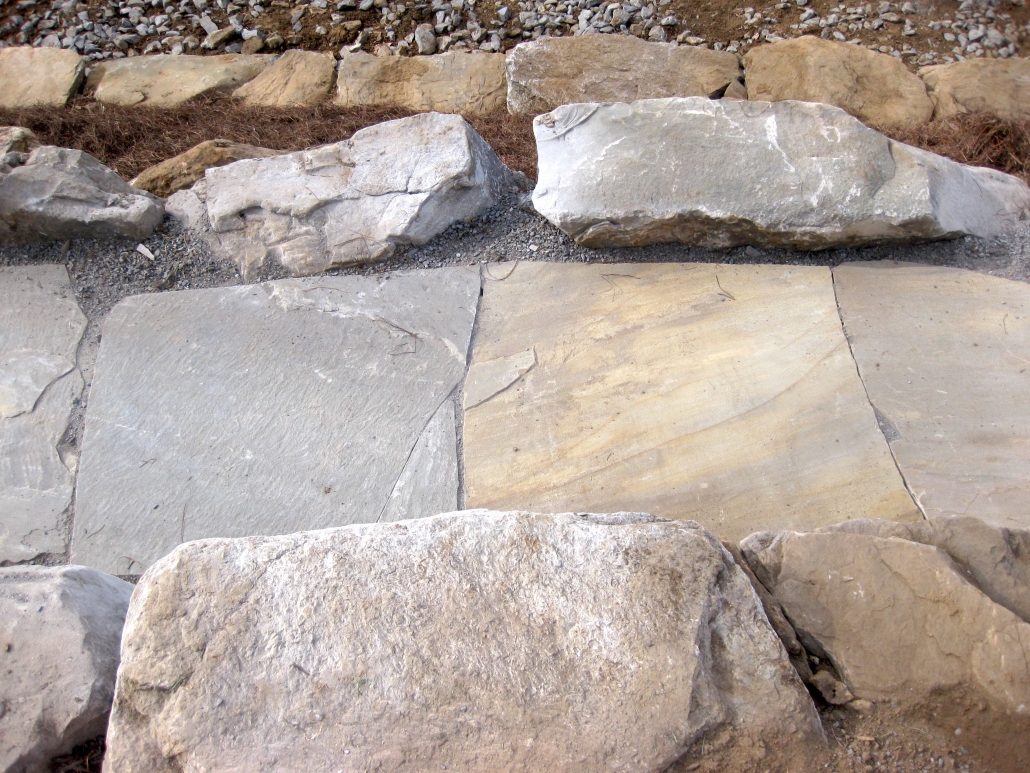
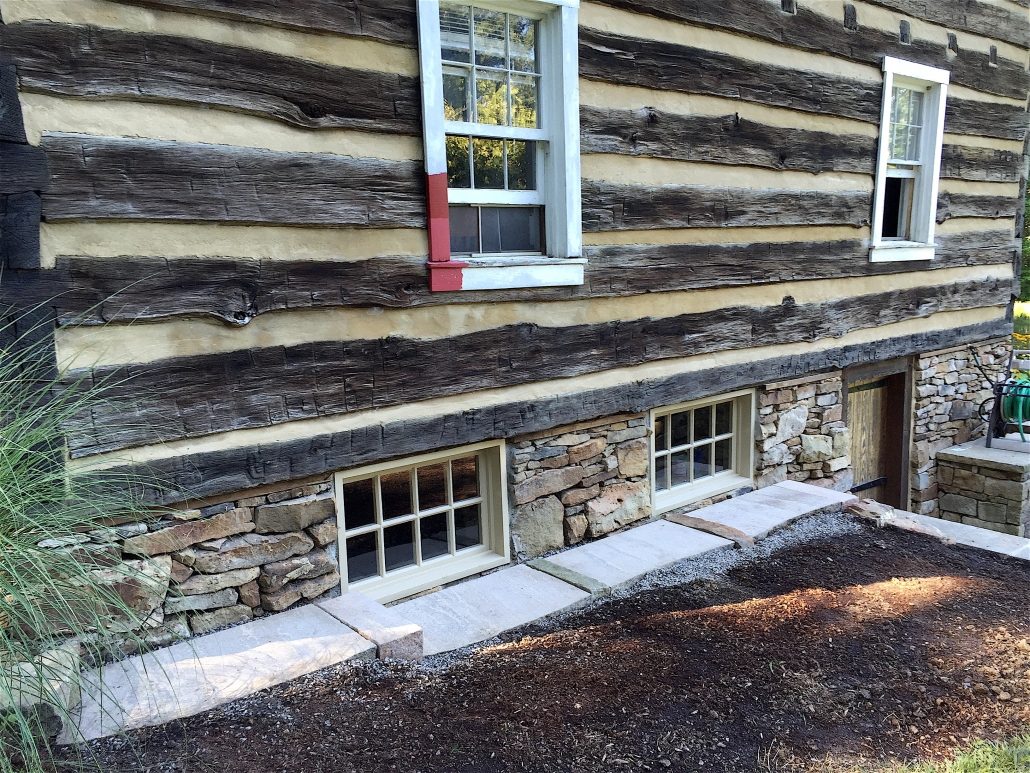
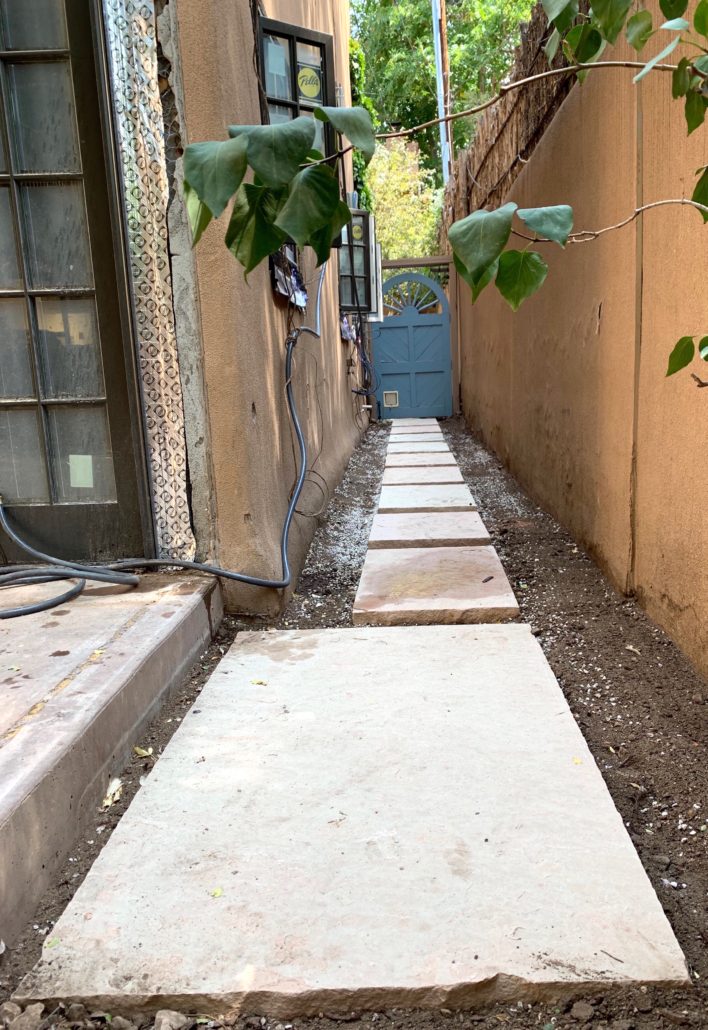
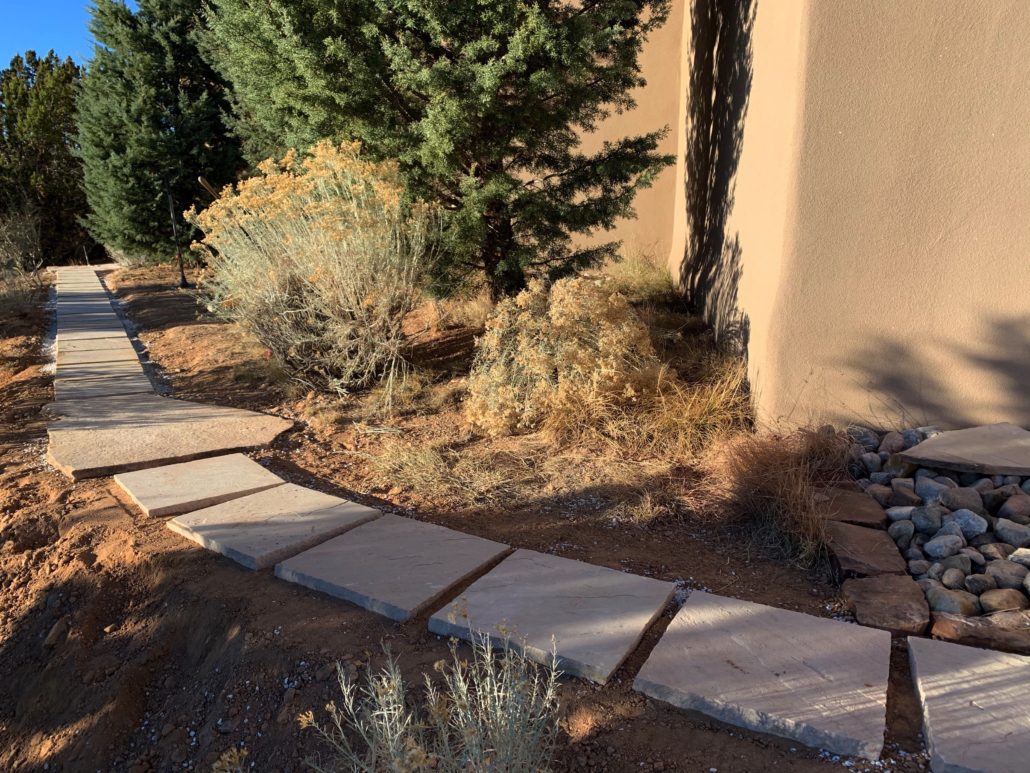
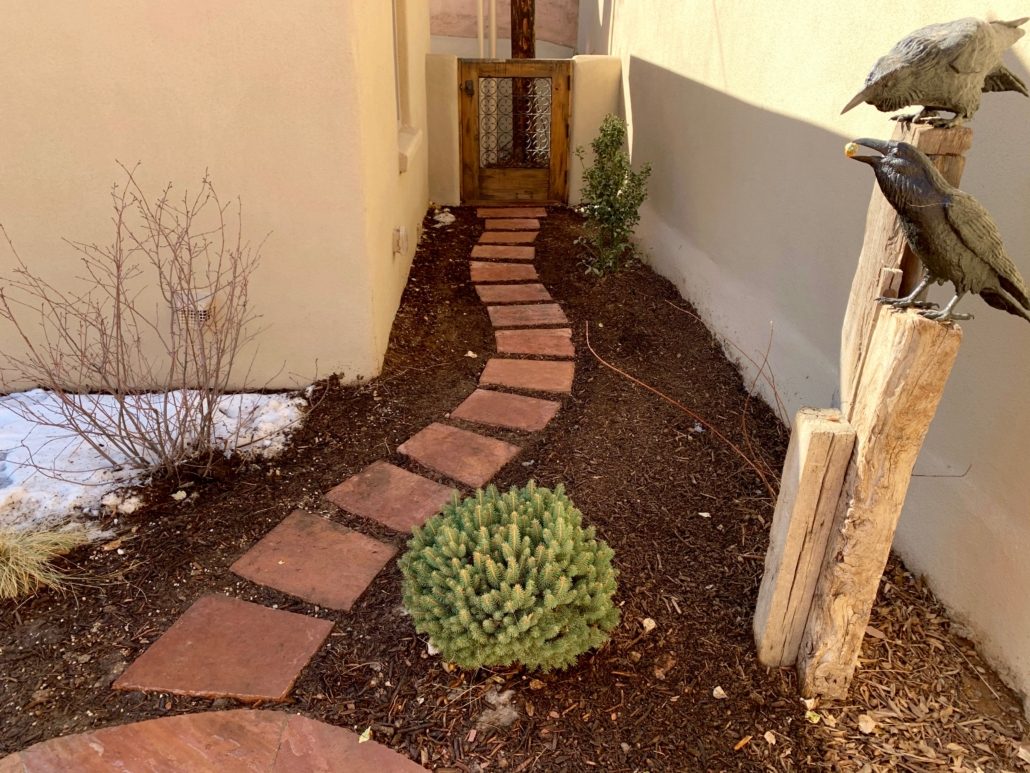
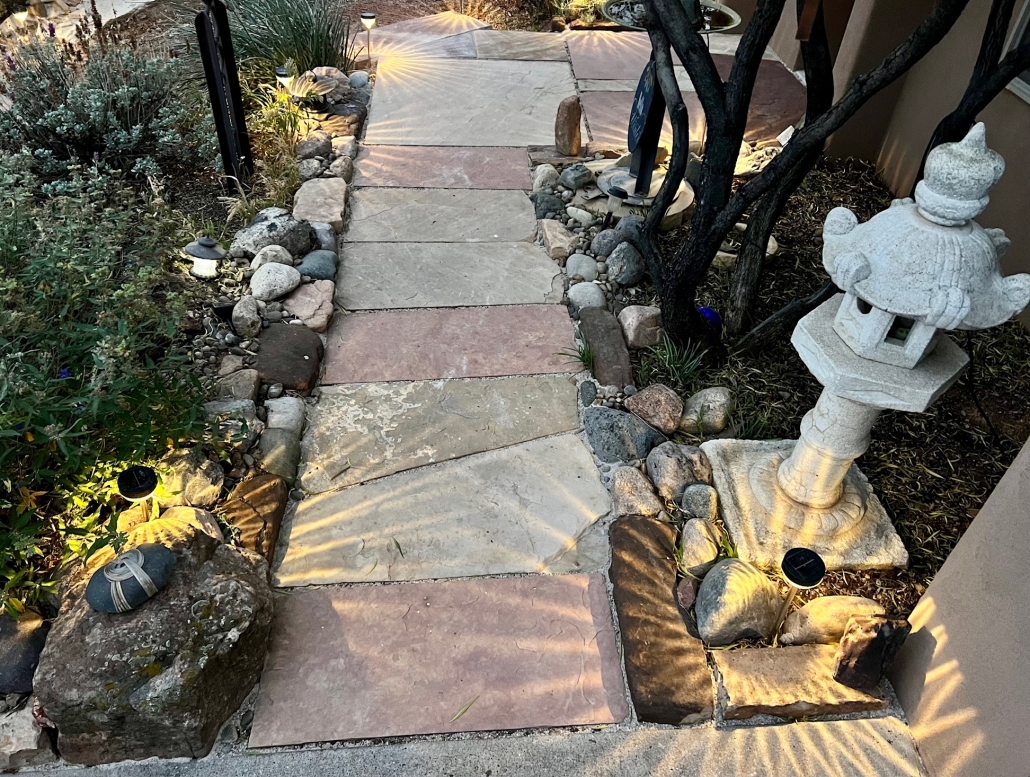
Stone walkways certainly provide a safe, attractive, and durable path in a wide range of landscape circumstances. Dry stone walkways, for example, accommodate the movement of earth, and allow rainwater to penetrate soil beneath. As a result of its durability, process of creation, and surface area, stone walkways are preferable to brick or concrete walkways. Therefore, I do not suggest using brick in walkways unless they are mortared onto a substantially deep concrete footer. Brick does not have the mass to resist the heave of soil, consequently most brick walkways do not have a level plane on top. So, brick walkways are frequently difficult for walking or wheelchair use.
Best Practices in Stone Walkways
Walkways work best when they are level in all directions, most importantly left to right. Stone walkways on a slope should incorporate steps if possible. However, if it is specifically designated for wheelchairs, walkers, or other ADA criteria, steps will not work. In those circumstances, there is a specific maximum grade of the slope.
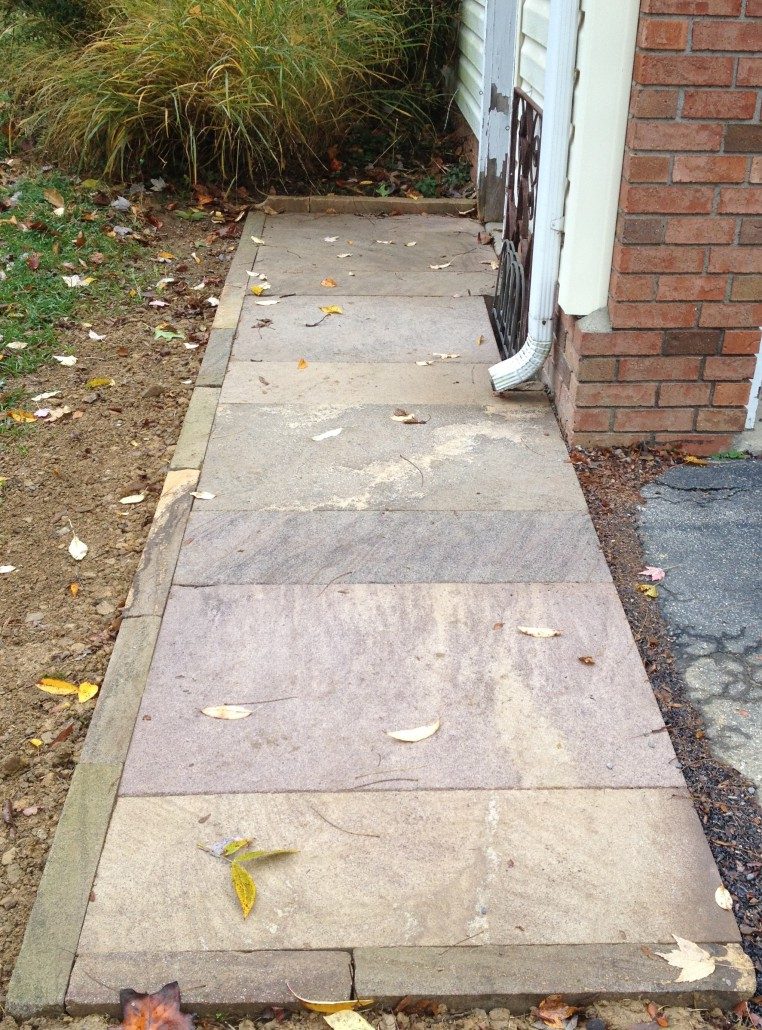
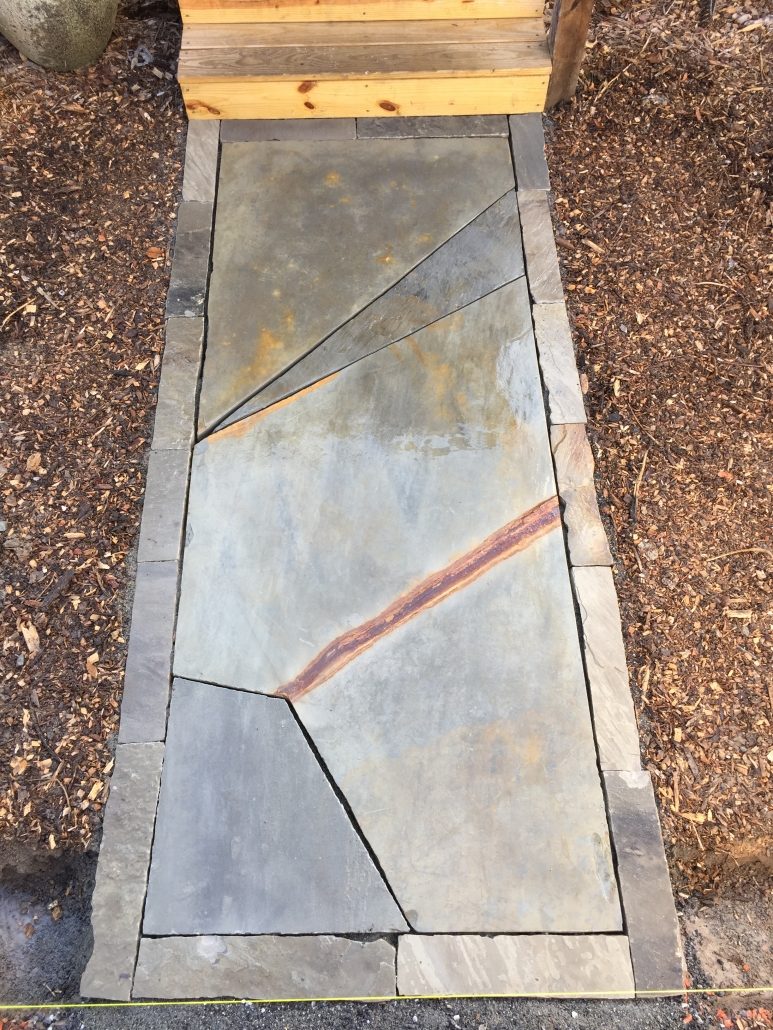
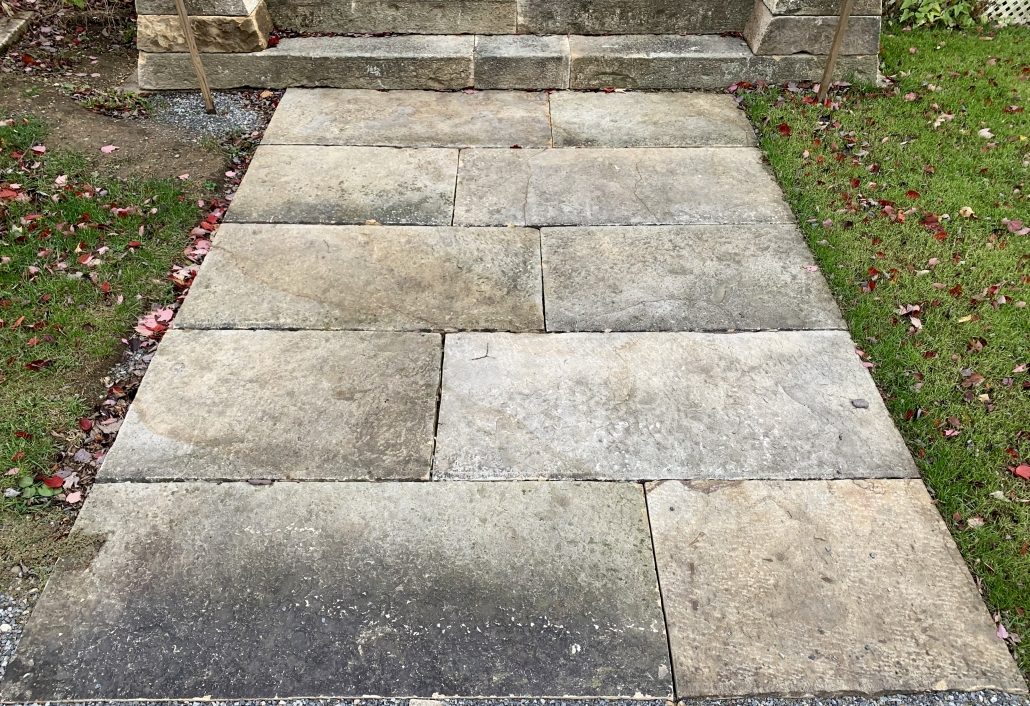
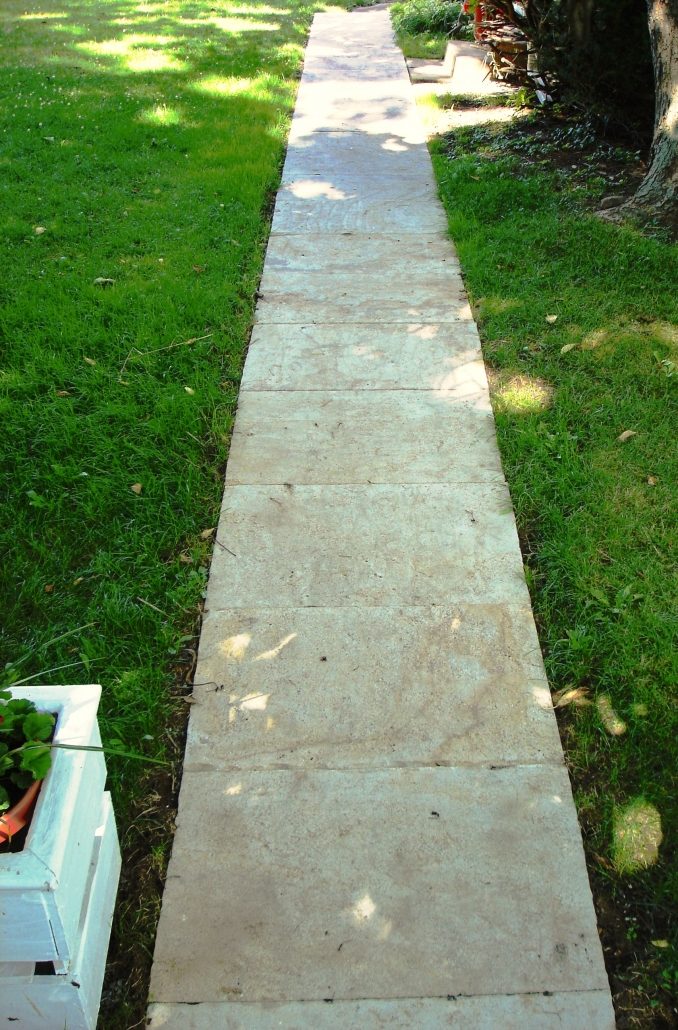
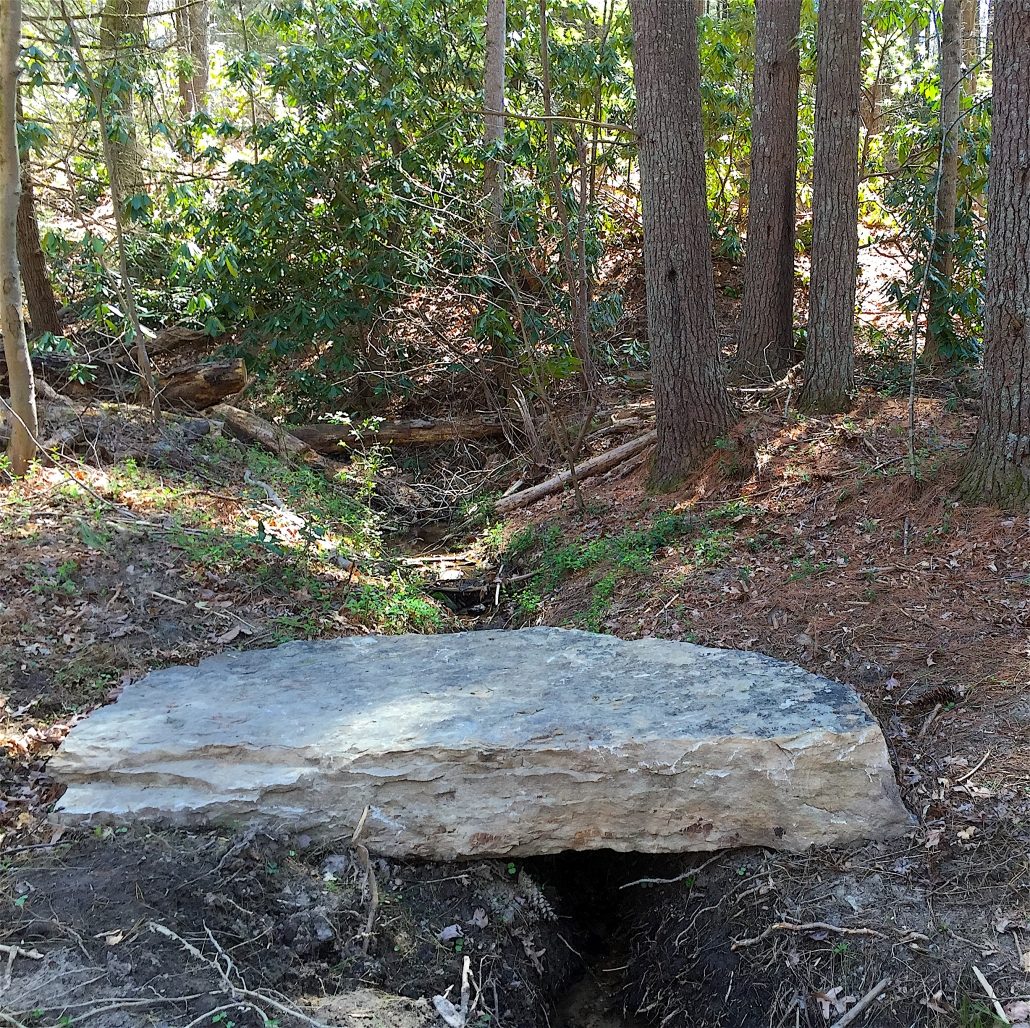
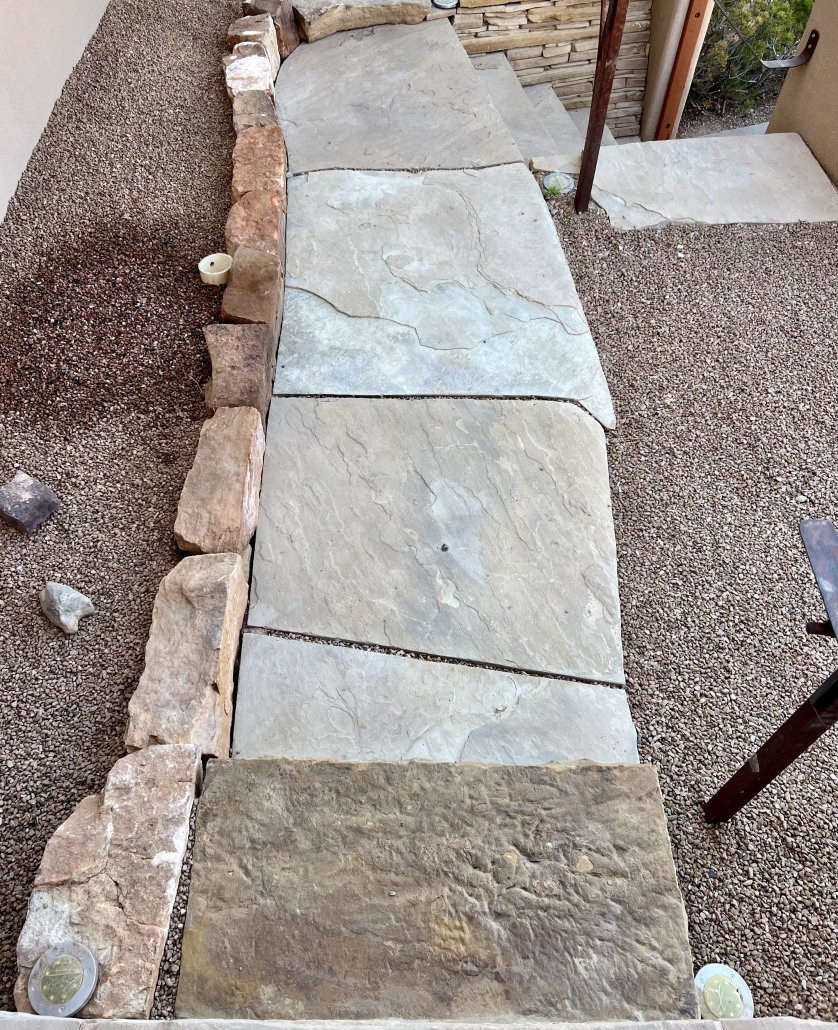
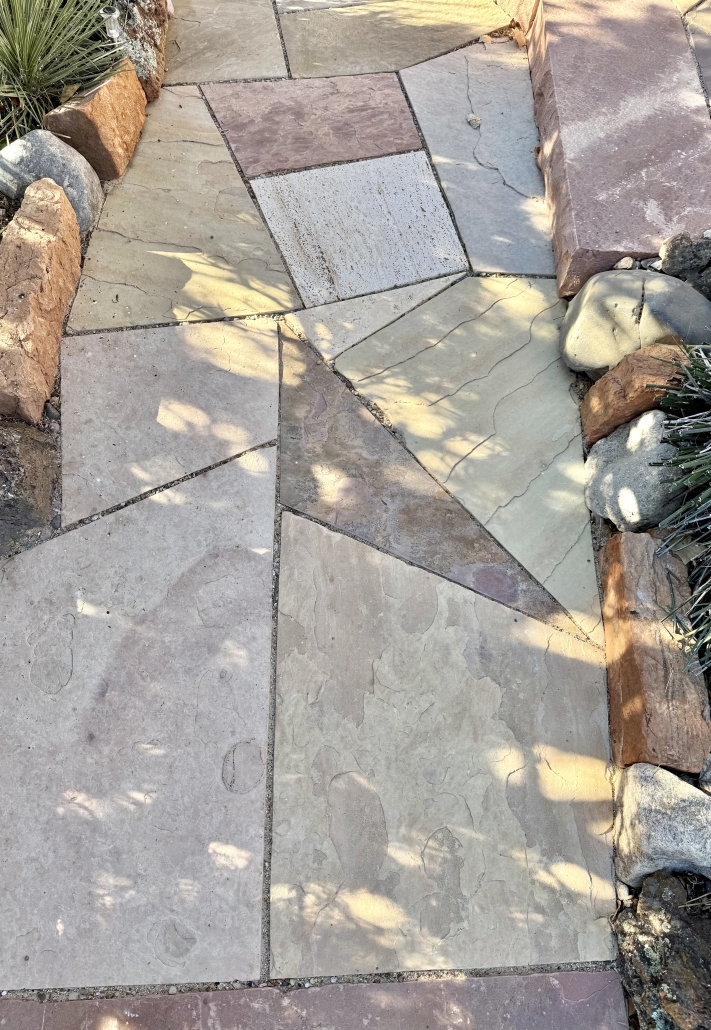
Large, single stone slabs with a minimum depth of 2 inches work well in walkways. Thinner stones, on the other hand, tend to move and/or crack. In general, a minimum width of 18″ is best for walkways. For example, this allows most people to have both feet on the same stone at the same time. I build most of my walkways at 3′ wide, which allows two people to walk adjacent if necessary during use of the walkway. I install flagstone walkways on top of a bed of compacted, crushed gravel. The gravel serves many purposes. It allows minor adjustments to that the top surface of the walkway is smooth, and in addition it also allows rainwater to permeate the soil.
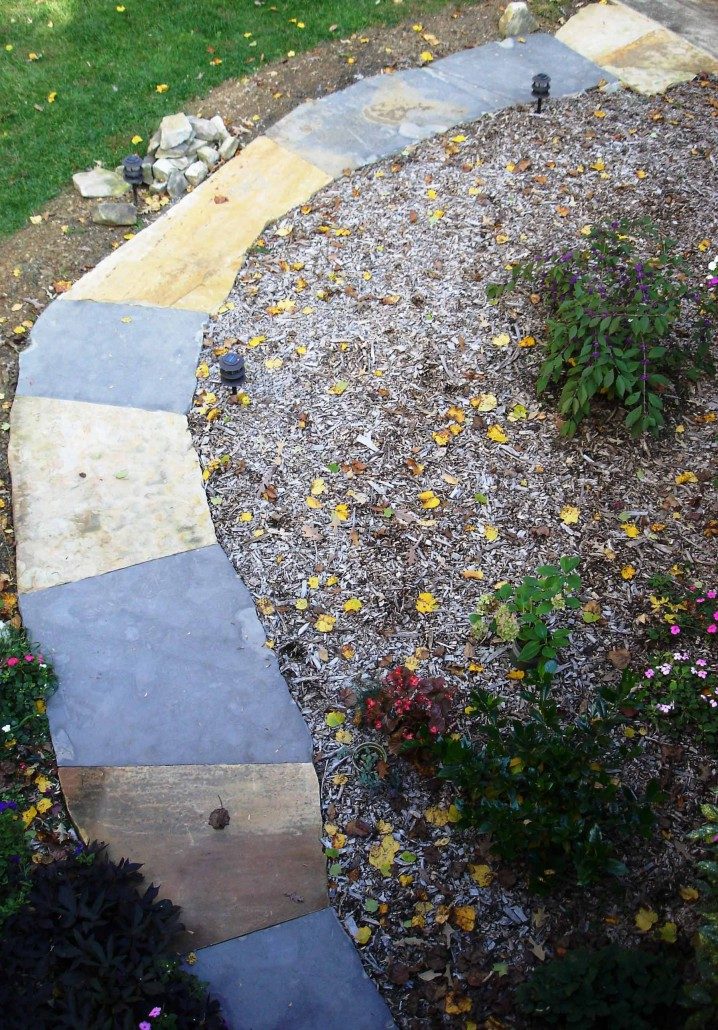
In addition, stone edging is needed to contain the gravel beneath the sides of the flagstone of the walkway. Likewise, edging helps keep soil or grass from spilling over onto the walkway from its borders.
World Heritage Site Stone Walkway:
The oldest stone walkway in South America is the Incan Qhapaq Ñan, a World Heritage Site. It was constructed during several centuries, and was thousands of miles long. Many parts of it are 3′ wide, so those sections are about an average modern stone walkway width. Wheels were not used on it, as a result of it being constructed for people and llamas.