
How to Move Heavy Stones
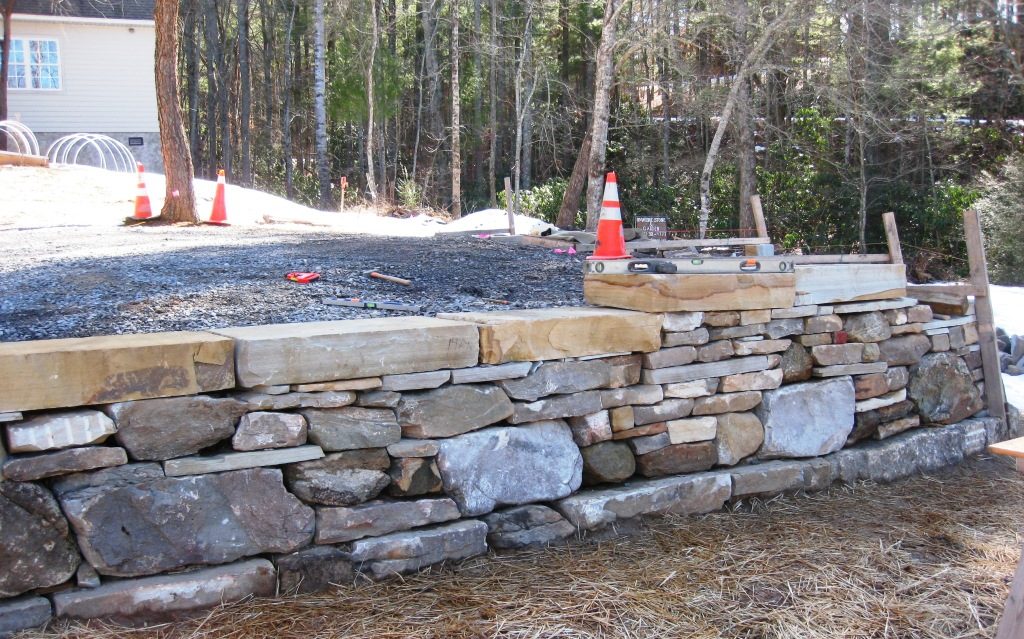
The dry stonemasonry project explained in this blog involves moving 350 pound stones with simple hand tools. If you would like to learn how to safely move heavy stones without mechanized equipment, then read on. In the photos, I’m building a curved drystone retaining wall near the continental divide in southern Appalachian mountains. The wall is 3’ height average, and I am setting the capstones on top of the wall. I purchased 4 sandstone capstones, each of which was quarried and then run through a mechanized splitter to give it specific dimensions. The capstones are 3’ wide, 6” height, and 18” front to back. However, since the horizontal bed of the sandstone is natural surface, it does fluctuate in thickness and in plane. To the best of my knowledge, the sandstone capstones pictured are from central Tennessee.
I rolled them out of my truck bed onto gravel just above where they are destined to rest permanently. Therefore, I didn’t need power equipment on site to move and set them. With the right tools and an awareness of methodology and safety, I easily set the stones in place myself. Here is how I did it:
Tools:
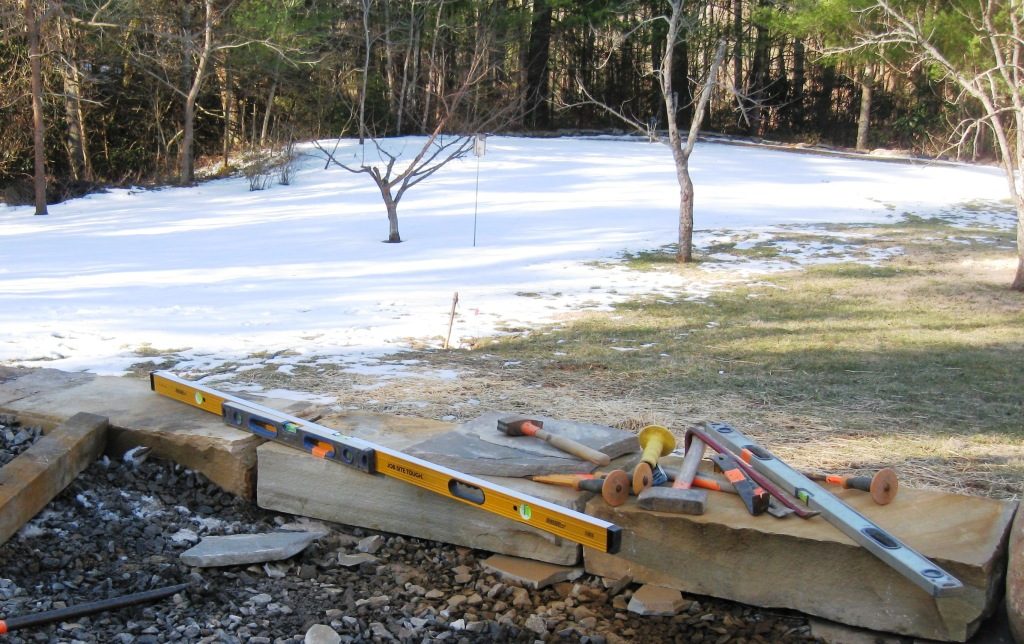
1) The tools needed to move these capstone include: Two 6’ long digging irons; several pieces of 4” x 4” lumber, 2′ -4′ wide; three 2” diameter steel rollers; two bubble levels (4′ length and 2′); a thick pencil; a tape measure; a stone hammer; and a stone chisel. However, smaller sized prybars, such as 2′ – 4′ lengths, are sometimes helpful.
Measurements:
2) I measured the 4 corners of each stone and marked their height on the stone with a pencil. After that, I set similar height stones next to one another.
How to Move Heavy Stones:
3) pried up the capstone with two digging irons which rested on a 4” x 4” piece of lumber next to the capstone
4) slid two steel rollers under the capstone
5) moved the digging irons in a way like rowing a boat, tips under the bottom of the capstone, to slide the capstone over the rollers
6) however, I had to remove a capstone that was in the way onto another metal roller
7) moved the capstone towards its resting place by rowing it with the digging irons and fulcrums, meanwhile pushing it along the top of the rollers
8) rowed it into place, for example like a boat
How to Set Heavy Stones:
9) firstly, used bubble levels on top of the stone to make sure that it was level left to right and likewise front to back
10) pinned beneath the capstone with smaller stones to stabilize it and make it the most level possible
11) Finally, used a hammer and chisel to remove stone beneath the capstones so as to make them level
12) moved and set the second cap next to the first using similar methods, then after that the 3rd and 4th caps also
The finished set of capstones on the wall are each level front to back, similarly evel left to right, and at the same height next to one another. Subsequently, as the wall rises in elevation, the capstones will step up.
Reasons for Heavy Stones On Top of a Retaining Wall:
The weight and dimensions of these capstones are ideal to have on top of the finished wall for several reasons. Therefore, I suggest this size capstone and bigger when possible. The traits of this size includes: 1) they provide pressure on the stones beneath to reduce movement 2) they tie together the stones beneath them with friction 3) they won’t move easily 4) they provide a flat surface for sitting, walking, or setting items 5) they look nice, for example with interesting grain patterns and colors 6) above all, they are the border of a car parking area, and will allow contact with tires to alert wayward drivers without scraping the metal of a car body
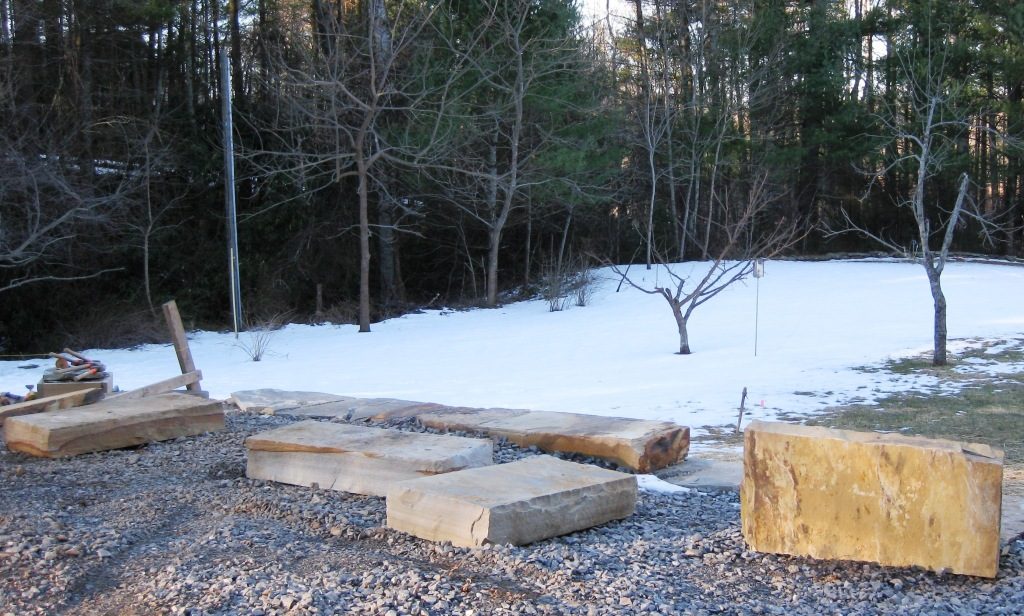
Capstones dumped out of truck bed firstly
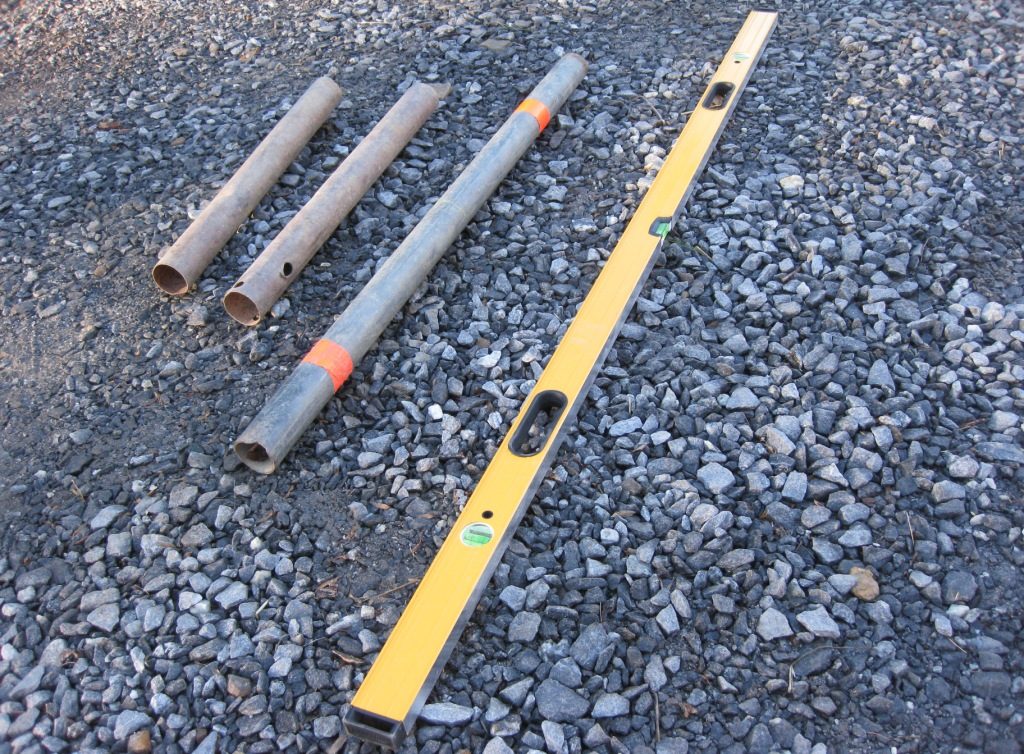
Metal rollers and a 6′ level
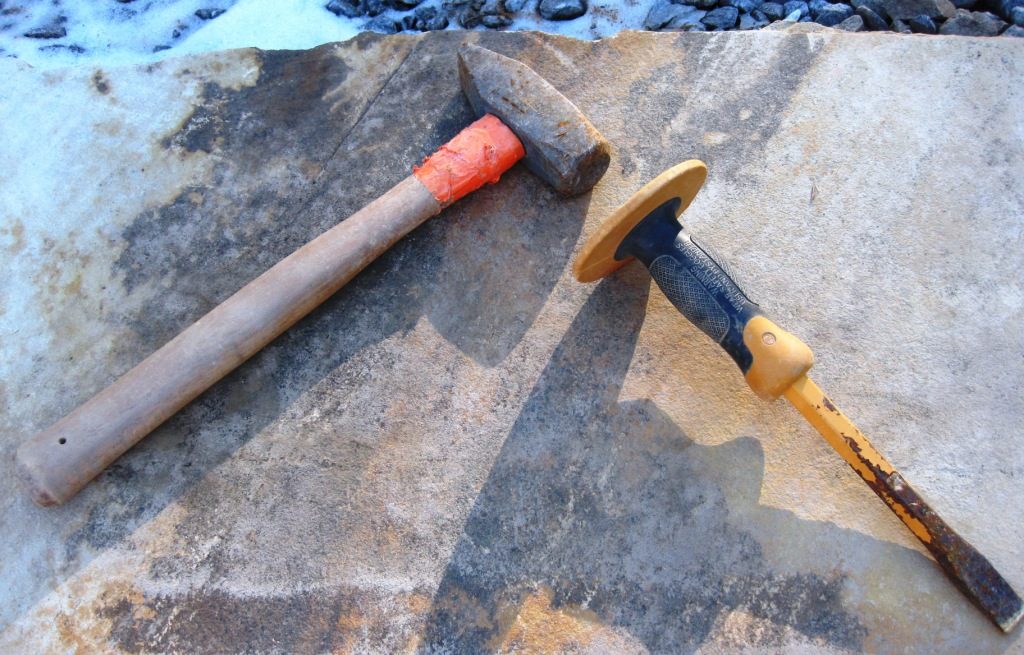
Hammer & chisel
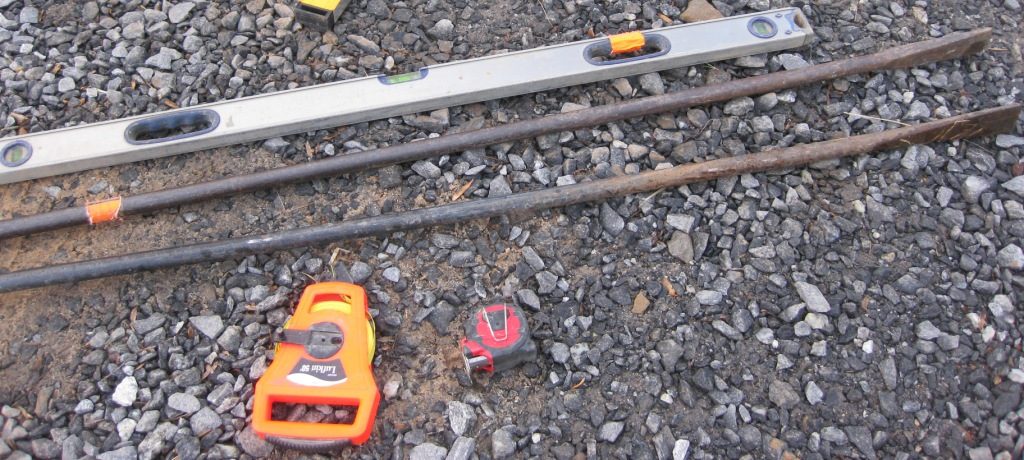
Digging irons, level, and tape measures
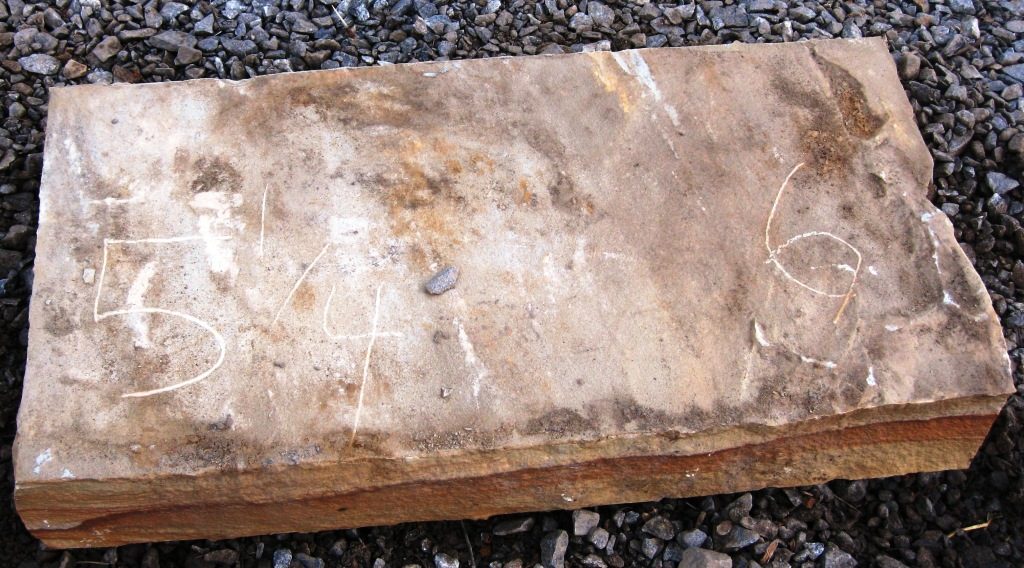
Height of stone drawn on each corner
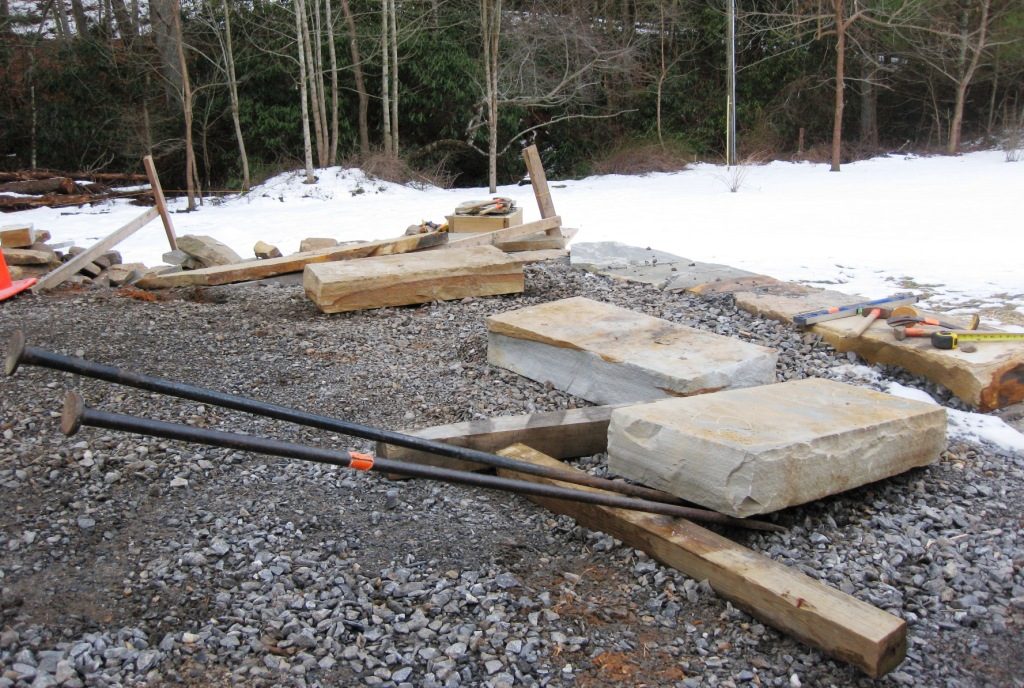
Pry up capstones with two digging irons resting on 4″ x 4″
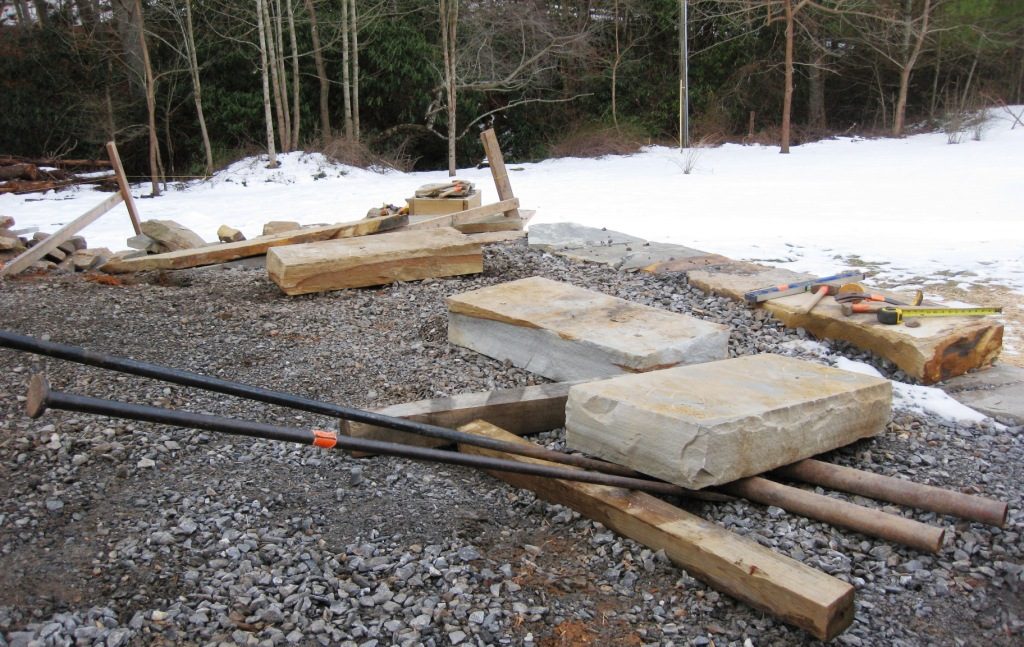
Slide metal rollers under capstone
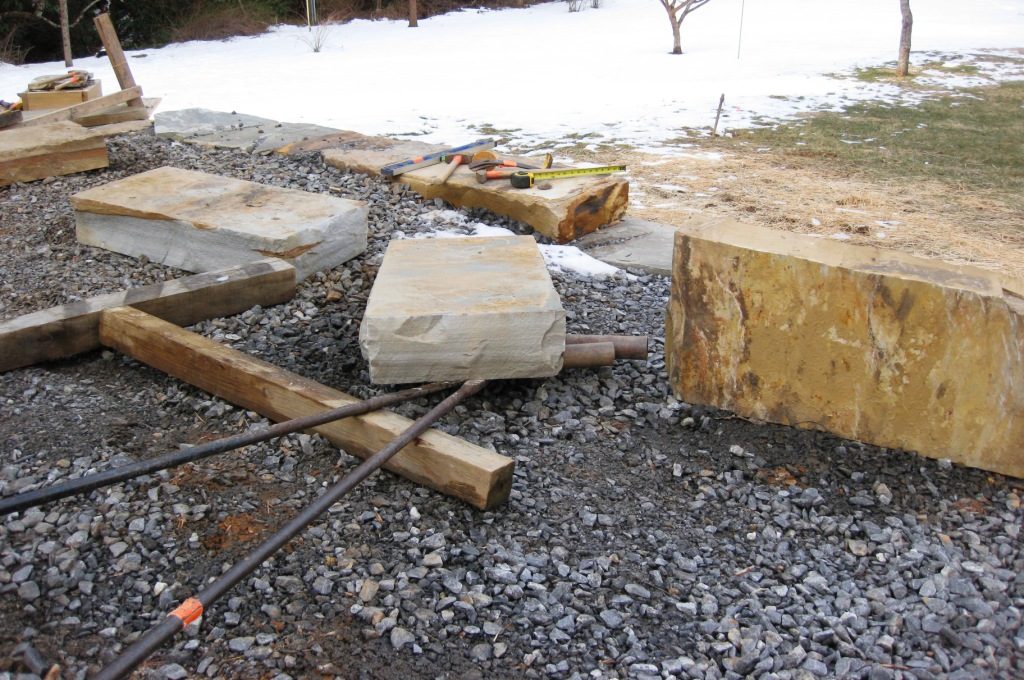
Row the capstone over surface of metal rollers
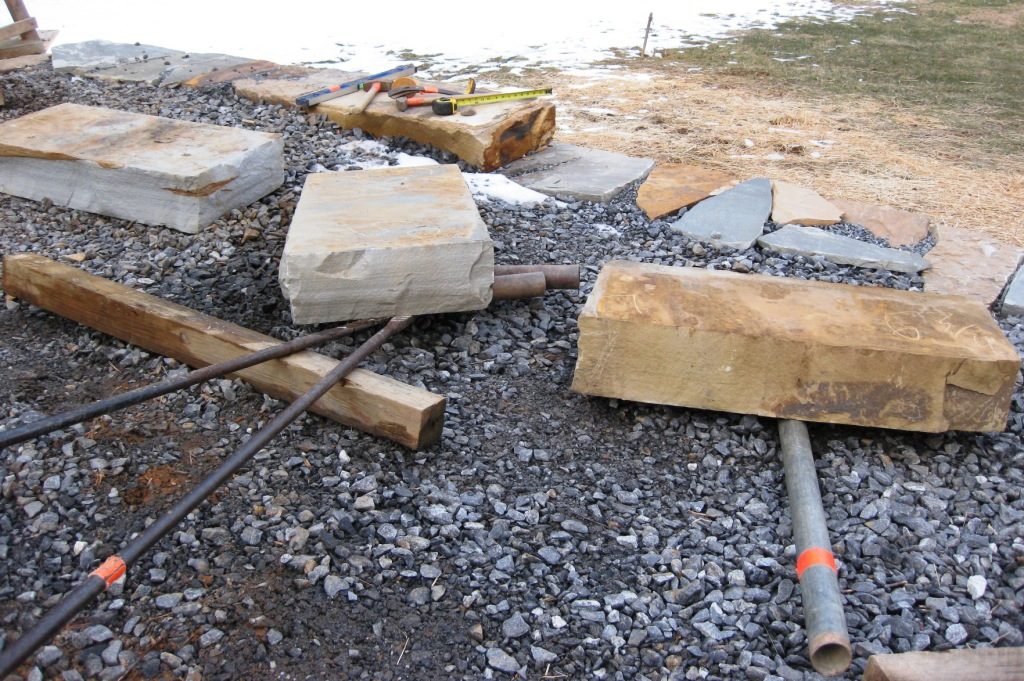
Drop capstone in way onto another metal roller
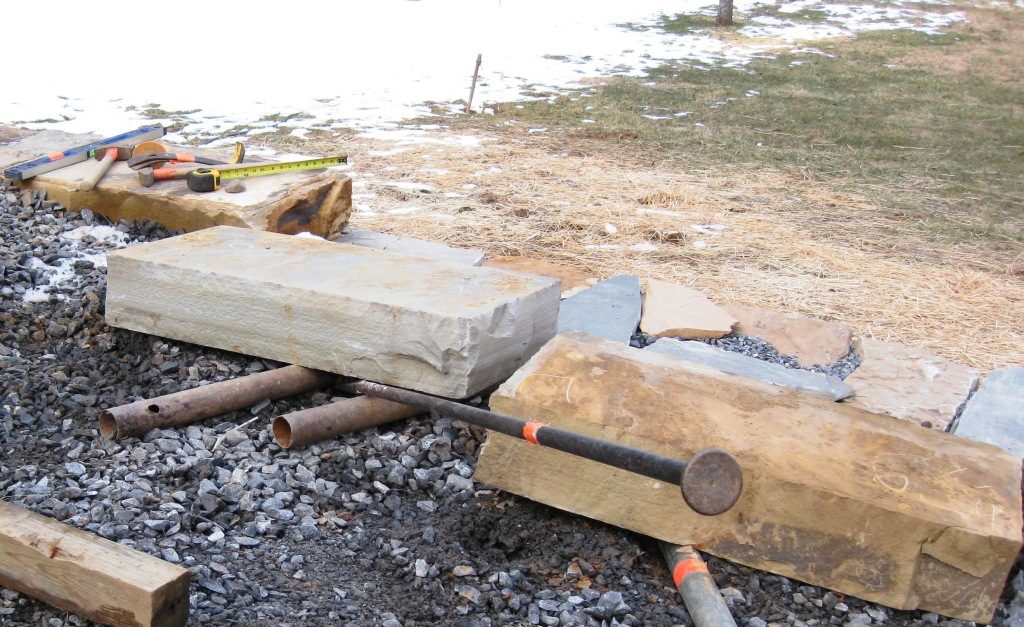
Continue rowing and sliding capstone over metal rollers
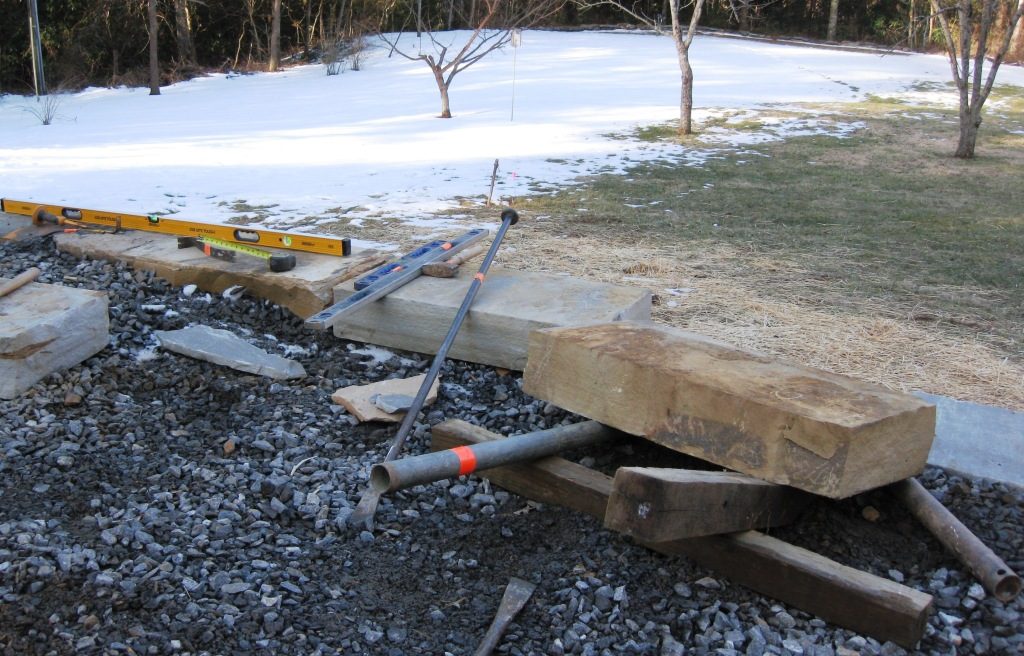
Check capstone with levels both left-to-right and front-to-back
Check plane across top of all 3 capstones with long level during the pinning process
Finally, capstones set in place on top of drystone retaining wall! This concludes how to safely move heavy stones without equipment.
Here is a photo of the completed capstones.
