
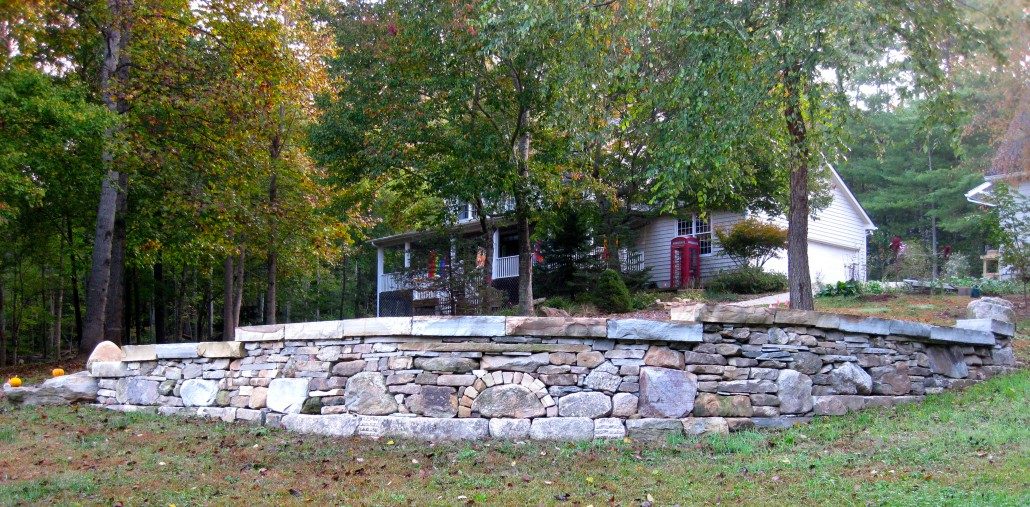
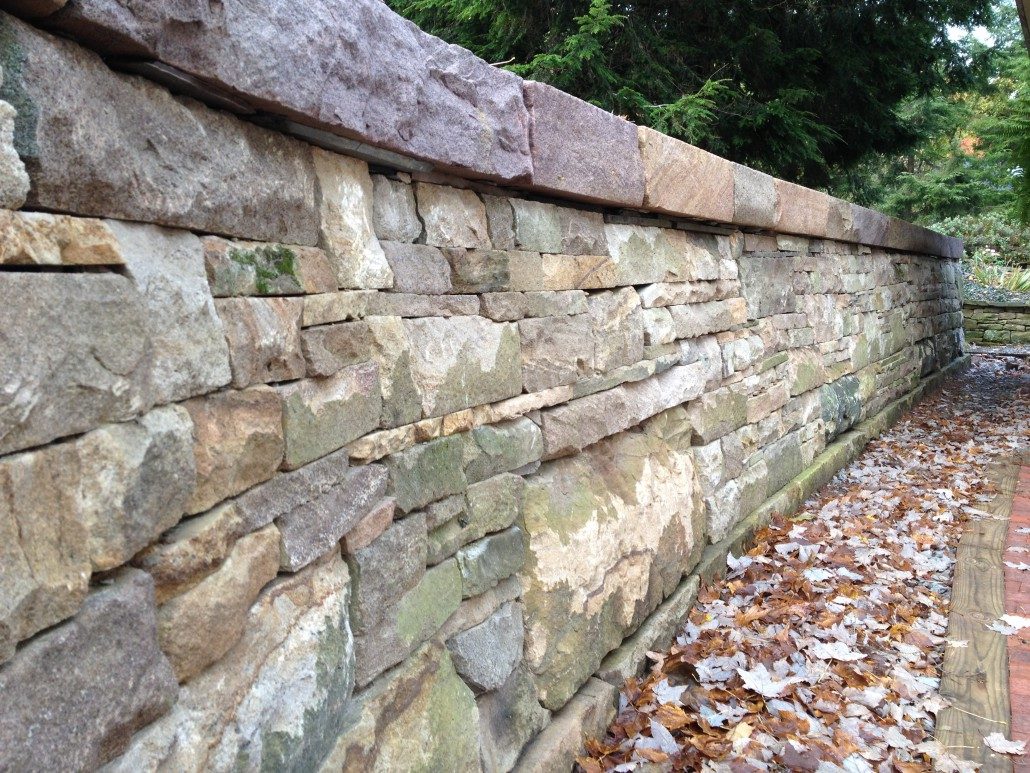
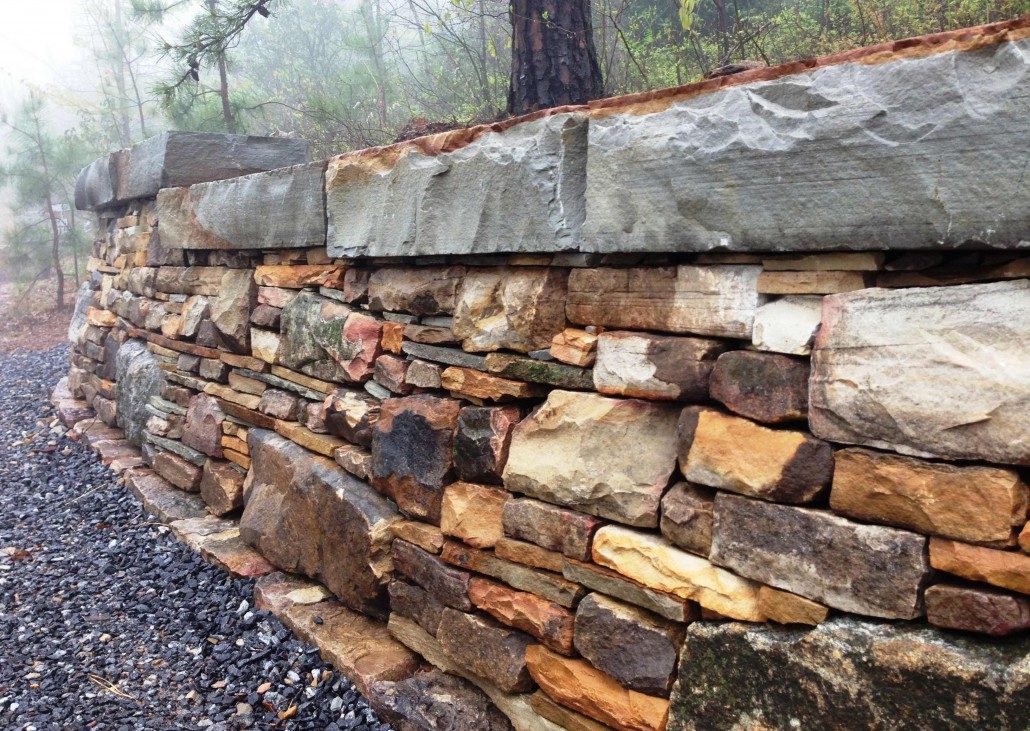
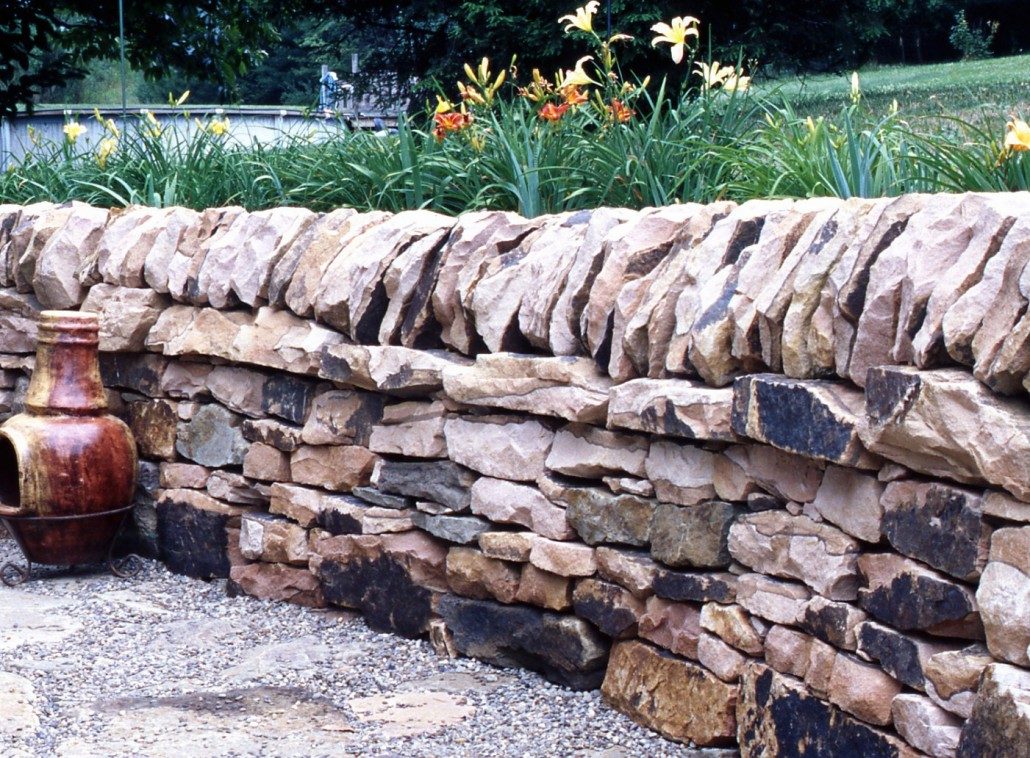
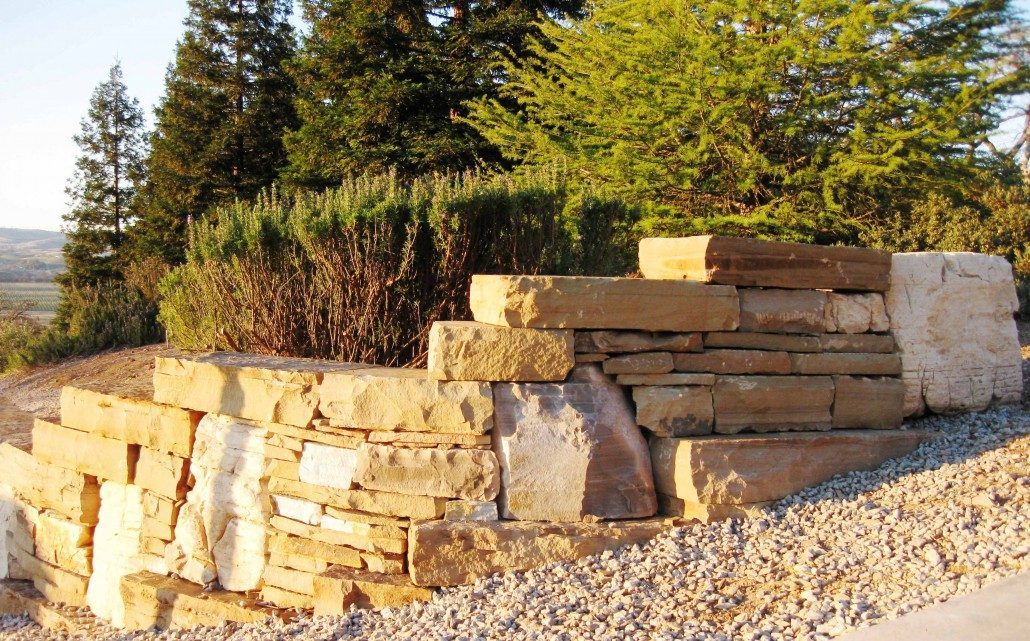
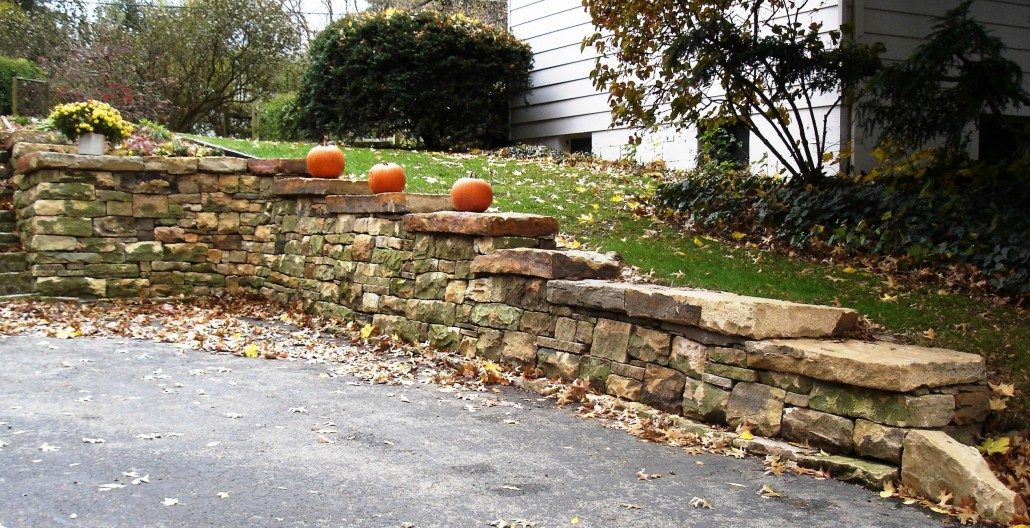
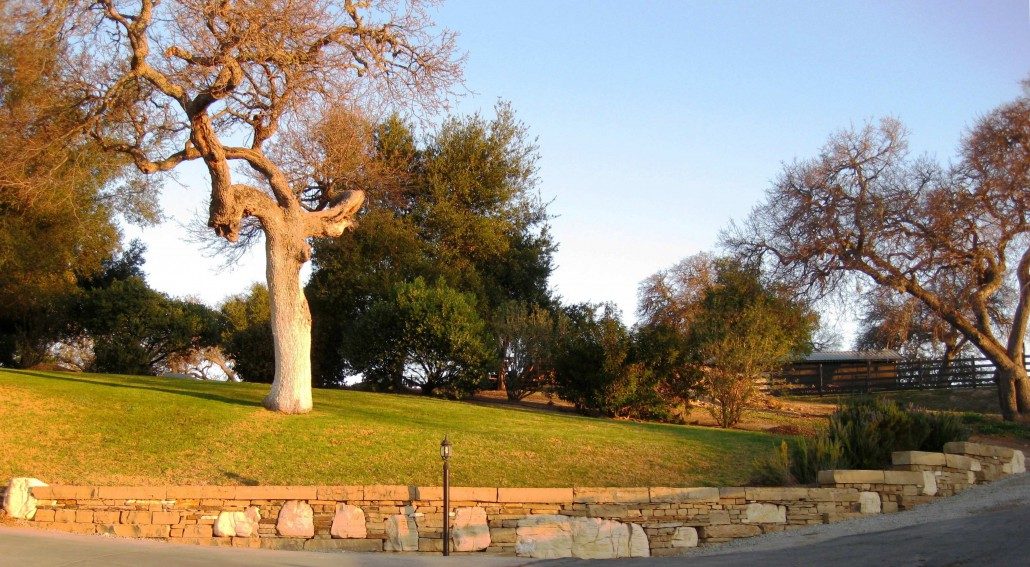
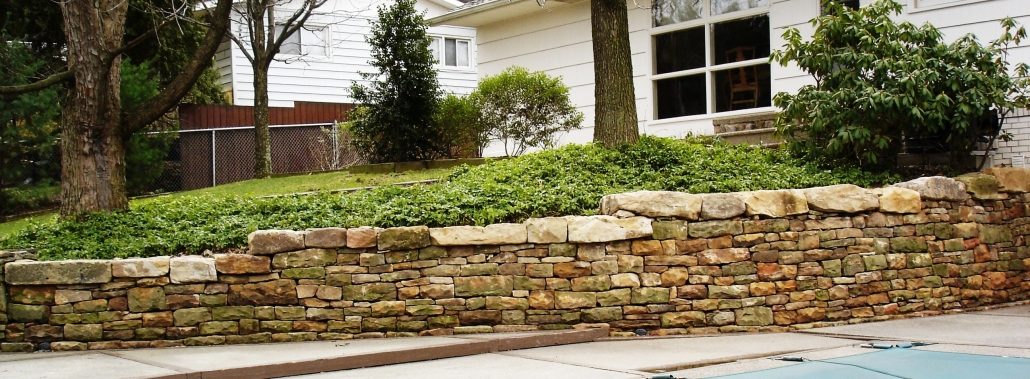
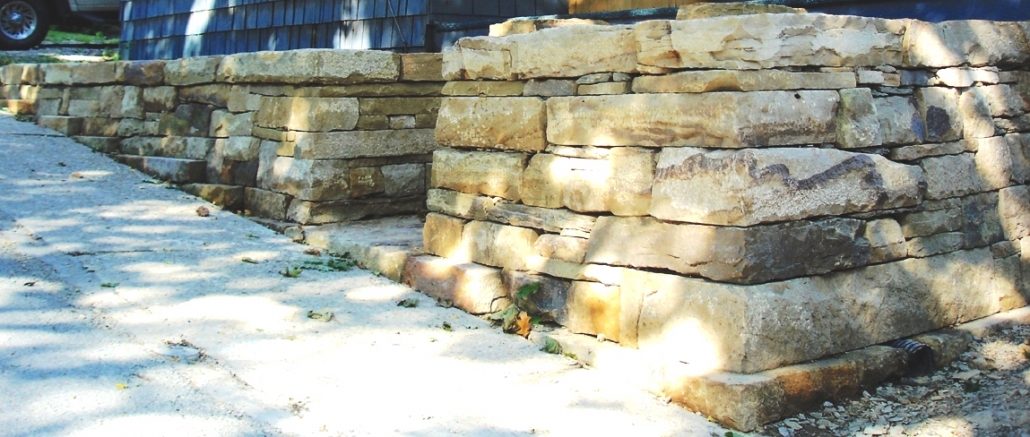
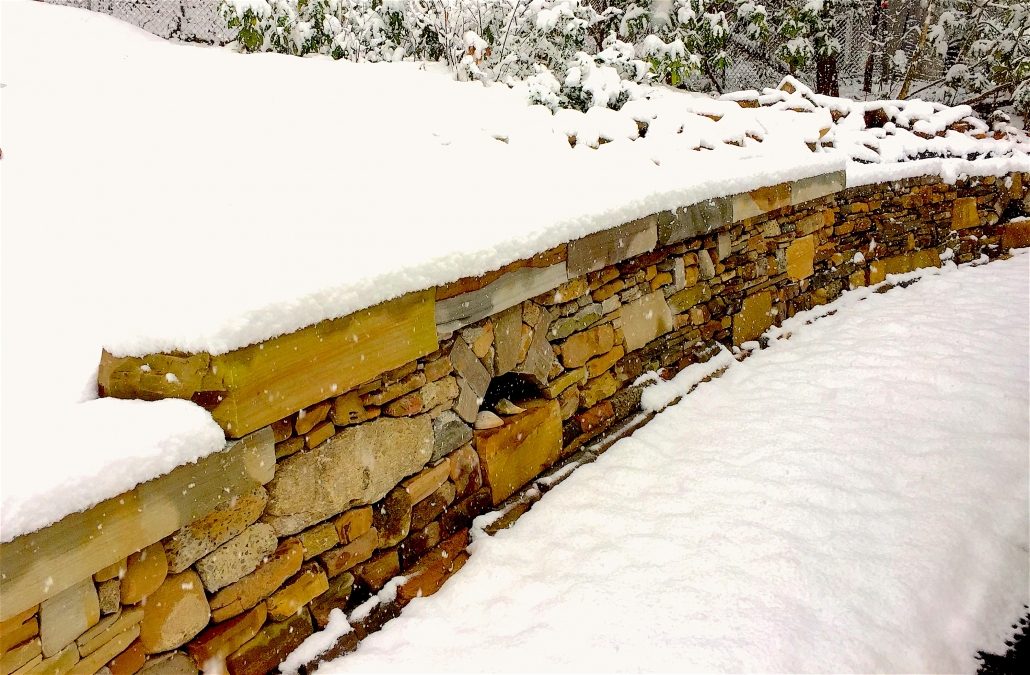
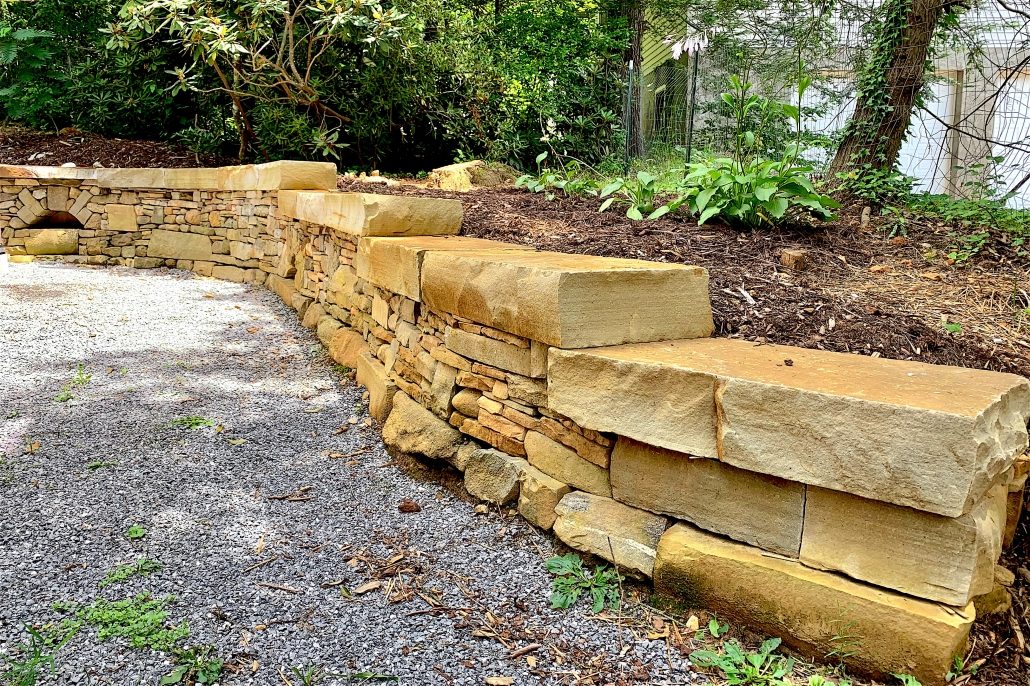
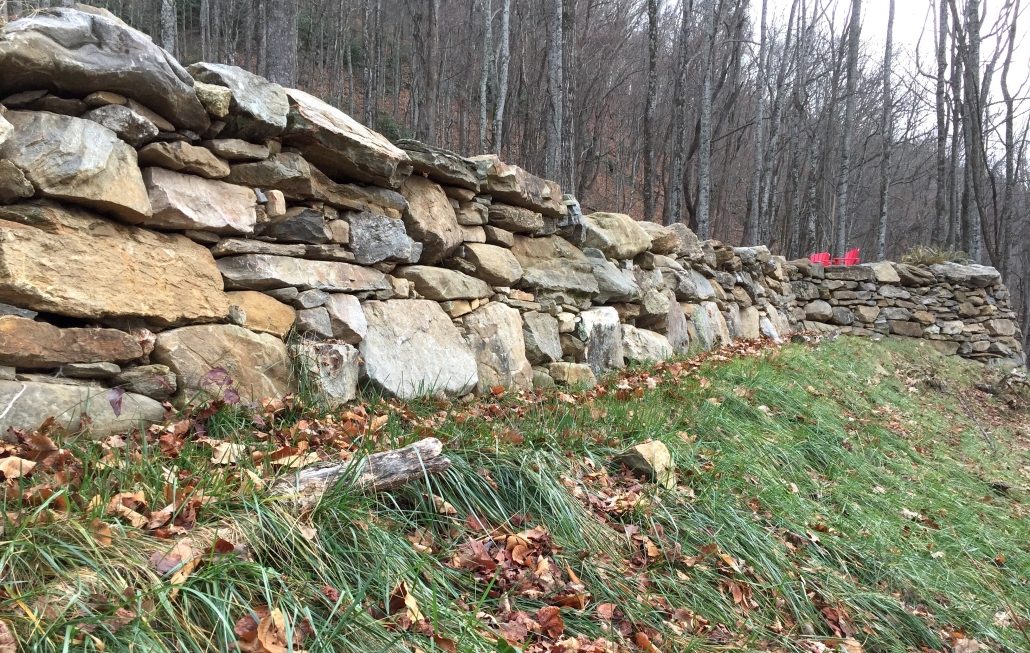
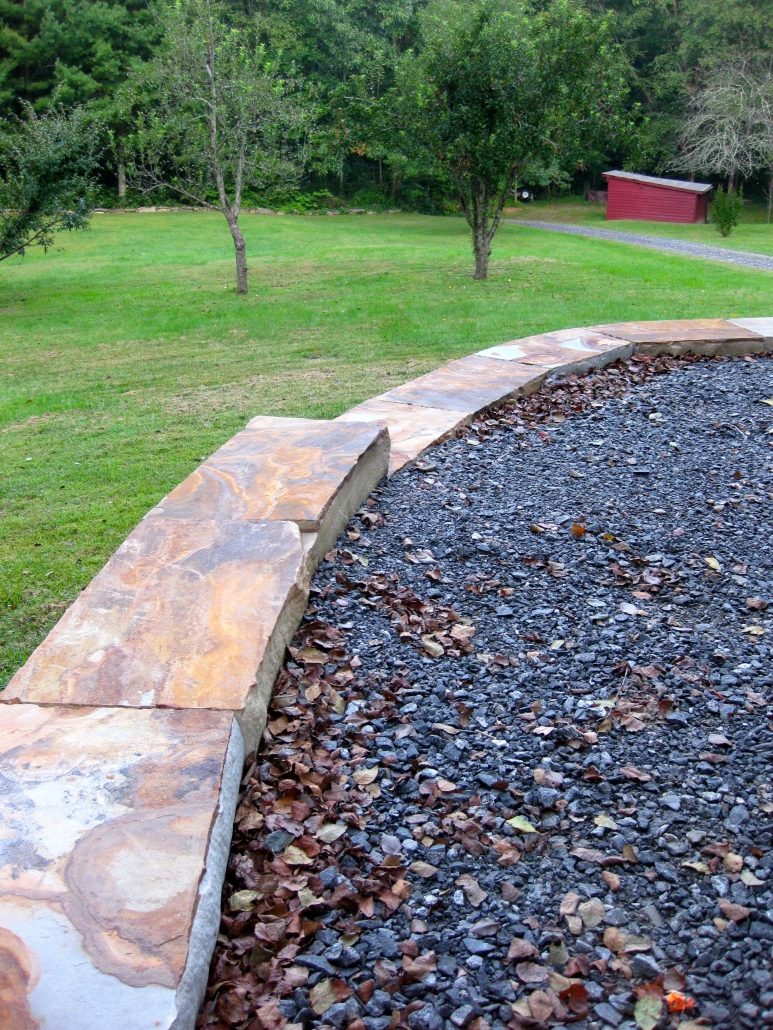
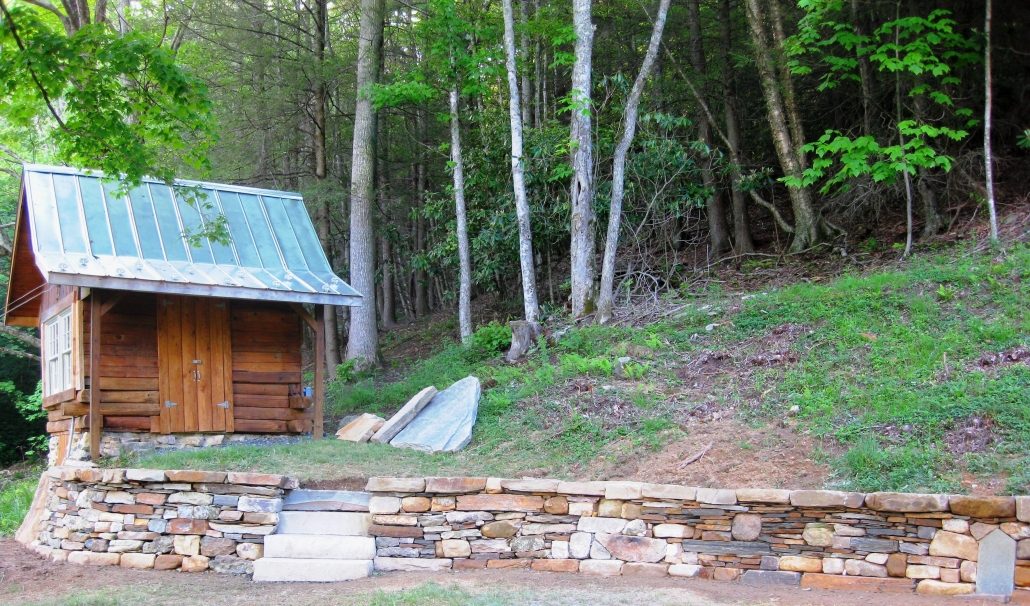
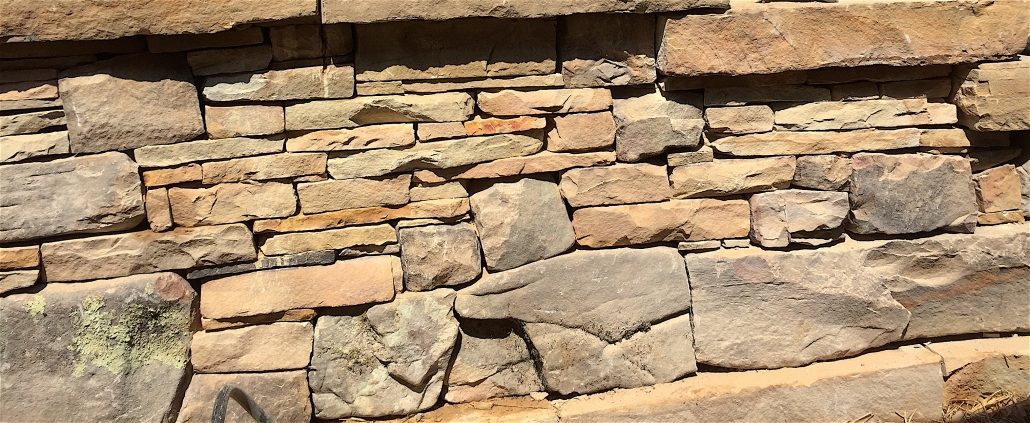
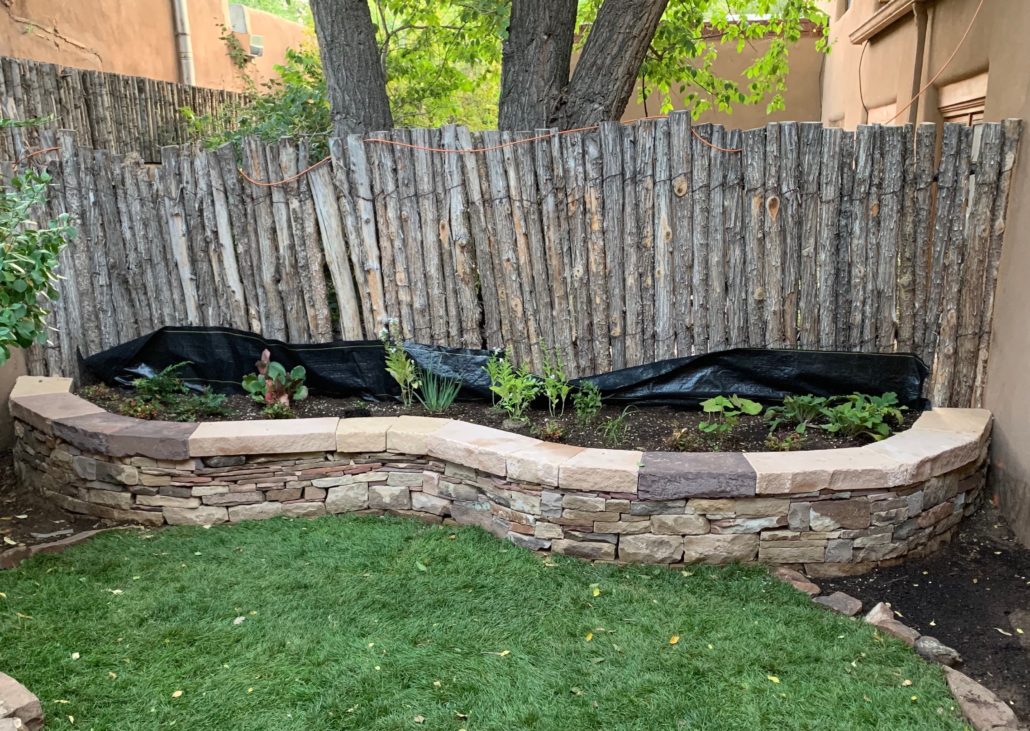
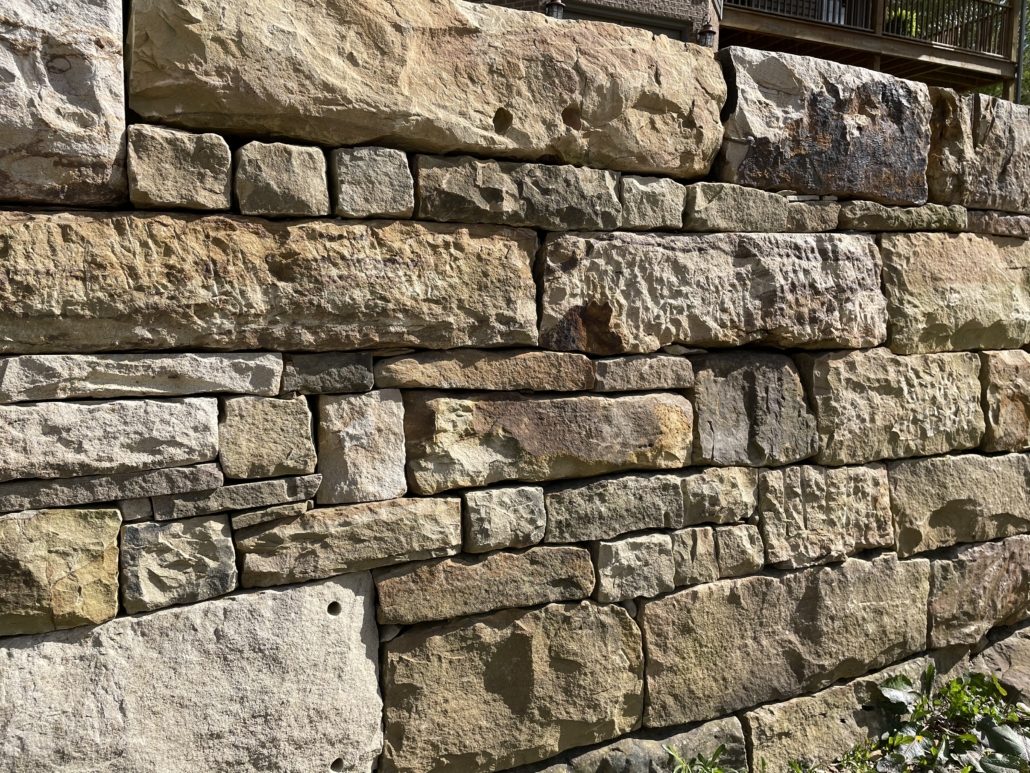
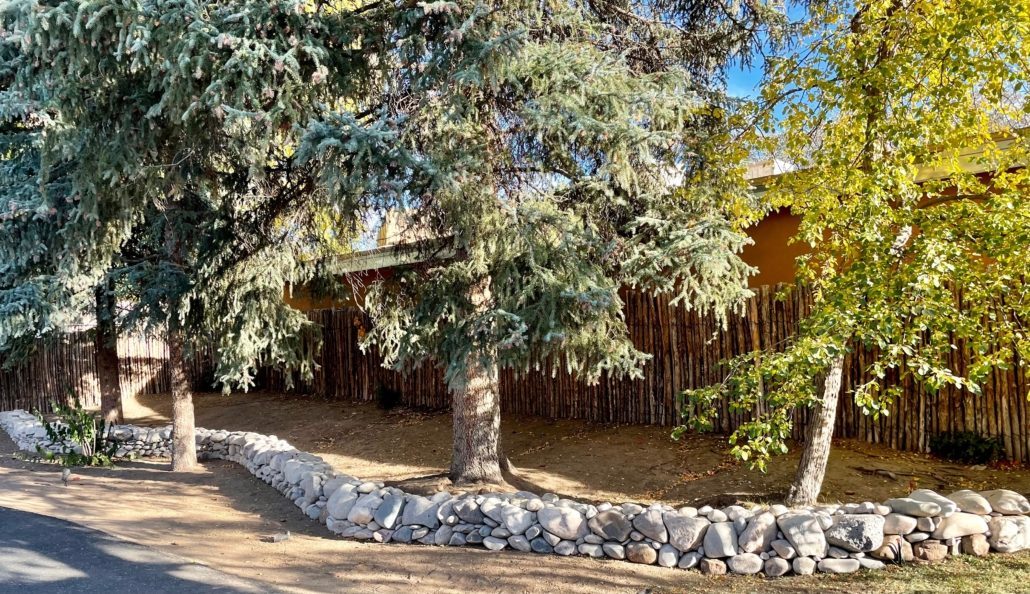
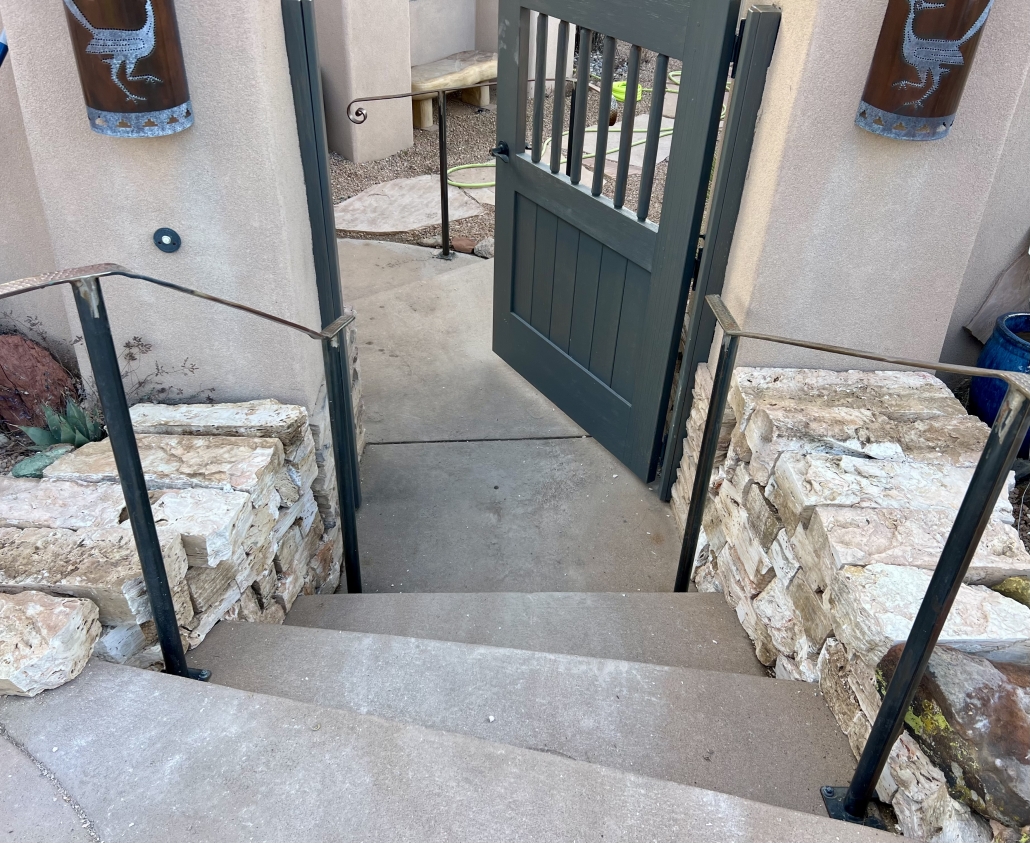
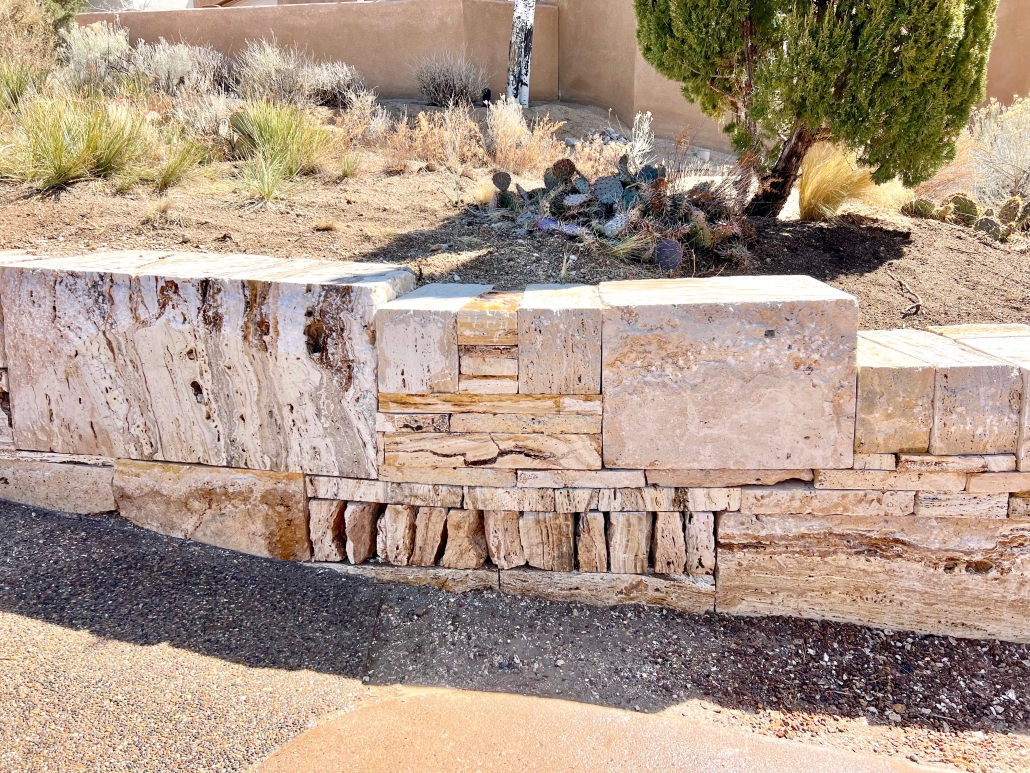
Dry stone retaining walls are the bulk of my work experience in stonemasonry. I have built and restored them during the last 29 years throughout the US. I do not build stone retaining walls with mortar, as a result of dry stone retaining walls draining water naturally. Mortar traps and slows water behind a retaining wall, as a result this often causes failure. Also, a dry stone retaining wall can expand and contract due to earth’s freeze/thaw patterns or earthquakes without failure. However, mortared stone walls cannot do this. The craft of dry stonemasonry retaining walls was added to the cultural list of World Heritage Sites in a region including 13 European countries.
15 Great Rock Hits!
There are 15 general traits which dry stone retaining walls either do or don’t possess that determines the durability of the retaining wall. These traits are known and quantified, and are usually evident when looking at the face of a retaining wall. I refer to them as “15 Great Rock Hits!” Here is a downloadable PDF of those best practices for dry stone retaining wall construction:
Stone Retaining Walls Engineer Study
For example, one of the 15 traits is that retaining walls need to lean into the soil or other material they are holding back. For this reason, vertical walls often fail no matter what material they are made with. One 2025 engineering study of dry stone retaining walls came to this conclusion. The authors suggested that a tilt of 5-10 degrees towards the soil being retained subsequently lengthens the life of stone retaining walls. “Optimizing shape design in drystone retaining walls: A multi-scope approach focusing on failure mechanisms.”
Unfortunately, the engineers study does not reflect knowledge of the other essential retaining wall structural traits. For example, all of the walls used in the study contain some stones that do not have the length going in. These stones are called “tracers”, so they are parallel to the face of the wall. 4 out of 5 walls studied consequently failed at the location of the tracer stones. In addition, another shortcoming of the study is that the walls are unreasonably narrow at the top. The capstones are also tracers. As a result, this reduces the amount of weight on top of the stones below, thus reducing friction. Moreover, the authors do not recognize the merits of a retaining wall built as a parallelogram, which is how I build all stone retaining walls.
Stone Versus Concrete Retaining Walls
Retaining walls also need a certain amount of mass to resist the lateral pressure of soil, water, tree roots, etc. trying to push them over. Thin retaining walls lack this mass. For example, 18″ is an average minimum thickness for a stone retaining wall to last. Also, stone is more dense than the inferior concrete wall materials often used in retaining walls. That density in stone certainly has a structural advantage over concrete. In addition, the process by which stone is made has environmental benefits that manufacture of concrete does not.